
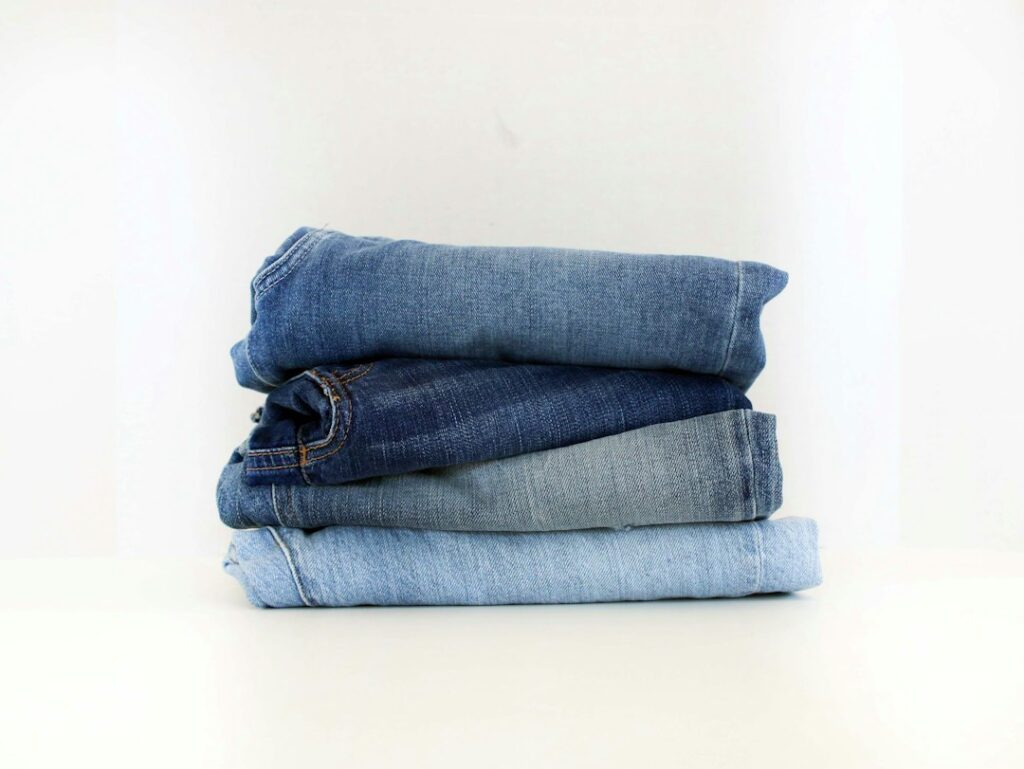
Jeans are the most worn pants in the world, but buying a pair can still be confusing. Skinny, slim, straight, relaxed: each name describes a different shape through the hip, thigh and leg. This guide explains 20 types of jeans, how each one fits, and which outfits and shoes suit them, so you can choose the right pair the first time.
Jean names usually describe two things: the rise (where the waistband sits) and the leg shape. The table below shows six common cuts at a glance.
| Type of jeans | Leg shape | Pairs well with |
|---|---|---|
| Skinny | Tight from hip to ankle | Loose tops, boots |
| Straight | Even width from hip to hem | Almost everything |
| Bootcut | Slight flare below the knee | Boots, heels |
| Wide-leg | Wide from hip to hem | Fitted tops |
| Baggy | Loose through hip and leg | Fitted or cropped tops |
| Mom jeans | High rise, relaxed hip, tapered leg | Tucked-in tops, sneakers |
1. Skinny jeans
Skinny jeans fit close to the body from the hip to the ankle and usually contain some stretch. They work well with loose tops, long shirts and boots. If they dig in at the waist when you sit, size up or choose a higher stretch content.
2. Slim-fit jeans
Slim-fit jeans are fitted through the thigh but a little roomier than skinny jeans. They look neat without feeling tight, so they suit offices with casual dress codes and everyday wear.
3. Straight-leg jeans
Straight-leg jeans keep the same width from the hip down to the hem. It is a balanced, classic shape that suits most body types and almost any shoe, from sneakers to loafers and boots.
4. Regular-fit jeans
Regular-fit jeans have a standard cut with room in the seat and thigh and a straight leg. They are the most common fit in menswear and are comfortable for long days.
5. Relaxed-fit jeans
Relaxed-fit jeans are looser than regular fit through the hip and thigh. They suit people who want comfort and freedom to move, and they pair well with fitted T-shirts.
6. Tapered jeans
Tapered jeans have a relaxed top and narrow towards the ankle. They keep room where you need it and look neat at the hem, which shows off shoes. They work for both men and women.
7. Bootcut jeans
Bootcut jeans are fitted through the thigh and flare slightly from the knee, leaving room for boots. The small flare balances wider hips and works with heels or boots.
8. Flared jeans
Flared jeans widen from the knee to the hem more dramatically than bootcut. They lengthen the legs when worn with heels or platforms and suit a retro look.
9. Wide-leg jeans

Wide-leg jeans are loose from the hip all the way down. They move as you walk and suit tall frames. Keep the top fitted so the outfit does not look boxy. For similar shapes in other fabrics, see types of pants for women.
10. Baggy jeans

Baggy jeans are loose through the hip, thigh and leg, often sitting low on the waist. They are a streetwear favourite. Pair them with fitted or cropped tops, and chunky sneakers balance the volume.
11. Boyfriend jeans
Boyfriend jeans are relaxed, slightly slouchy jeans with a lower rise. They are often cuffed at the ankle. They look casual and work with oversized shirts, T-shirts and flats.
12. Mom jeans
Mom jeans have a high rise, a relaxed hip and thigh, and a leg that tapers towards the ankle. They look best with tucked-in tops, which show off the waist. Sneakers and ankle boots finish the look.
13. High-waisted jeans

High-waisted jeans sit at or above the navel. They define the waist and make the legs look longer. They suit tucked-in shirts and crop tops and are available in most leg shapes.
14. Low-rise jeans
Low-rise jeans sit on the hips, below the navel. They suit longer torsos and fitted tops. Check that they stay up and stay comfortable when you sit and bend.
15. Cropped jeans
Cropped jeans end above the ankle. The shorter length shows off shoes and suits warm weather. They work with sneakers, sandals and loafers.
16. Ripped (distressed) jeans

Ripped jeans have tears, fraying or worn patches at the knees and thighs. They look casual and edgy. Keep the rest of the outfit simple, and think about the weather, since the holes let air in.
17. Carpenter jeans
Carpenter jeans are a loose, workwear-inspired cut with a hammer loop and extra pockets. They are relaxed and practical and suit casual outfits.
18. Barrel jeans
Barrel jeans, also called horseshoe jeans, curve out through the thigh and curve back in at the ankle, making a barrel shape. They are roomy and unusual, and look best with fitted tops.
19. Jeggings
Jeggings look like jeans but are made from a stretchy knit, so they feel like leggings. They are very comfortable, but usually less durable than real denim and less structured.
20. Raw (dry) denim
Raw denim has not been washed or treated after weaving. It is stiff at first and fades gradually with wear, which gives each pair its own pattern. It suits people who like to build a pair over time.
How to choose the right jeans
Start with the rise. High rise defines the waist, mid rise suits most people, and low rise sits on the hips. Pick the rise that stays comfortable when you sit, not only when you stand.
Next, choose the leg shape for your build and your outfits. A straight leg works for almost everyone. A small flare, as in bootcut, balances wider hips. Tapered legs suit people who want a neater hem. If you want to try new cuts, buy one pair and wear it for a few weeks before buying more.
Check the fabric. Jeans with a little stretch, usually around one to three percent, are comfortable and keep their shape. Rigid denim lasts longer but feels stiff at first. See our guide to types of fabrics for more on denim and blends.
Always try jeans on, sit down, and walk around. They should fit the waist without a gap at the back, and the hem should skim your shoes. For the wider wardrobe, see our guide to types of clothes, and for similar cuts in menswear, see types of pants for men.
How to care for jeans
Wash jeans less often than other clothes, and turn them inside out to protect the colour. Use cool water and a mild detergent, and hang them to dry instead of using a hot dryer, which can shrink them and wear out stretch fibres. Spot-clean small marks. Raw denim is washed even less, often only when it needs it.
FAQs
What are the most common types of jeans?
The most common are skinny, slim, straight, bootcut, wide-leg and baggy jeans. Most other styles are variations of these.
What is the difference between slim and skinny jeans?
Skinny jeans fit tight from the hip to the ankle. Slim jeans are fitted but leave a little more room through the thigh and leg.
Which jeans suit a pear body shape?
Bootcut and straight-leg jeans with some stretch in a mid or high rise are comfortable choices, because they leave room through the hips and balance the leg line.
What is the difference between mom jeans and boyfriend jeans?
Mom jeans have a high rise and taper at the ankle. Boyfriend jeans sit lower and are looser and slouchier throughout the leg.
About the author
Dev Panchal is a fashion and lifestyle enthusiast with an interest in clothing trends, personal style, and everyday fashion inspiration. Through Fashiqa, he shares practical styling tips, outfit ideas, fashion guides, and lifestyle articles to help readers discover new trends and make confident style choices.
Last updated: October 2026 | More from Dev | About Fashiqa