
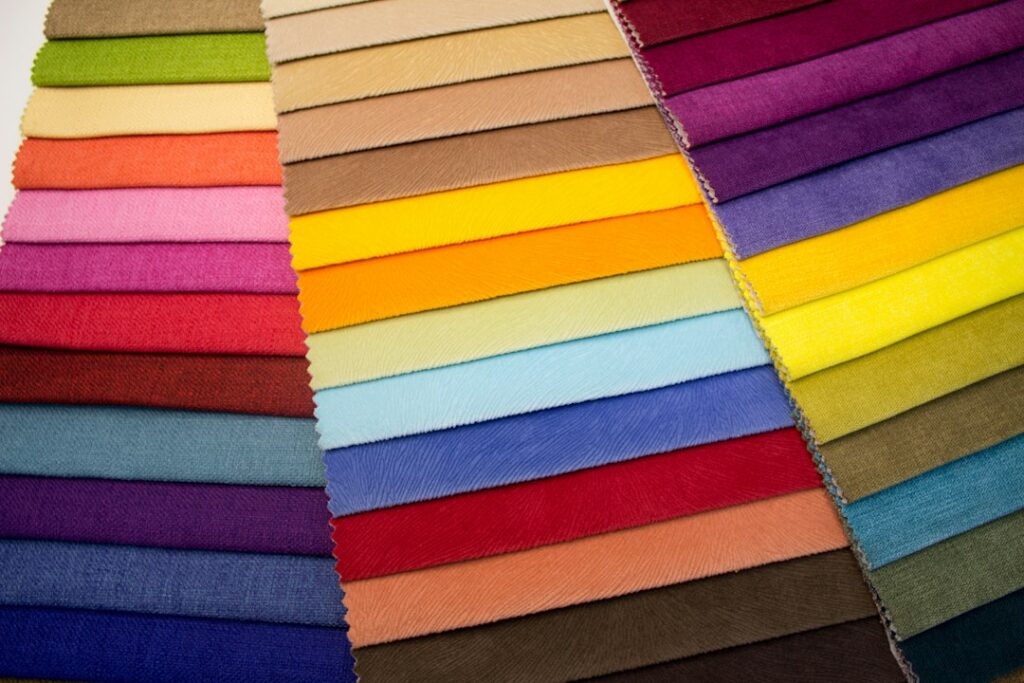
The same shirt can feel cool and crisp in one fabric and hot and sticky in another. Knowing the main types of fabrics helps you shop smarter, wash clothes properly, and pick the right material for the weather and the occasion. This guide explains 20 types of fabrics, where they come from, how they feel, and what they suit best.
Fabrics fall into three broad groups. Natural fabrics come from plants or animals, such as cotton, linen, silk and wool. Synthetic fabrics are made from chemicals, such as polyester and nylon. Semi-synthetic fabrics, such as rayon, are made from natural material like wood pulp that is processed in a factory. The table below compares six common fabrics at a glance.
| Fabric | Type | Feels | Best for |
|---|---|---|---|
| Cotton | Natural | Soft, breathable | Daily wear, summer |
| Linen | Natural | Crisp, airy | Hot weather |
| Silk | Natural | Smooth, light | Sarees, formal wear |
| Wool | Natural | Warm, thick | Winter clothes |
| Polyester | Synthetic | Smooth, dries fast | Sportswear, travel |
| Rayon | Semi-synthetic | Soft, drapes well | Dresses, kurtis |
1. Cotton
Cotton comes from the cotton plant and is the most widely worn natural fabric. It is soft, breathable and easy to wash, which makes it the standard choice for T-shirts, shirts, kurtis and everyday wear in hot weather. Cotton can shrink in a hot wash, so use cool or warm water.
2. Linen
Linen is made from the flax plant. It is crisp, airy and dries quickly, so it keeps you cool in summer. It creases easily, but many people like that relaxed look. Linen shirts, trousers and dresses are popular for warm days.
3. Silk

Silk is a natural fibre made by silkworms. It is smooth, light and has a soft shine. It is used for sarees, blouses, scarves and formal clothes. Silk needs gentle care, so check the label and avoid harsh detergents. See our guide to types of sarees for regional silk weaves.
4. Wool
Wool comes from sheep and holds body heat well. It is used for sweaters, coats, shawls and suits. Wool can feel itchy on bare skin, so many people wear it over a cotton layer. Wash it gently and dry it flat to avoid shrinking.
5. Cashmere
Cashmere is a very fine wool from cashmere goats. It is much softer and lighter than ordinary wool while staying warm. It costs more and needs careful handling, so it suits good sweaters and scarves that you plan to keep.
6. Denim

Denim is a strong cotton twill, usually dyed blue. It is used for jeans, jackets and skirts. It is durable and gets softer with wear. Wash dark denim inside out and less often to keep the colour.
7. Polyester
Polyester is a synthetic fabric that is strong, resists creasing and dries fast. It is used in sportswear, uniforms and many everyday clothes. It does not breathe as well as cotton, so it can feel warm in hot weather. It is often blended with cotton to balance comfort and easy care.
8. Nylon
Nylon is a strong, light synthetic fabric. It resists wear and dries quickly, which is why it appears in jackets, bags, swimwear and stockings. It is not very breathable, so it suits outerwear more than hot-weather shirts.
9. Rayon (viscose)
Rayon, also sold as viscose, is made from wood pulp that is processed into fibre. It is soft, drapes well and feels cool, so it is common in dresses, kurtis and blouses. It can weaken when wet, so wash it gently.
10. Spandex (elastane)
Spandex, also called elastane or Lycra, is a stretchy synthetic fibre. It is rarely used alone. A small amount is mixed into jeans, leggings and activewear to help them stretch and recover their shape.
11. Chiffon
Chiffon is a very light, sheer fabric with a soft drape. It is made from silk or polyester. It is used for sarees, dupattas, scarves and evening dresses. It is delicate and can snag, so avoid rough surfaces and jewellery that catches.
12. Georgette
Georgette is a light, slightly crinkled fabric with a dry feel. It is more opaque than chiffon and drapes beautifully. It is used for sarees, kurtis, dupattas and party wear.
13. Crepe
Crepe has a crinkled, slightly textured surface. It drapes well, resists creasing and suits office wear, dresses, blouses and sarees. It comes in silk, polyester and other fibres.
14. Satin
Satin is a type of weave, not a fibre, that gives a glossy front and a dull back. It can be made from silk, polyester or other fibres. It is used for evening dresses, slip dresses, lingerie and blouses.
15. Velvet

Velvet has a short, dense pile that feels soft and rich. It is warm and looks luxurious, so it is popular for winter dresses, blouses, jackets and wedding outfits. Brush it gently and avoid pressing it flat with an iron.
16. Jersey
Jersey is a soft, stretchy knit, usually in cotton or a blend. It is used for T-shirts, dresses, loungewear and leggings. It is comfortable and does not need ironing, but it can lose shape if hung wet.
17. Fleece
Fleece is a soft, fluffy synthetic fabric, usually polyester, that traps heat. It is used for jackets, hoodies and blankets. It is light for its warmth and dries quickly.
18. Corduroy
Corduroy is a cotton fabric with raised vertical ridges. It is warm and hard-wearing and used for trousers, jackets and skirts in cooler months.
19. Lace

Lace is a fine, open fabric with patterns of threads and holes. It is delicate and decorative, used for blouses, dresses, bridal wear and trims. It usually needs gentle hand washing.
20. Khadi
Khadi is a hand-spun, hand-woven cotton fabric from India. It is breathable, textured and cool in summer and warm in winter. It is used for kurtas, shirts, sarees and stoles, and it has a strong place in Indian history and fashion.
How to choose the right fabric
Start with the weather. In heat and humidity, choose breathable fabrics such as cotton, linen, khadi and rayon. In cold weather, choose wool, fleece, velvet and corduroy. Synthetic fabrics suit sport and travel because they dry fast.
Next, think about how you will use the garment. Everyday clothes need to survive frequent washing, so cotton, denim and polyester blends work well. Special-occasion clothes can use delicate fabrics such as silk, chiffon, satin and lace, which need gentler care.
Check the label for blends. A fabric labelled 95 percent cotton and 5 percent spandex will stretch, while one with a high polyester content may feel warmer. If your skin is sensitive, natural fibres or soft blends are often more comfortable.
Fabric choice changes how clothes look, too. Stiff fabrics hold their shape, and soft fabrics drape. For dress ideas, see our guide to types of dresses, and for kurti shapes and fabrics, see types of kurtis.
How to care for different fabrics
Always read the care label first, because it is written for that exact garment. As a general guide, wash cotton and denim in cool or warm water, wash delicate fabrics such as silk, chiffon and lace by hand or on a gentle cycle, and dry wool flat. Turn dark clothes inside out to protect the colour. For a wider view of what to put in your wardrobe, see our guide to types of clothes.
FAQs
What are the main types of fabrics?
The main groups are natural fabrics (cotton, linen, silk, wool), synthetic fabrics (polyester, nylon) and semi-synthetic fabrics (rayon).
Which fabric is best for hot weather?
Cotton, linen and khadi are good choices because they breathe and absorb sweat. Light rayon also feels cool.
What is the difference between chiffon and georgette?
Chiffon is very light and sheer. Georgette is slightly heavier with a crinkled texture and is less see-through.
Is silk a natural fabric?
Yes. Silk is a natural fibre produced by silkworms.
About the author
Dev Panchal is a fashion and lifestyle enthusiast with an interest in clothing trends, personal style, and everyday fashion inspiration. Through Fashiqa, he shares practical styling tips, outfit ideas, fashion guides, and lifestyle articles to help readers discover new trends and make confident style choices.
Last updated: October 2026 | More from Dev | About Fashiqa