
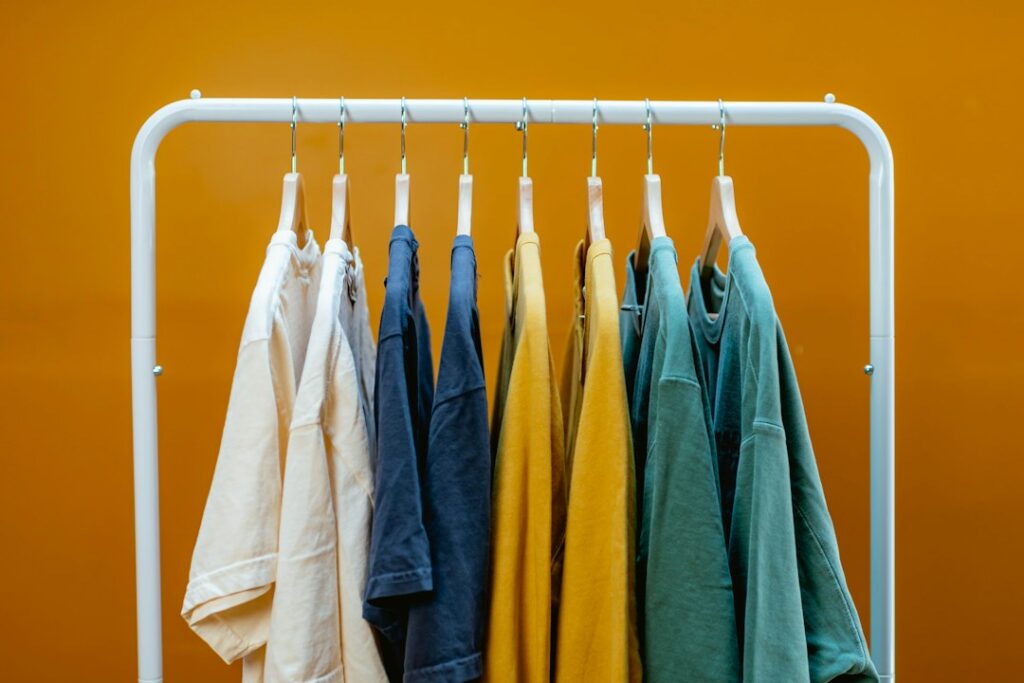
Clothes are easier to shop for once you know what each garment is for. Some pieces handle everything from work to weekends, while others only suit one occasion. This guide covers 20 main types of clothes, what makes each one different, and where it fits in a normal wardrobe.
The table below groups the garments by what they do, so you can see the whole wardrobe at a glance.
| Group | Garments | Worn for |
|---|---|---|
| Tops | T-shirts, shirts, blouses, kurtas, sweaters, hoodies | Daily wear, work, layering |
| Bottoms | Jeans, trousers, skirts, shorts | Daily wear, work |
| One-piece | Dresses | Work, parties, events |
| Outerwear | Jackets, coats, blazers | Cold weather, formal layering |
| Traditional wear | Sarees, salwar suits, lehengas | Festivals, weddings |
| Activewear and rest | Activewear, loungewear, swimwear | Gym, home, swimming |
1. T-shirts

T-shirts are soft, short-sleeved knit tops, usually in cotton. They are the base of most casual outfits and layer well under shirts and jackets. A well-fitted plain tee lasts longer and looks neater than a thin or shapeless one.
2. Shirts
Shirts have a collar and buttons down the front. They range from crisp office shirts to relaxed linen ones. A good shirt fits across the shoulders and chest first, because sleeves and length are easier to adjust.
3. Blouses
Blouses are lighter, more feminine tops, often in silk, chiffon or crepe. They suit work and dressier occasions. Check the fabric care label, since many blouses need gentle washing.
4. Kurtas
A kurta is a long, loose tunic worn across South Asia, in cotton for daily use and silk or embroidered fabrics for festivals. Short kurtis pair with jeans or palazzos, and long kurtas pair with churidars or pyjamas.
5. Sweaters
Sweaters are knitted tops in wool, cotton or blends, made for warmth. Crew-neck, V-neck and turtleneck styles all layer over shirts. Store them folded, not on hangers, which stretch the shoulders.
6. Hoodies

Hoodies are warm, casual tops with a hood and a front pocket. They suit cool weather, travel and relaxed days. An oversized shirt or T-shirt underneath adds another layer.
7. Jeans
Jeans are durable denim pants that work almost everywhere. Choose the cut that fits your build, such as straight, bootcut or skinny. Dark, plain jeans look smarter, and light or distressed ones feel more casual.
8. Trousers
Trousers are tailored pants for work and formal events. Good ones sit well at the waist, fall straight and are hemmed to the shoe. See our guides to types of pants for women and types of pants for men.
9. Skirts
Skirts come in mini, midi and maxi lengths and in shapes such as A-line, pencil and pleated. Pencil skirts suit formal wear, while pleated and A-line skirts are easy for daily wear.
10. Shorts
Shorts keep you cool in hot weather. Tailored shorts in cotton or linen work for smart-casual days, while sports shorts suit exercise and home. Pick a length that suits where you are going.
11. Dresses
A dress is a single garment that replaces a top and a bottom. The styles range from shifts and shirt dresses to maxis and ball gowns. Our guide to types of dresses covers 20 of them.
12. Jackets

Jackets are short outer layers, such as denim, bomber and leather jackets. They add warmth and finish an outfit. A denim jacket is a versatile first choice because it goes over most things.
13. Coats
Coats are longer and warmer than jackets, in wool, down or waterproof fabric. Choose one with enough room in the shoulders and arms to fit a sweater underneath.
14. Blazers
A blazer is a tailored jacket that dresses up jeans or finishes a formal outfit. A neutral navy or black blazer works for interviews, meetings and dinners.
15. Sarees
A saree is a long, unstitched cloth draped around the body, worn with a blouse and petticoat. Fabrics and weaves vary by region, from Kanjivaram to Banarasi. See our guide to types of sarees.
16. Salwar suits
A salwar suit combines a kameez (tunic), a salwar (loose trousers) and a dupatta (scarf). It is comfortable and suits work, festivals and weddings, depending on fabric and embroidery.
17. Lehengas
A lehenga is a long, flared skirt worn with a fitted blouse and a dupatta. It is a traditional choice for weddings and major festivals, often with heavy embroidery or zari work.
18. Activewear
Activewear includes sports T-shirts, leggings, shorts and track pants made from stretchy, sweat-wicking fabric. Wear it for exercise, and choose supportive shoes from our guide to types of shoes.
19. Loungewear and nightwear
Loungewear and nightwear are soft, loose clothes for home and sleep, such as pyjama sets, nightdresses and cotton shorts. Breathable cotton is a comfortable choice in warm weather.
20. Swimwear
Swimwear includes swimsuits, trunks and rash guards made from quick-drying, stretchy fabric. Rinse it in fresh water after swimming to protect the fabric from chlorine and salt.
How to build a simple wardrobe
Start with versatile basics: a few plain T-shirts, two or three shirts, a pair of dark jeans, one pair of tailored trousers, and a layer such as a blazer or jacket. These pieces mix and match, so a small number of items makes many outfits.
Next add pieces for your own life. If you attend weddings and festivals, add one traditional outfit. If you exercise, add activewear. Buy for the lifestyle you actually have, not the one you imagine.
Fit and fabric matter more than price. Check seams, buttons and the inside of the garment, and read the care label before you buy. A structured bag from our guide to types of bags pulls most outfits together.
How to care for your clothes
Follow the care label, wash dark clothes inside out in cool water, and avoid over-drying, which wears fabric faster. Fold knits, hang tailored pieces, and air out wool between wears instead of washing it often. For underwear fit and types, see our guide to bra types.
FAQs
What are the main types of clothes?
The main groups are tops, bottoms, dresses, outerwear, traditional wear, activewear, nightwear and swimwear.
Which clothes should every wardrobe have?
Plain T-shirts, a couple of shirts, dark jeans, tailored trousers, a jacket or blazer, and one traditional outfit cover most needs.
What is the difference between a jacket and a coat?
A jacket is shorter and lighter, usually ending at the waist or hip. A coat is longer and warmer, and often reaches the thigh or knee.
How do I choose clothes that fit well?
Check the shoulders, chest and waist first, because these are hardest to alter. Move around in the garment before you buy to make sure it is comfortable.
About the author
Dev Panchal is a fashion and lifestyle enthusiast with an interest in clothing trends, personal style, and everyday fashion inspiration. Through Fashiqa, he shares practical styling tips, outfit ideas, fashion guides, and lifestyle articles to help readers discover new trends and make confident style choices.
Last updated: October 2026 | More from Dev | About Fashiqa