There is very little variation between guides regarding men’s pants across the world – numbers, image and two paragraphs about the versatility and style of the pants in question. But after having read through all of this, you still won’t know which pants you are supposed to wear considering your body type, the climate and Wednesday.
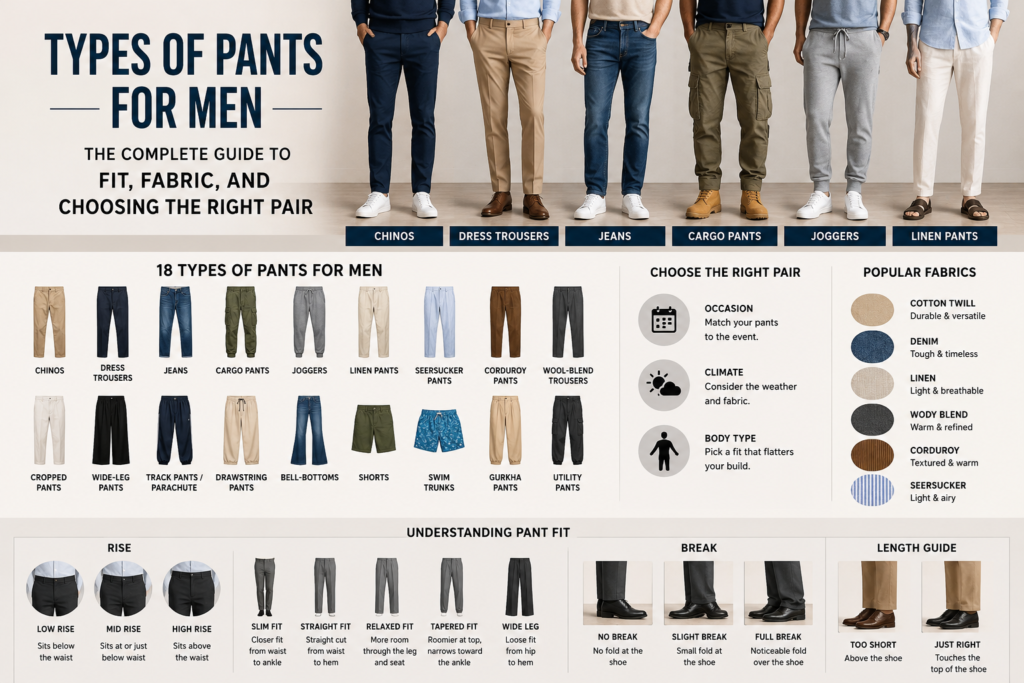
The structure of this guide is somewhat different from others because along with providing information on 15 different pants types, it allows you to recognize each of them and figure out which type of pants will suit your body type and weather. Fit terminology is explained too.
How to Actually Choose: A Decision Framework
Before delving into specific styles, there are three questions that can be answered to get rid of some styles.
1.What’s the occasion demanding?
For formal occasions and meetings with clients, you will end up with dress trousers and tailored chinos. For casual outings, jeans, joggers, cargo or linen pants are options to choose from. Anything in between would call for either
2.What’s the climate doing?
This point is often neglected while choosing a style of trouser, but if you happen to live in a humid region, it is extremely important. Twill or wool trousers looking stylish in the air-conditioned office environment might become uncomfortable if worn outside when it is as hot as 35°C. Lightweight materials such as linen, seersucker and cotton chinos are breathables while denim, corduroy and wool retain heat. So, in case of humid weather, it would be better to go for linen and lightweight cotton instead of denim and wool almost every time outside the air-conditioned environment.
3.What does your build actually need?
This is the point that is usually skipped in most of the guidelines available online.
- Straight and athletic physique: Any style works here. Slim and straight cut is the best option.
- Physique with broader thighs or hips: Relaxed or straight cut will balance the proportions better than the skinny cuts, which will appear to be tighter than desired.
- Slender or lean physique: You can safely choose slim and straight cuts of trousers, which will create visual structure without overwhelming the physique.
- Shorter physique (less than 5’8″): Higher rise and the break at the right place (at the level of the shoes) will make your body seem taller. Tapered ankles and cropped pants also work.
- Taller physique: Wide legged or relaxed cuts work well; do not go for excessively cropped pants.
Understanding the Terminology on the Tag
Half the confusion around men’s pants comes down to jargon nobody explains clearly.
Rise — the length between the crotch seam and the waistband. Low-rise pants sit below your belly button, mid-rise pants right at or slightly below the belly button, and high-rise pants above it. The vast majority of pants available today in men’s wear tend to be mid-rise by default.
Break — the fabric fold on the spot where the trouser leg connects to the shoe. “No-break” pants are tight-fitting and end right at your ankles, whereas “full-break” pants have extra fabric folded over the shoe. No break or slight break look good with chinos and dress pants, while jeans can take more break.
Taper — the degree of narrowing of the trouser leg from the knees to the ankles. Tapered trousers keep more roominess in the upper part of the leg and gradually narrow from there, which is kinder on the body than a full slim leg.
Inseam — the length between the crotch seam and the hemline of the pants, or simply the trouser leg length used when measuring.
GSM — grams per square meter, indicating the weight of fabric. Lightweight GSM (120-180) is airy and ideal for pants in the summer. Heavyweight GSM (250+) is heavier and more rigid and can be used in winter and tailoring.
The Complete List: Every Type of Pants for Men Explained
1. Chinos
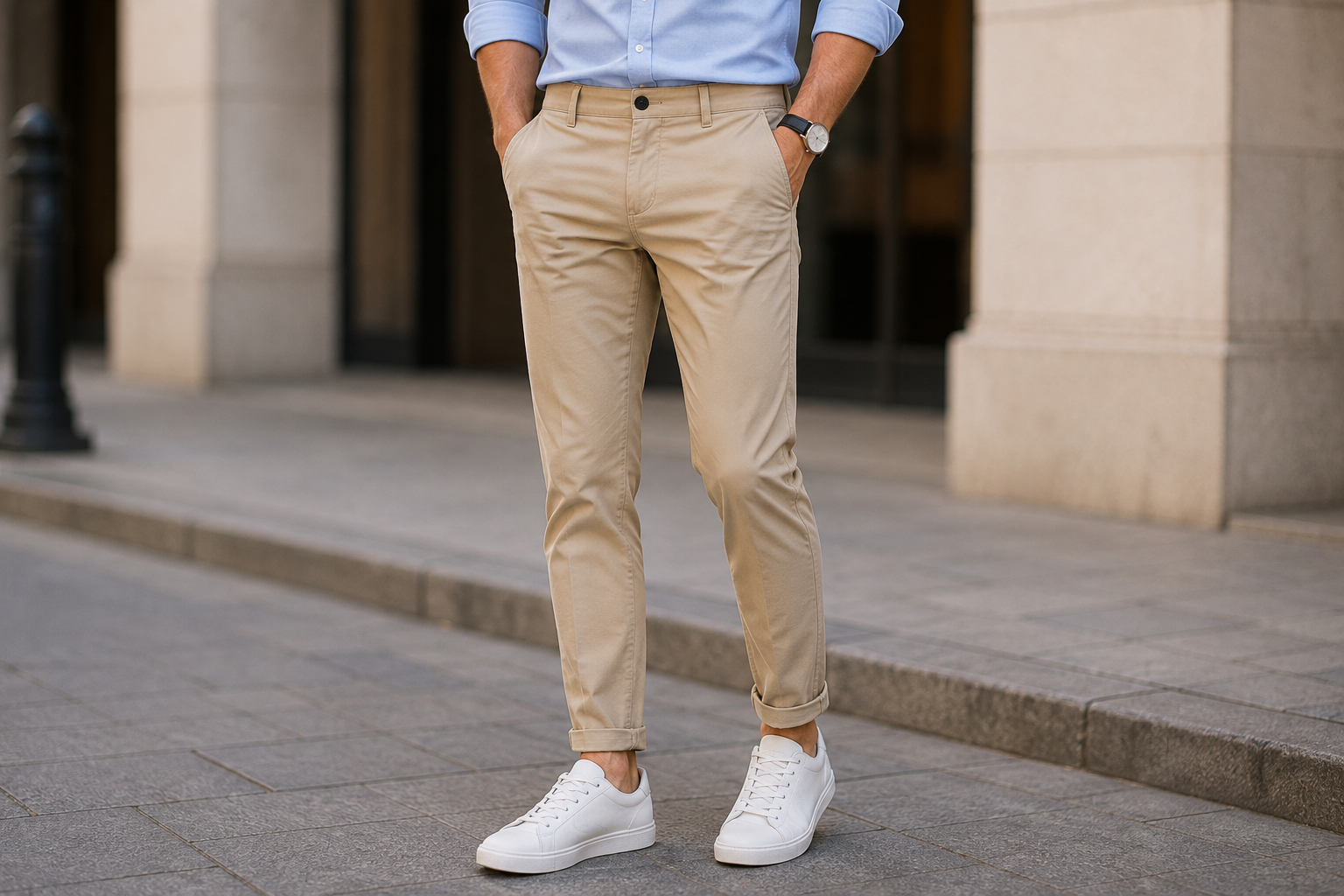
These are the most dependable pants in one’s closet since chinos lie in between the two extremes of denim’s casual style and formal dress trousers. Made of cotton twill fabric, these maintain a crisp shape without requiring constant pressing. Slender or tapered pants in khaki, navy, or olive color go perfectly fine at work on Monday and even dinner on Friday. You should get a pant with a GSM of 200 – 240.
2. Formal or Dress Trousers
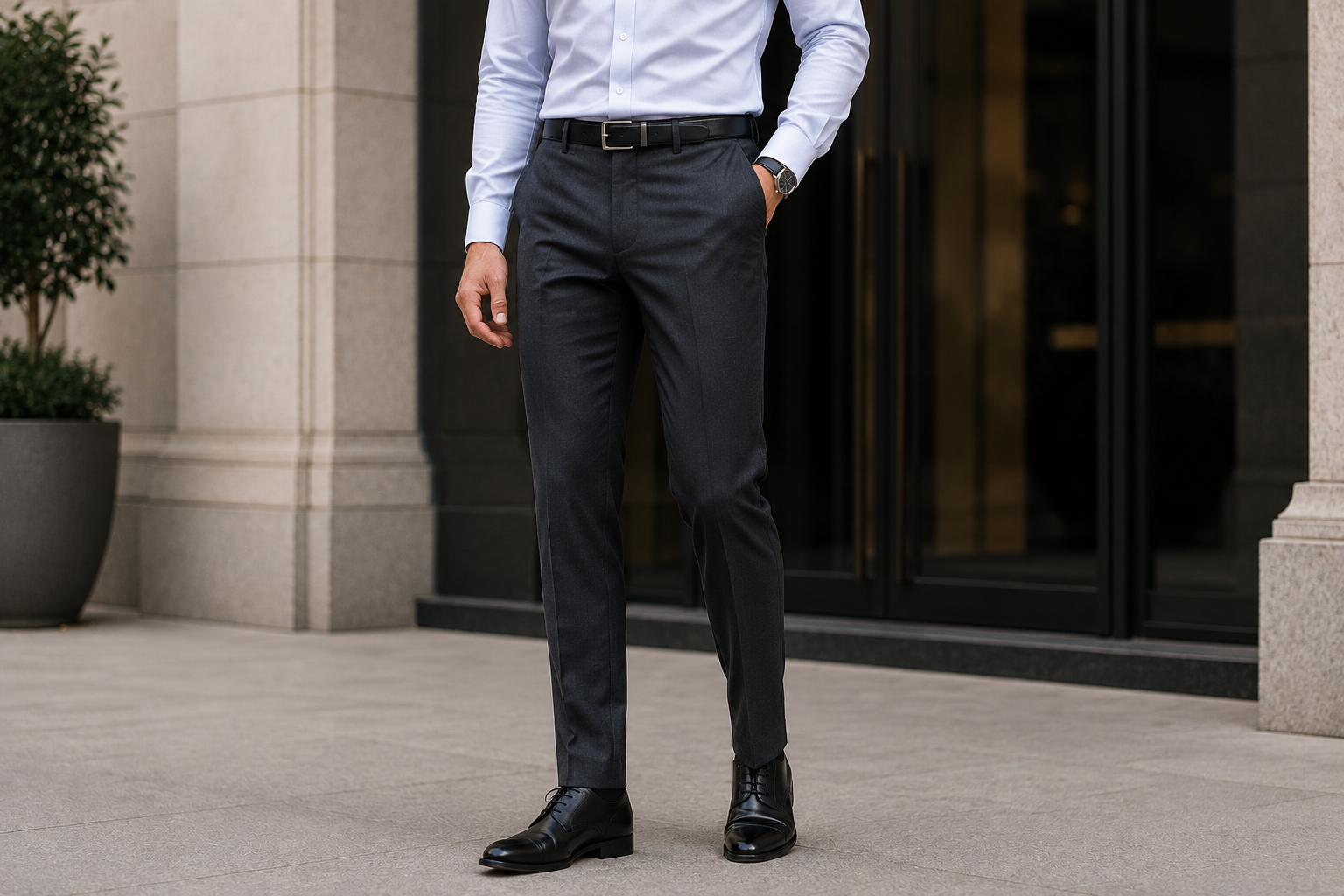
It is not a coincidence that formal pants have pleats, creases, and tailored breaks since they make the most demanding pants in terms of your formal wear. Wool blend material is perfect when there is cold while poly-viscose blend prevents wrinkles and travels very well. Charcoal, navy, and black are the most versatile colors that match almost any combination of shirts and jackets.
3. Jeans (Denim)
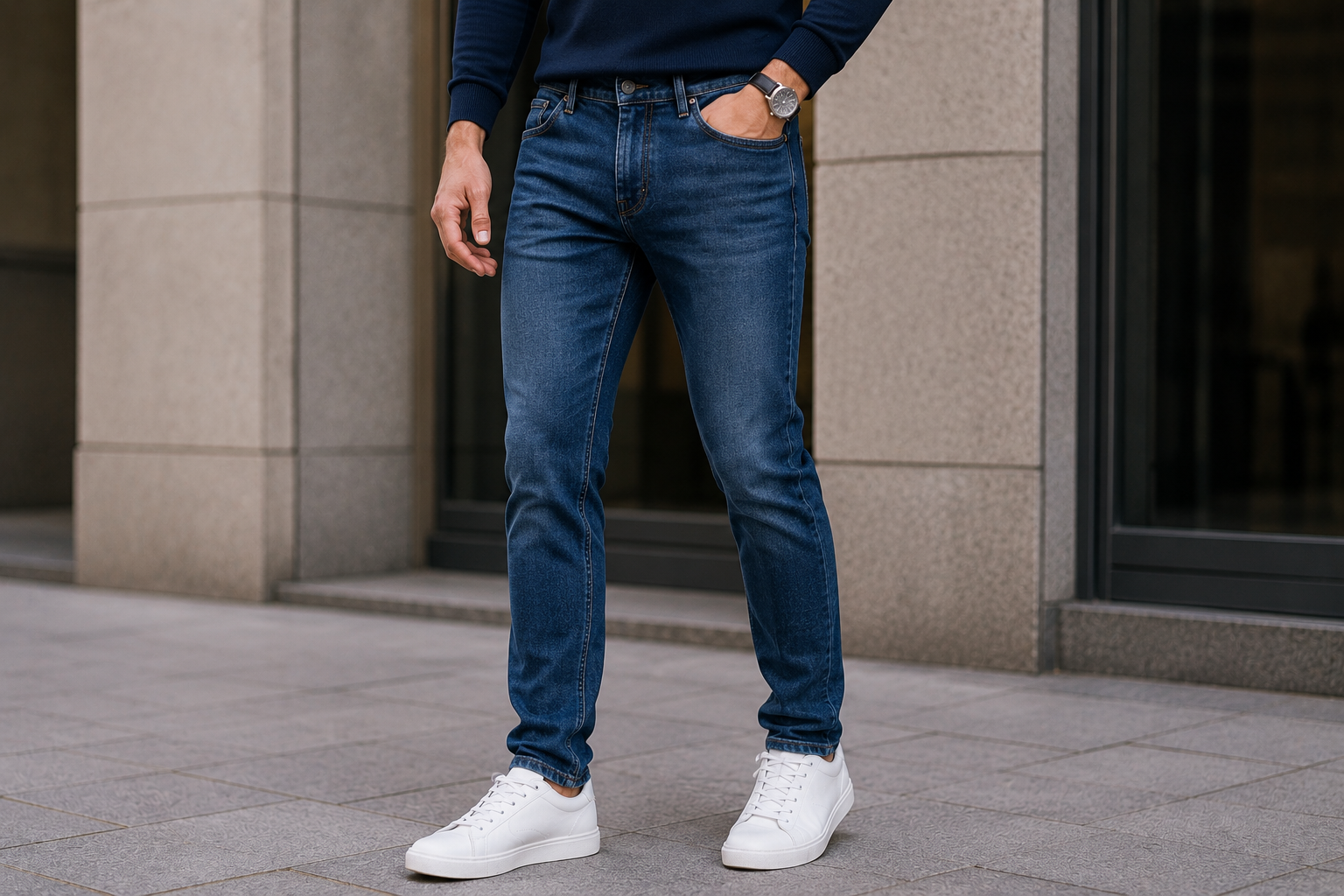
Jeans are here to stay due to denim being tough and flexible material. It is not the question of whether one should have jeans but what kind of jeans. Loose and relaxed pants flatter a bigger variety of shapes; slim fit jeans fit best people with slender figures; wide-legged and baggy jeans made a huge come back to street style fashion. Indigo washed jeans are more suitable to be dressed up (and even under a blazer) while washed and distressed ones are strictly casual.
4. Cargo Pants
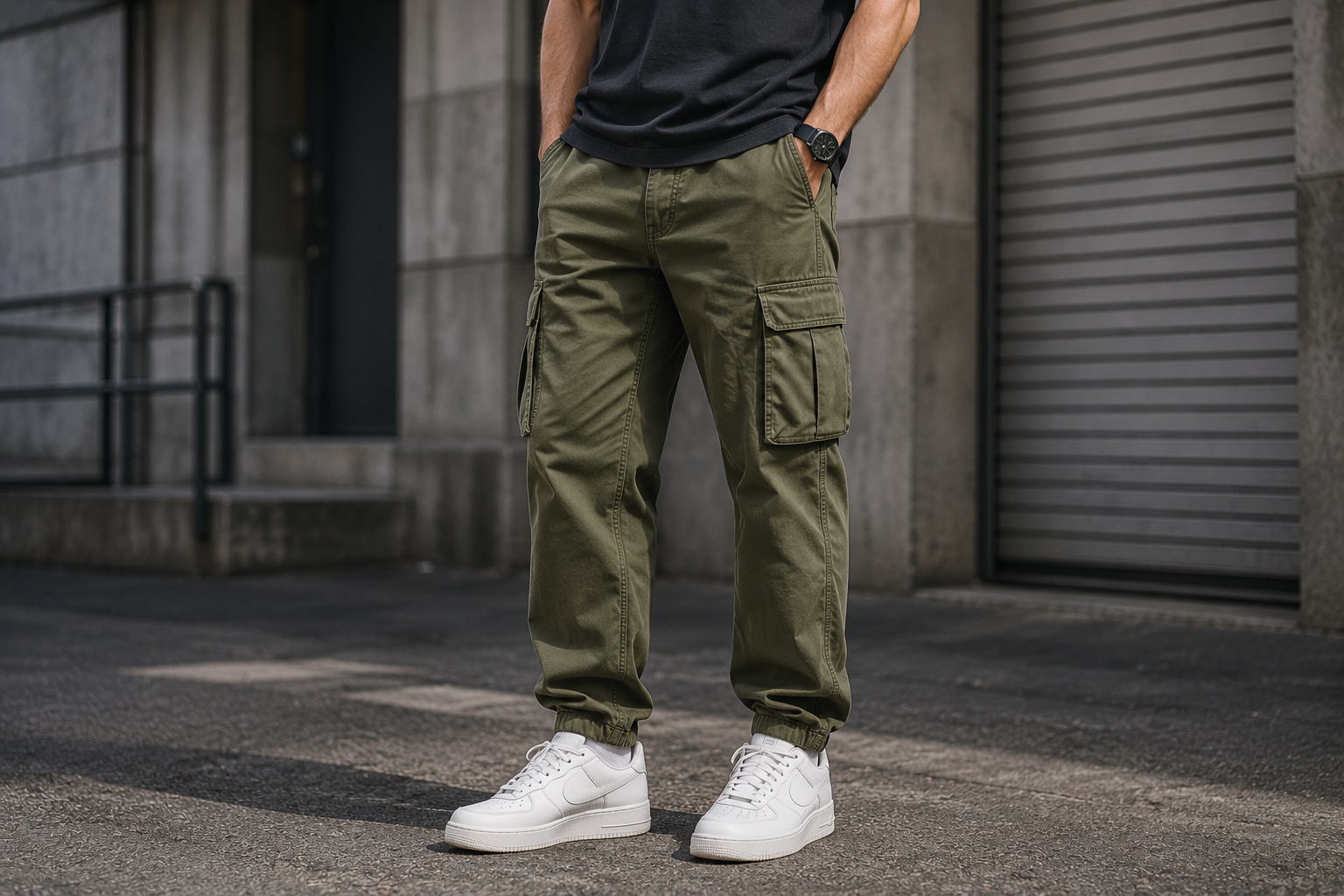
As the military wear, cargo pants earned their right to be here due to pure functionality of these pants – the side pockets actually carry something. The modern cargo pants moved away from extremely baggy cut in the 2000s to the slimmer cut with a streetwear look. Cotton or canvas material suits everyday wearing while ripstop or water-repellent material is worth it if one is going to use this kind of pants for traveling or outdoor activities.
5. Joggers
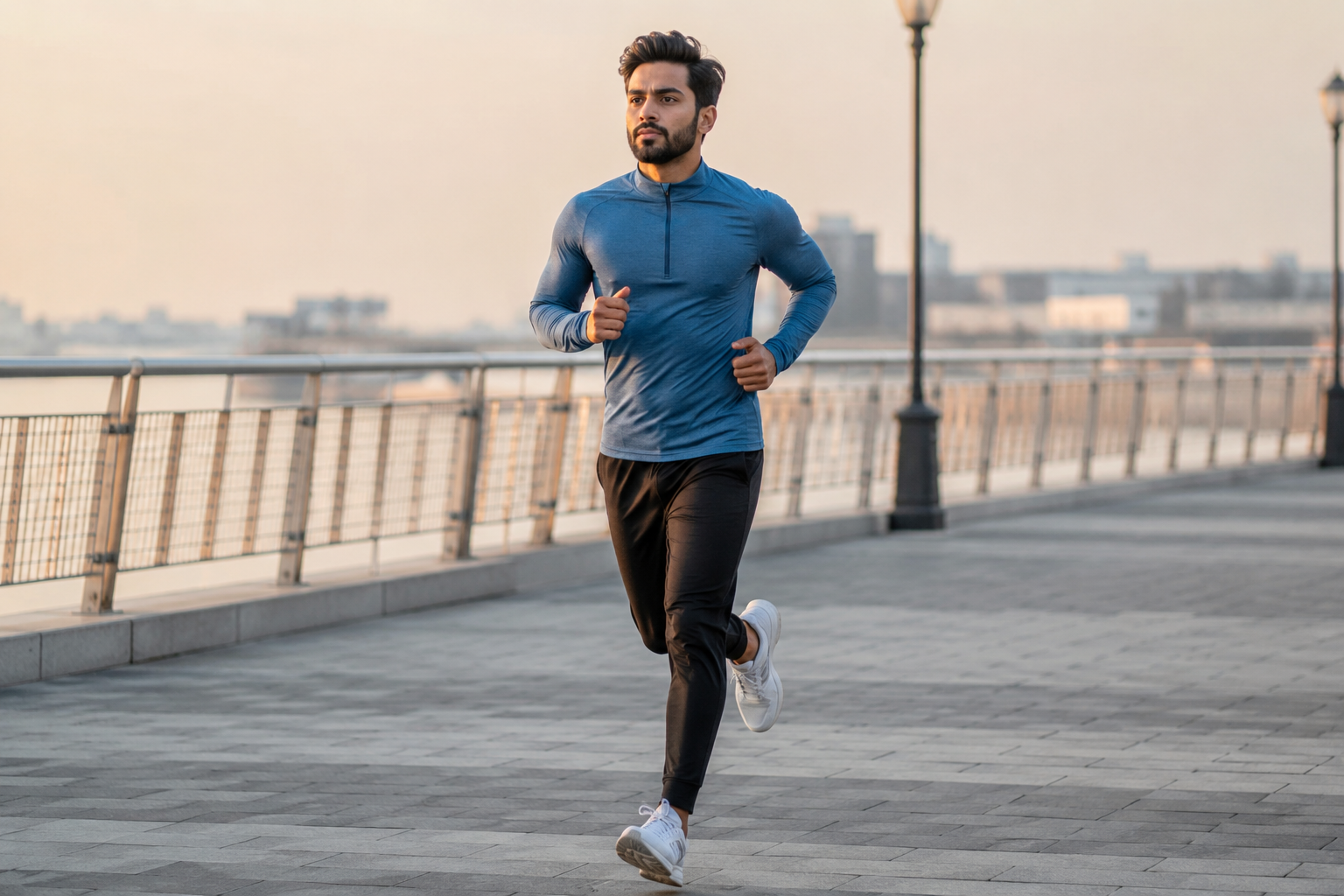
The jogging pants exist because sweatpants got a remake – the tapered shape, an elastic or drawstring waist, and often more slimmer design so they can be worn outside the gym. Cotton-blend joggers suit everyday wear and traveling while performance fabric joggers (moisture-wicking, four-way stretch material) are perfect for workouts.
6. Linen Pants
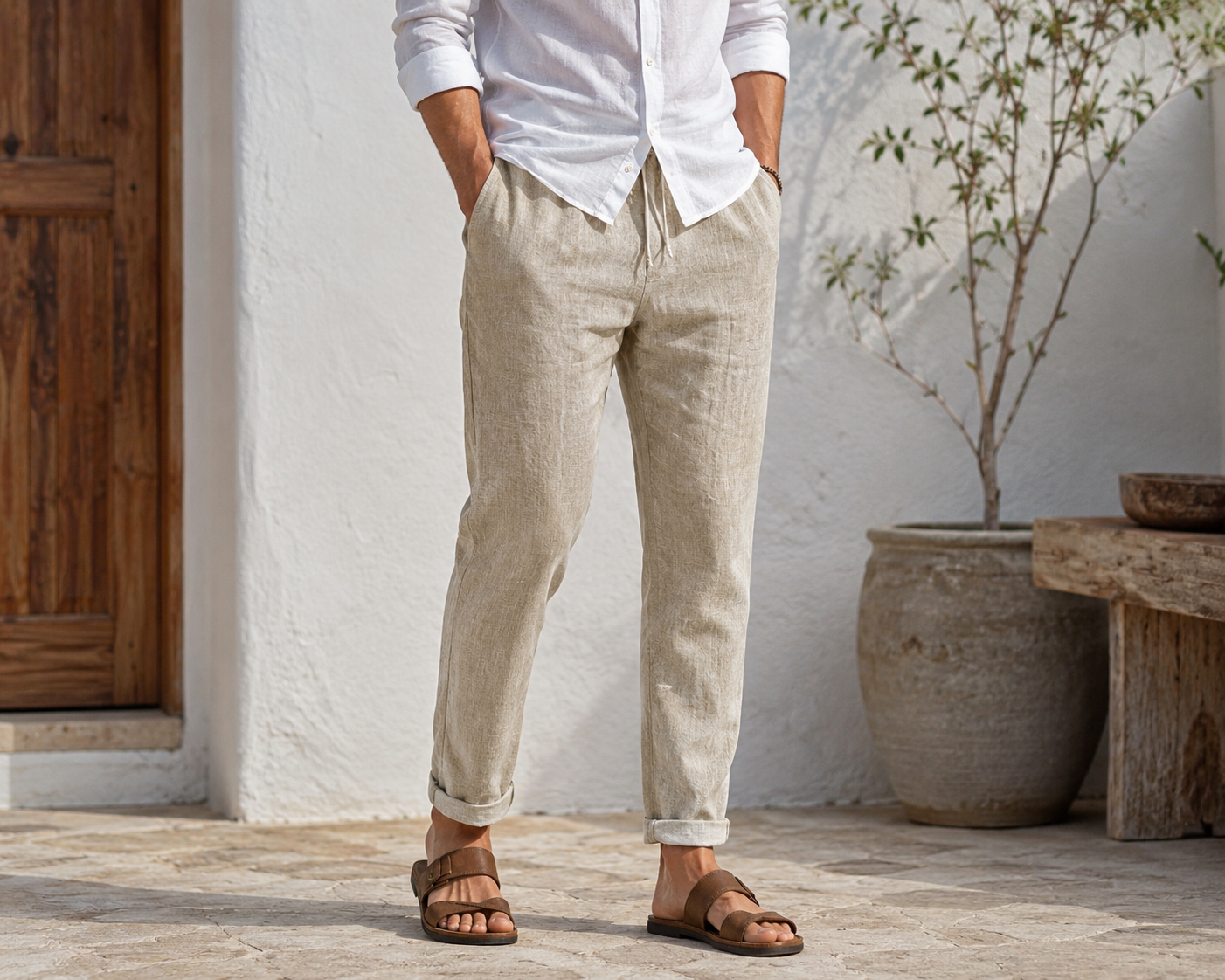
Linen is one of the few fabrics which literally breathe and hence it is the best choice of material in hot and humid climates. The fibers allow the airflow and the fabric dries quickly, however, it does wrinkle easily. That is the price you pay for such comfort, but people get used to wearing wrinkled linen pants and even consider it as a stylistic element. White, beige, and sand are perfect colors for linen pants.
7. Seersucker Pants
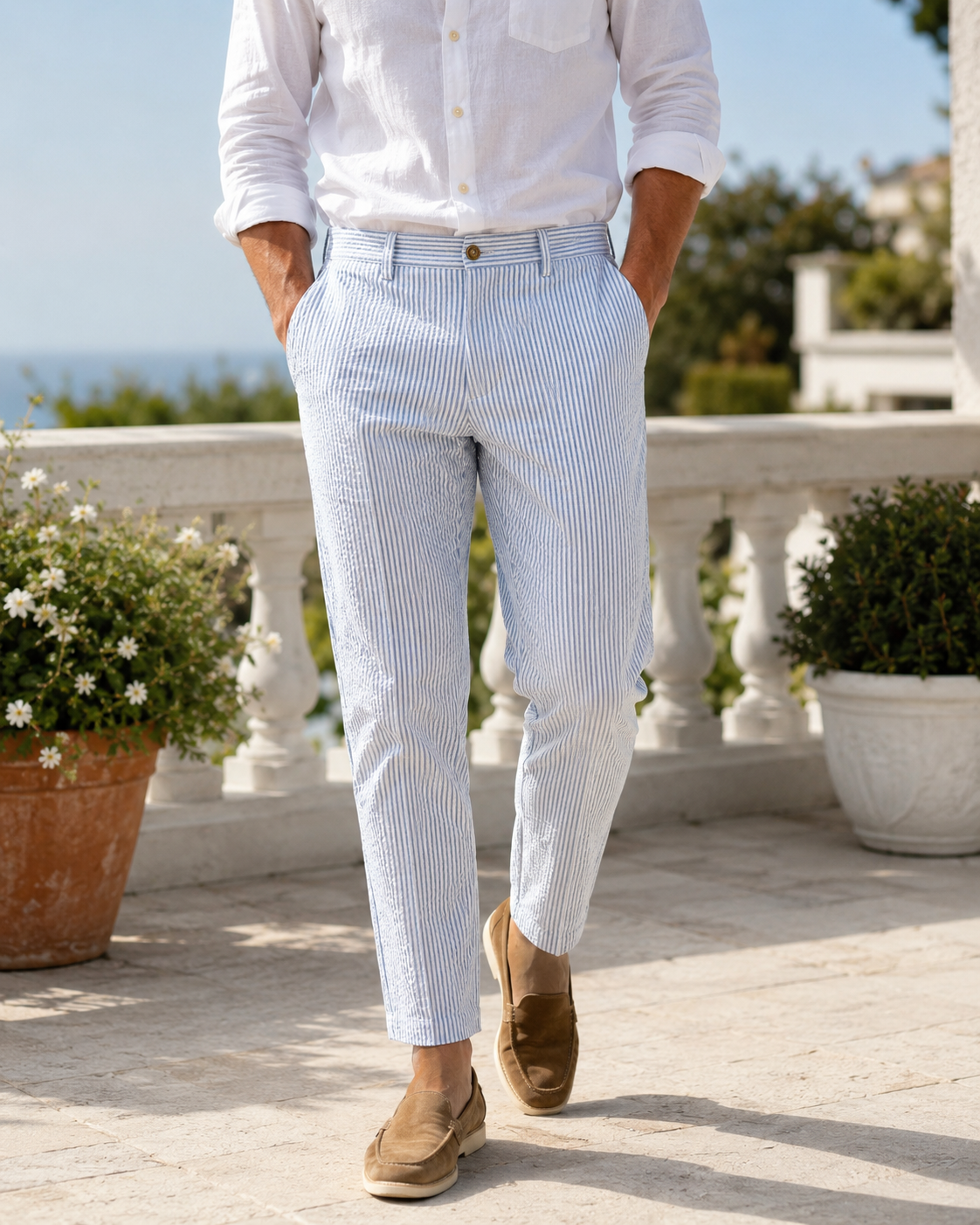
Seersucker’s signature puckered texture exists for a functional reason: the fabric barely touches the skin at certain points, which improves airflow in humid weather. It’s a lighter-weight, dressier alternative to linen — a good pick for summer weddings or daytime events where you need to look slightly more put-together than a linen pant allows.
8. Corduroy Pants
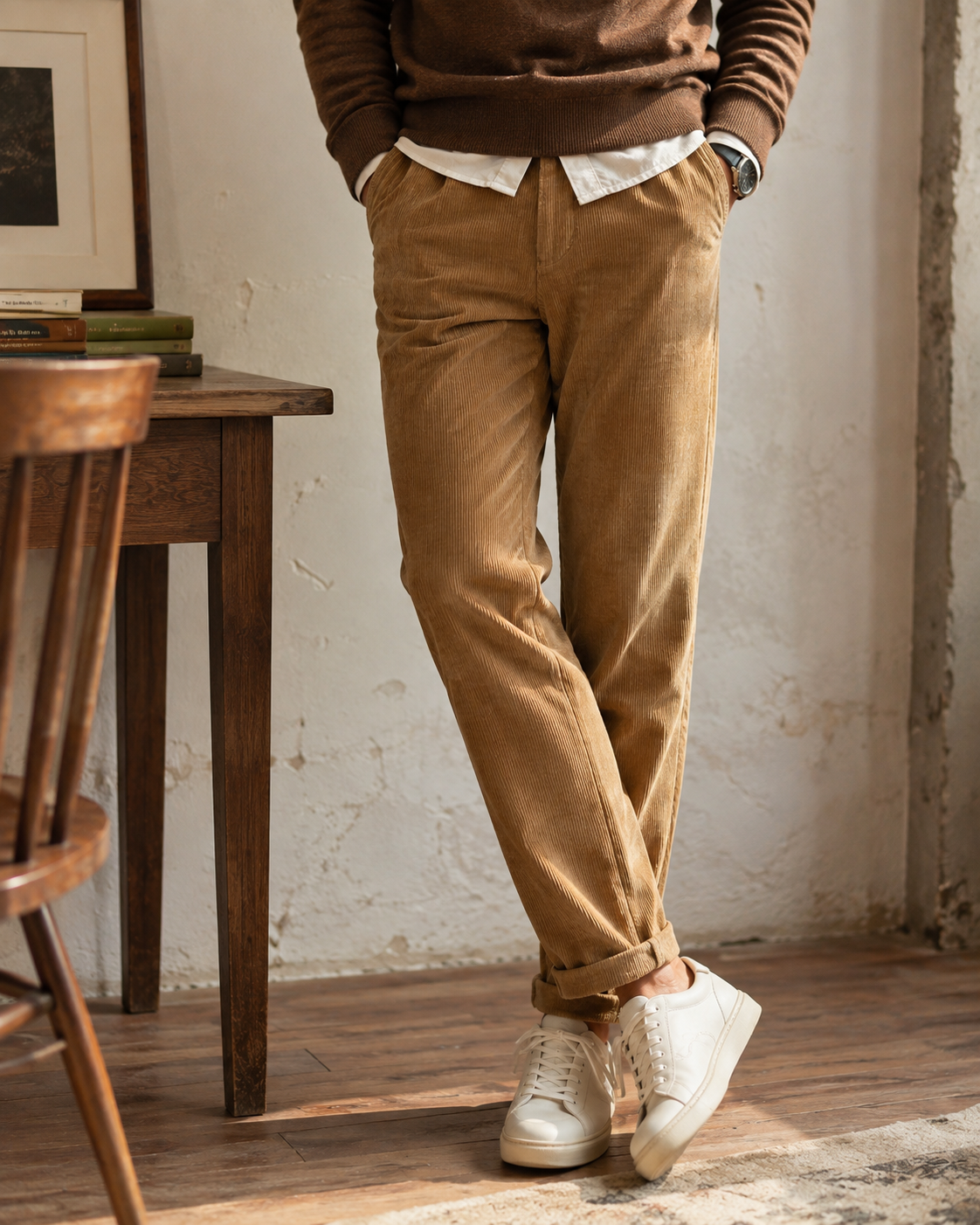
The ribbed texture is characteristic feature of corduroy pants (measured in “wales” or number of ridges per inch, wide wale is more casual, narrow – more dressy). Corduroy pants are the only ones on this list designed specifically for texture and warmth in cold weather. Corduroy suits perfectly for knitwear and denim jacket combination and olive, rust and brown colors are great for it.
9. Wool-Blend Trousers
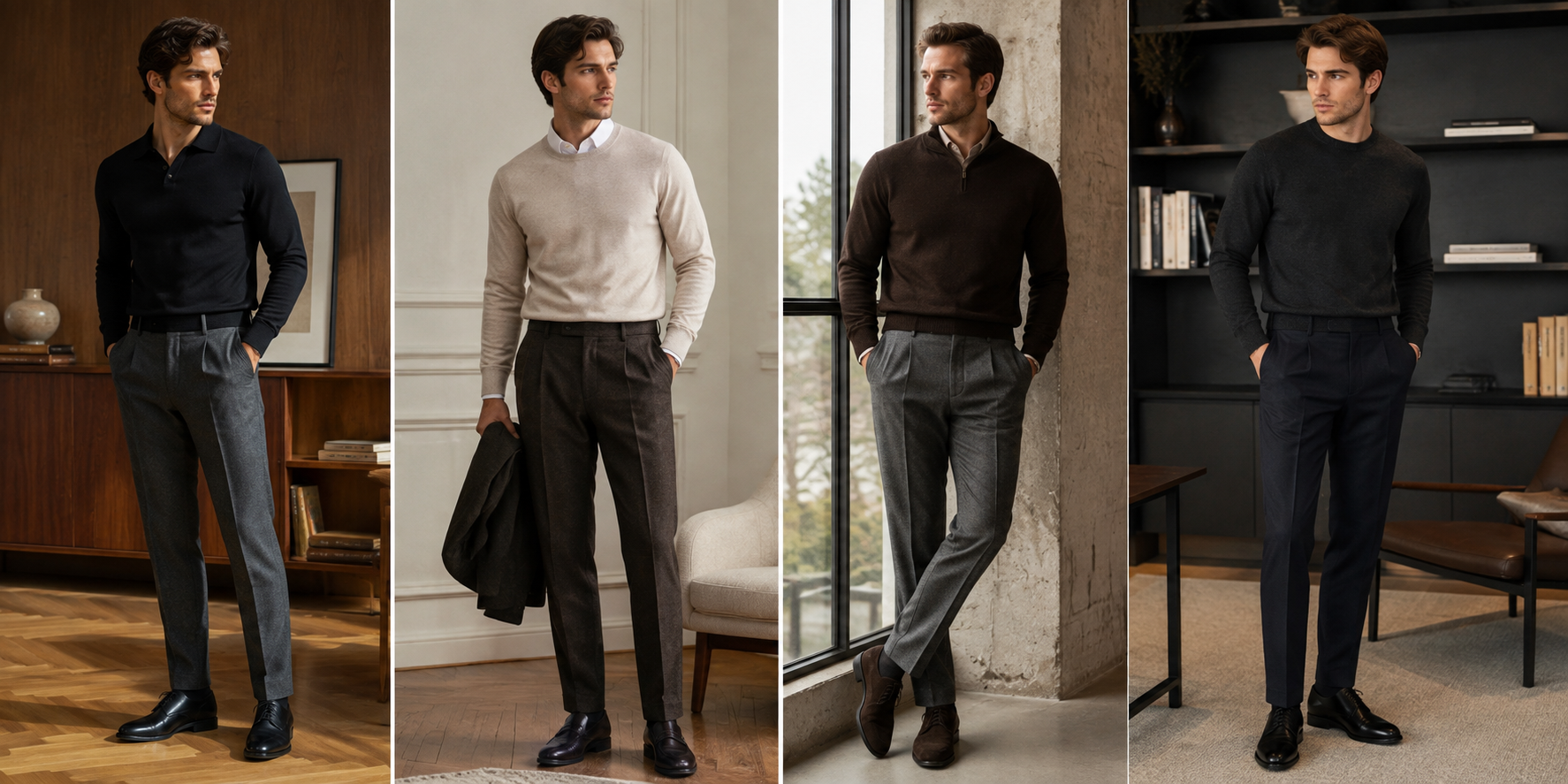
If you live in the climate where it is really cold or have an office with air conditioning, then you should consider wool blend trousers. Wool blend is more warm and insulating than cotton and holds a crease well. Charcoal and camel are popular colors for it and they can be worn all winter long.
10. Cropped Pants
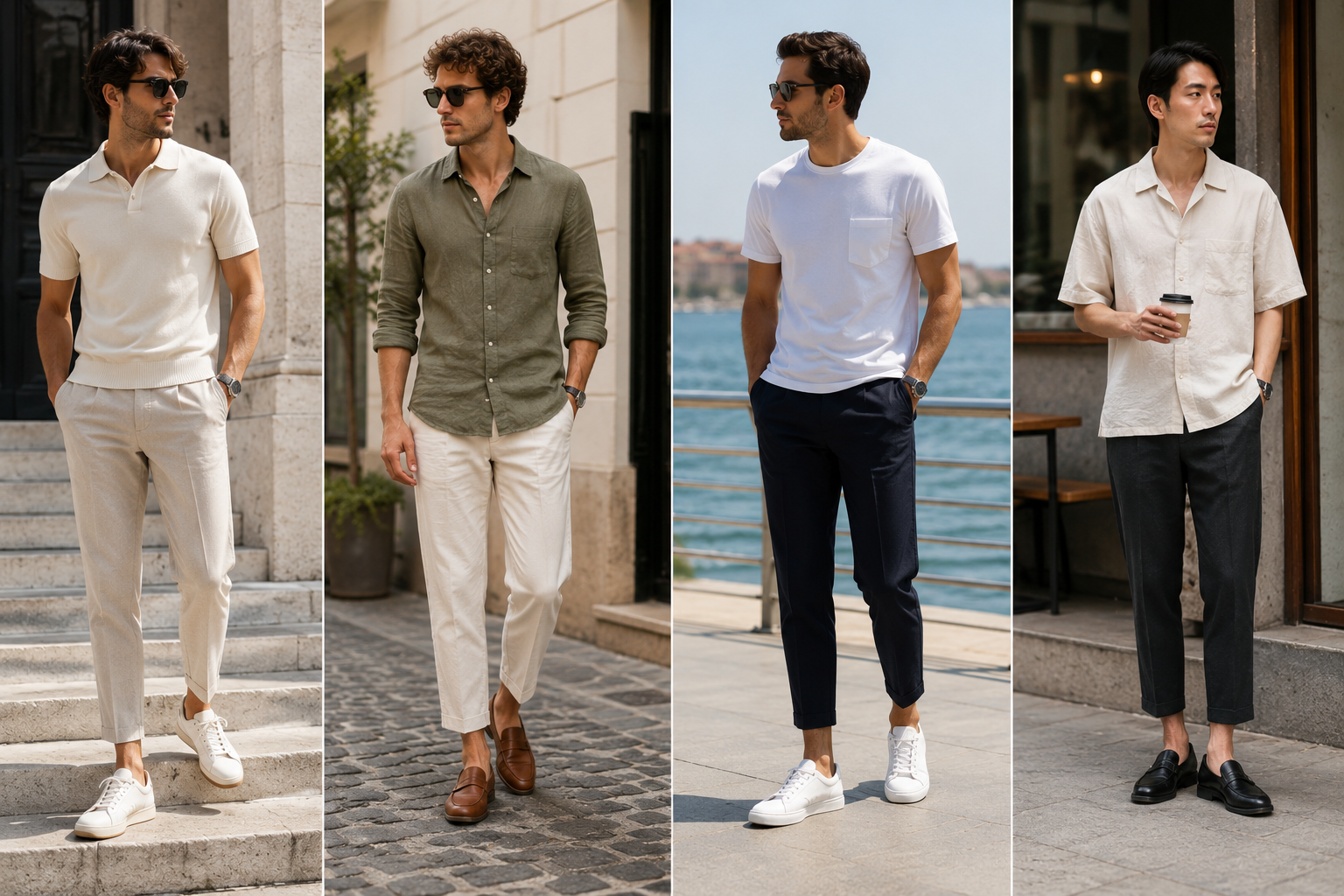
Cropped pants finish at the point just above ankles in order to show your sneakers, loafers or boots. Such pants are suitable in warm months and look great for average heights and shorter people, because exposed ankle makes the leg look longer than full-break pant.
11. Wide-Leg Pants
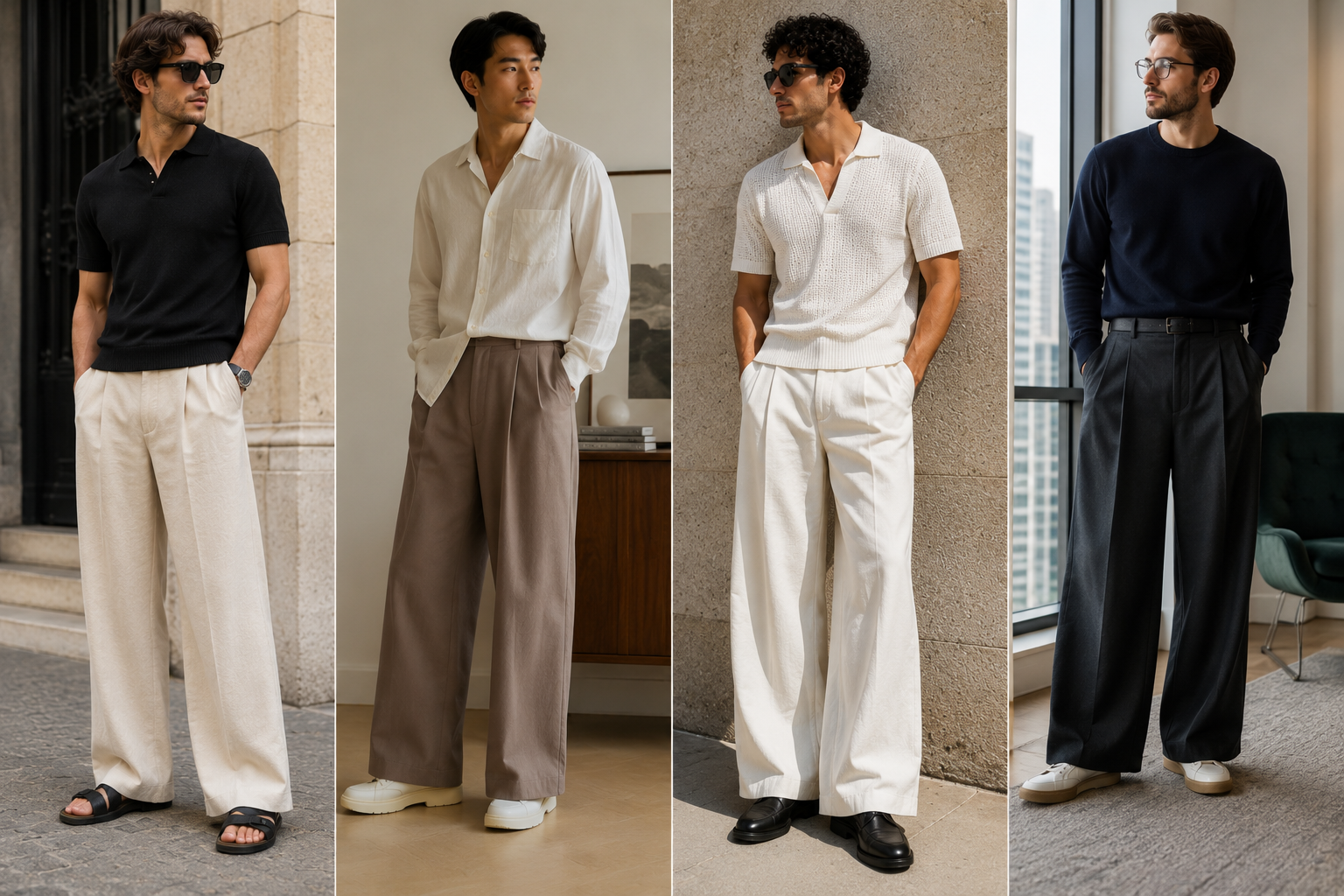
Perhaps the biggest fit trend in the last several years to reappear in menswear is wide legged pants, which replace the tailored silhouette with volume and ease of movement. They photograph extremely well, are cooler in warmer weather due to better airflow, and work very well on taller individuals; shorter individuals should be more careful because of the amount of fabric volume.
12. Track Pants and Parachute Pants
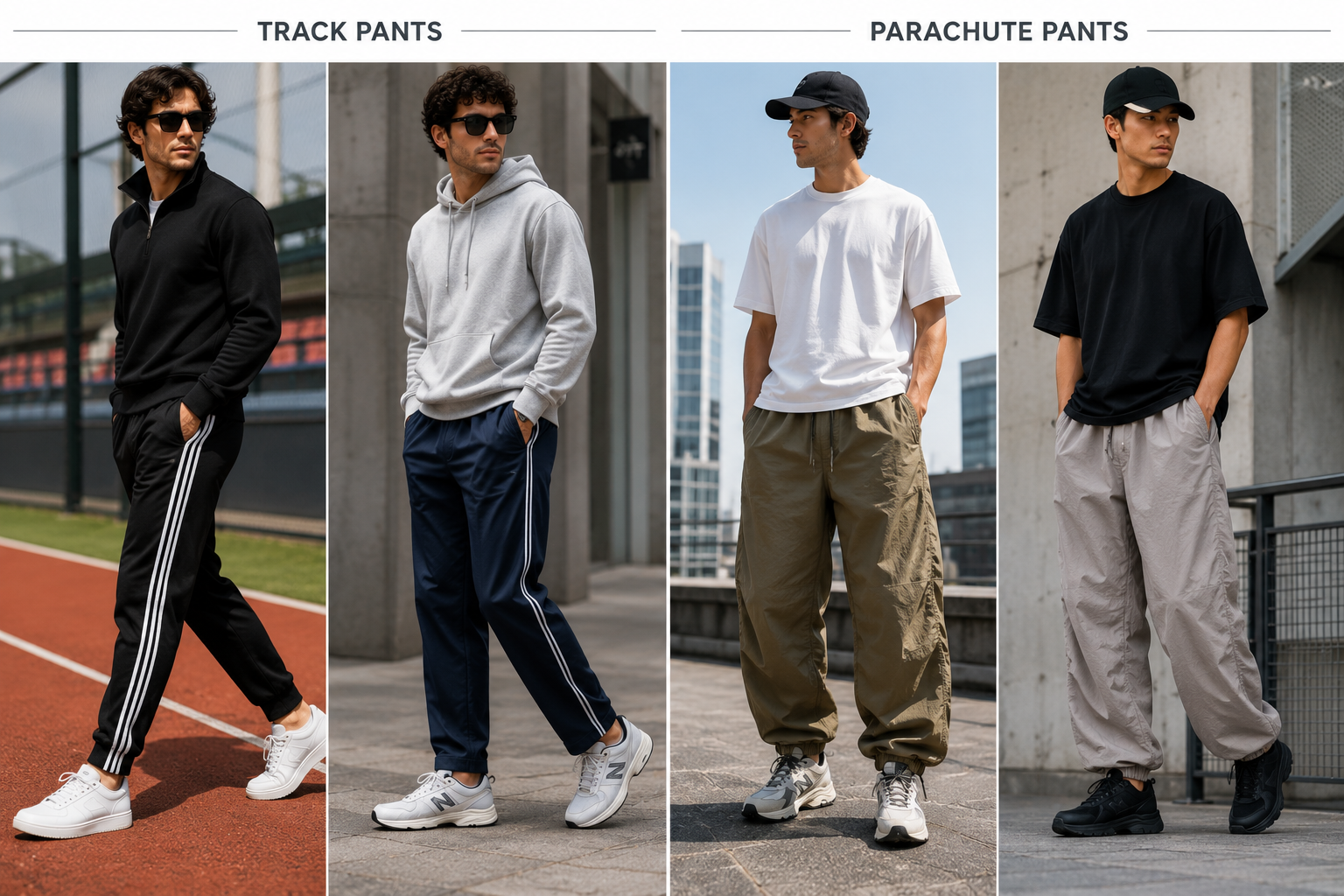
Both trackpants and parachute pants put emphasis on ease of movement and a sportier, streetwear-inspired look over structure. Parachute pants are made of light nylon, usually have ankle cuffs that can be adjusted using drawstrings, and a very loose silhouette inspired by ’90s and 2000s fashion trends. Trackpants are a little bit closer to athletic gear.
13. Drawstring Pants
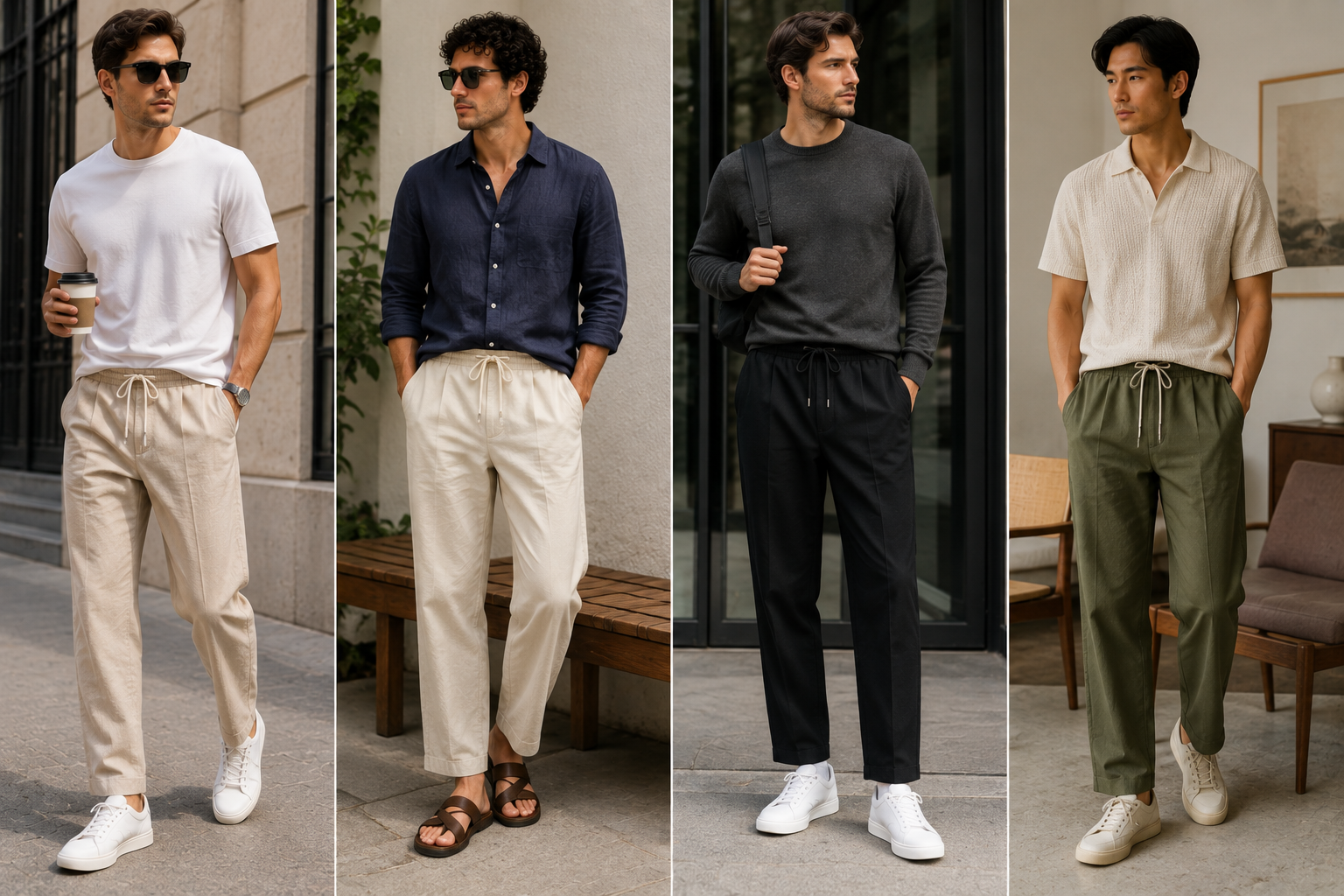
The presence of the drawstring waistband is the key feature that makes drawstring pants easy to wear and comfortable regardless of body type; that is why you will see drawstring waistbands used in joggers, cargo pants, and even loungewear. Drawstring pants made of lightweight cotton and linen are great travel pants since there is no need to wear a fitted waistband on an airplane.
14. Bell-Bottoms
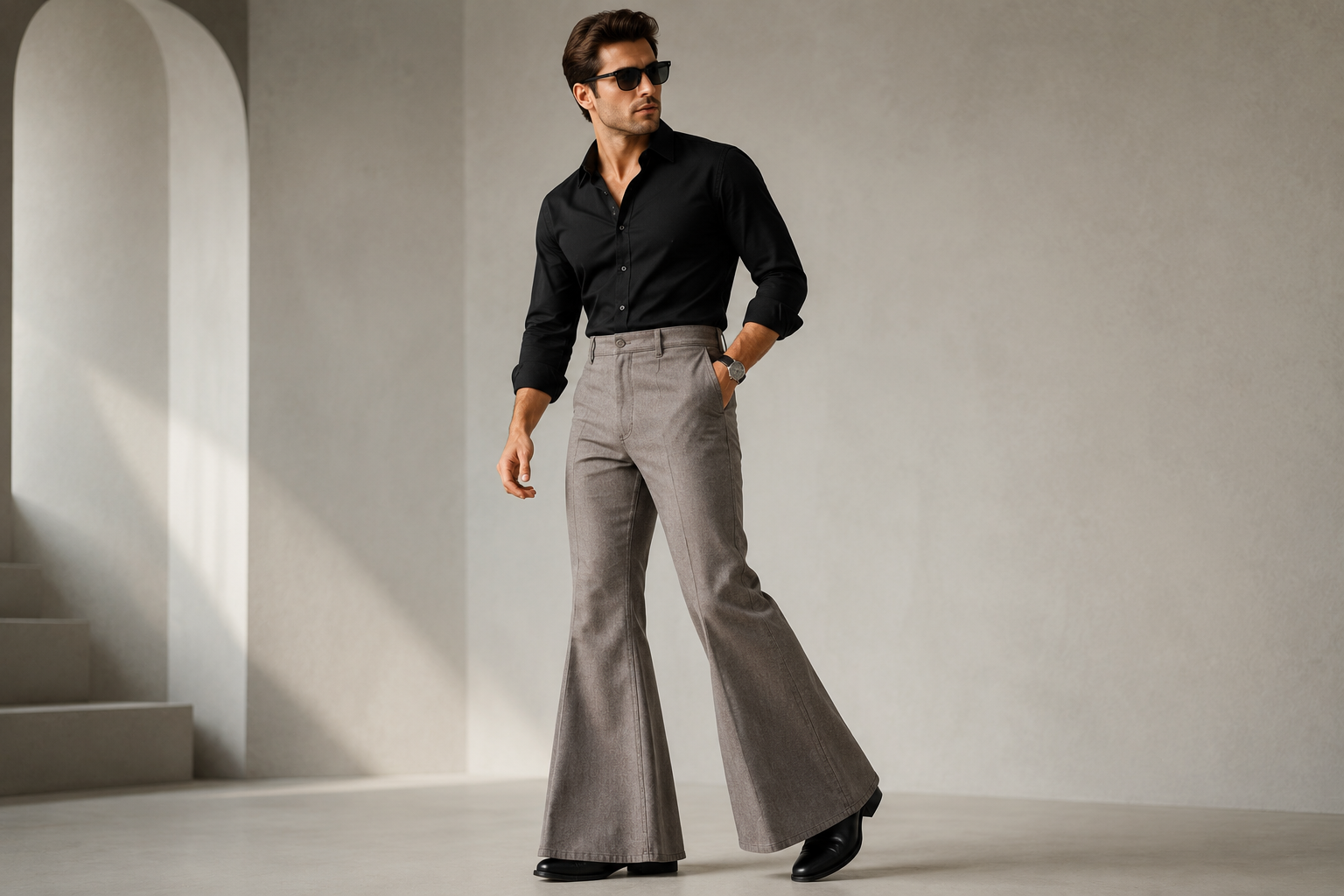
Bell-bottomed pants are the actual revival of ’70s fashion. Unlike the name implies, they flare only from the knee to the ankle, making the rest of the silhouette straight. Bell-bottomed pants require a lot more fashion confidence than most pants listed above; still, when worn with fitted tops and boots, they create a very distinct silhouette.
15. Shorts
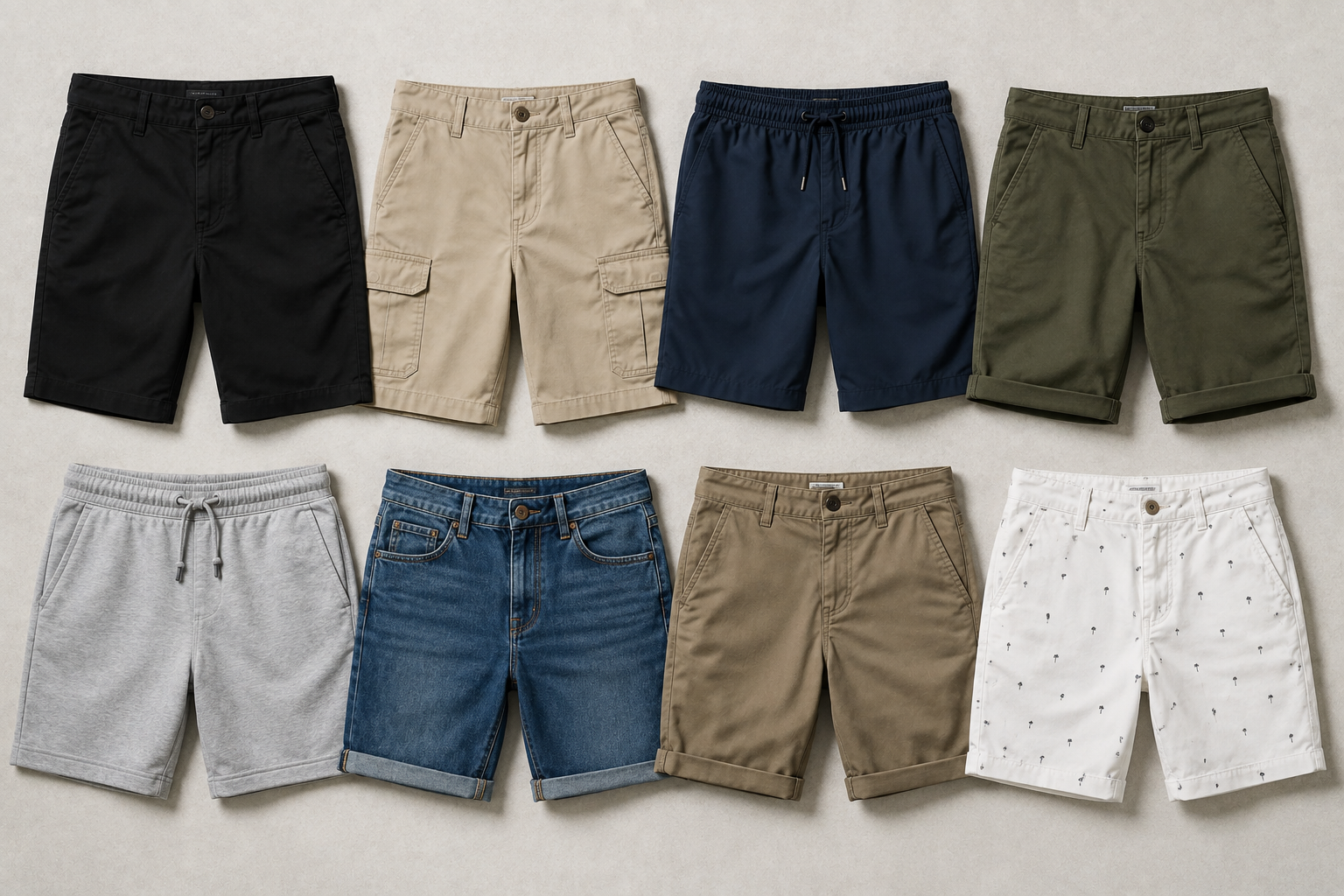
As the temperature increases, shorts replace pants entirely. While chino shorts look good enough for casual summer outings, athletic shorts are meant to be worn during training, while denim shorts are very much a casual weekend item. Length is important: the ones just reaching the knee look more modern than the shorter ones.
16. Swim Trunks
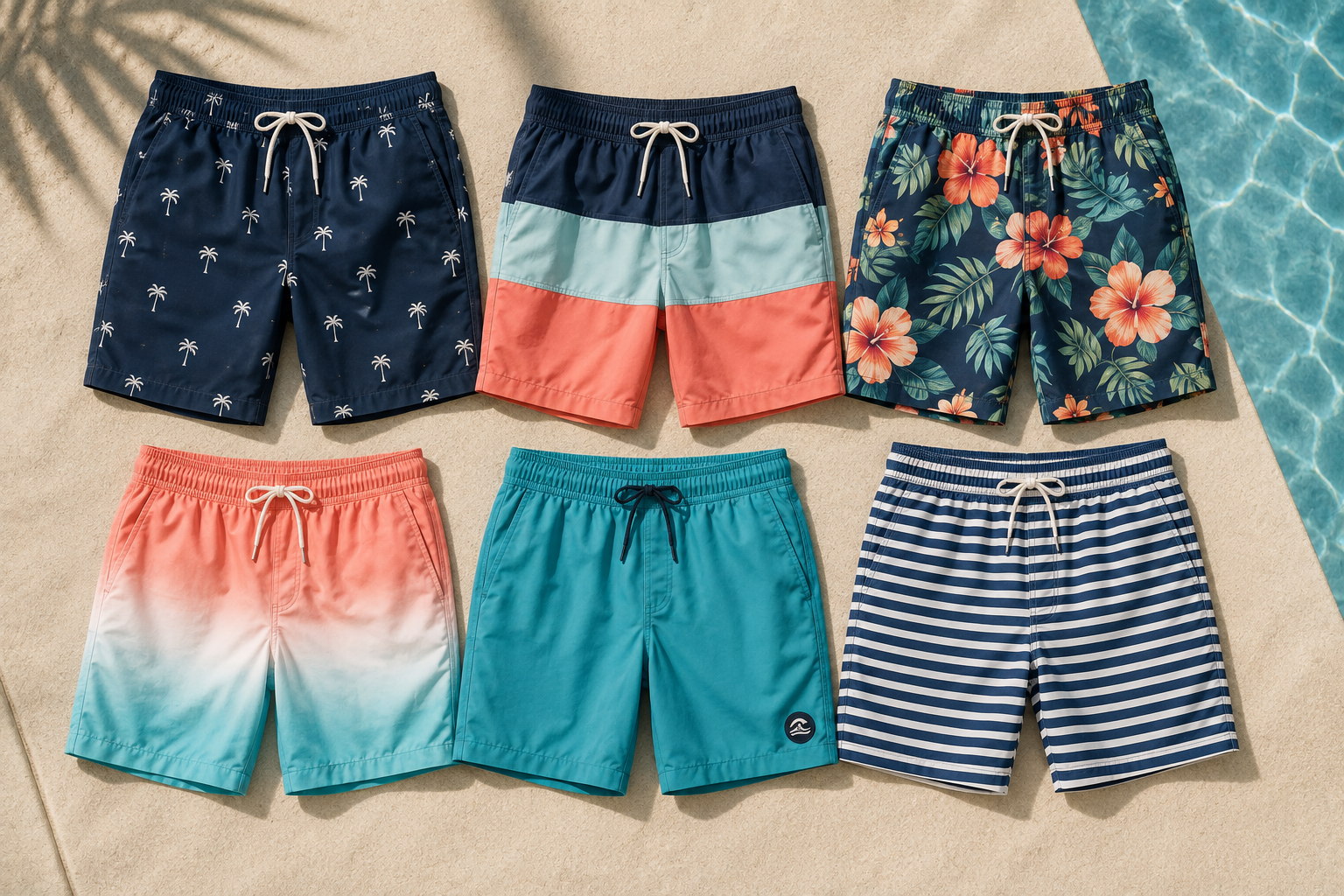
Since swim trunks are made for water, the fabric used includes fast-drying polyester and an elastic/drawstring waist, as well as mesh liner. The length of swim trunks fluctuates depending on the trend cycle, but mid-thigh is always the safest bet.
17. Gurkha Pants
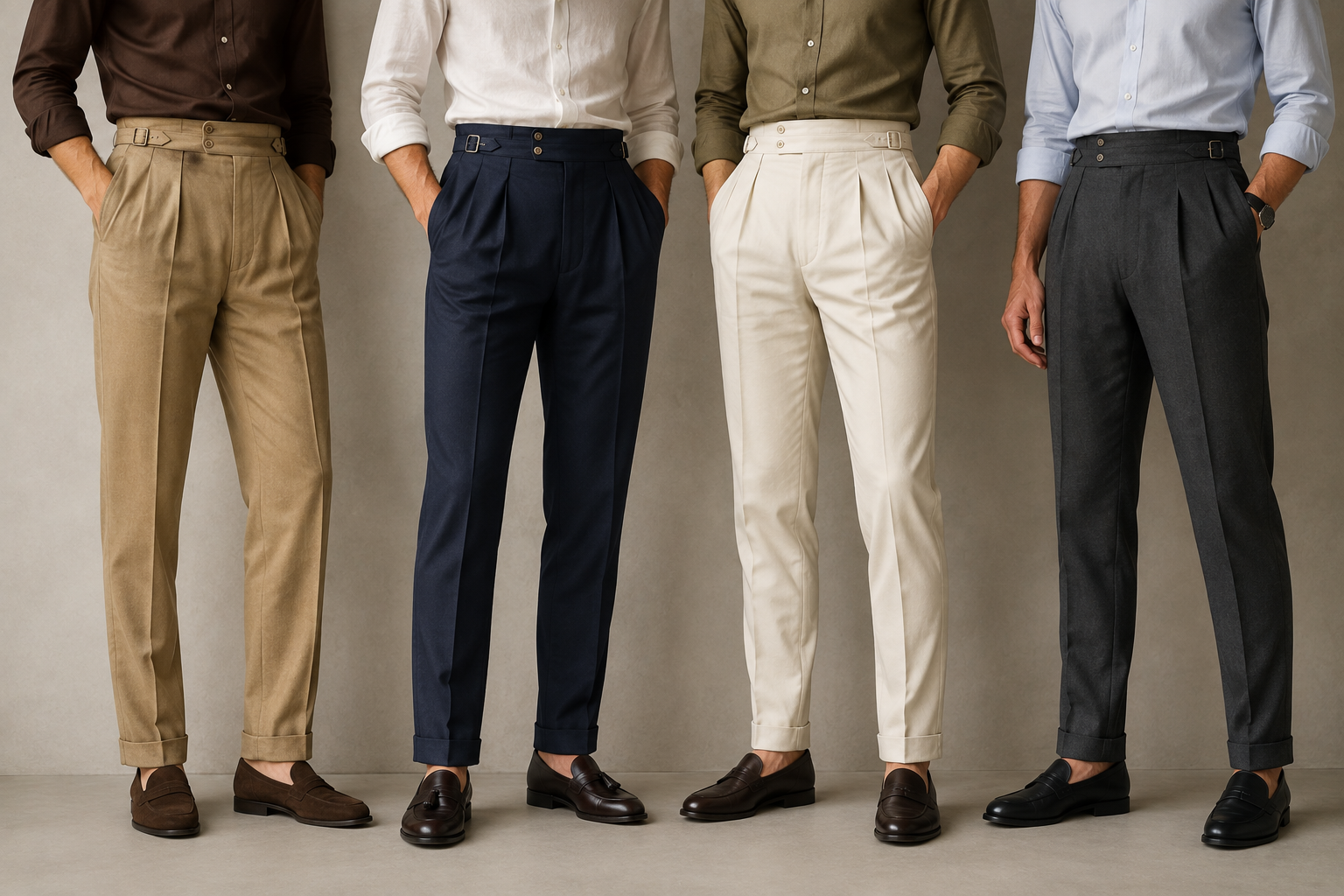
Gurkha pants are taken right from the military uniform designs and have a high waist with front pleats and a belt or button closure, no belt loops. Such pants became popular in “old money” and heritage-themed looks because the high waist and pleats make the pants appear to be more structured than regular trousers.
18. Utility Pants
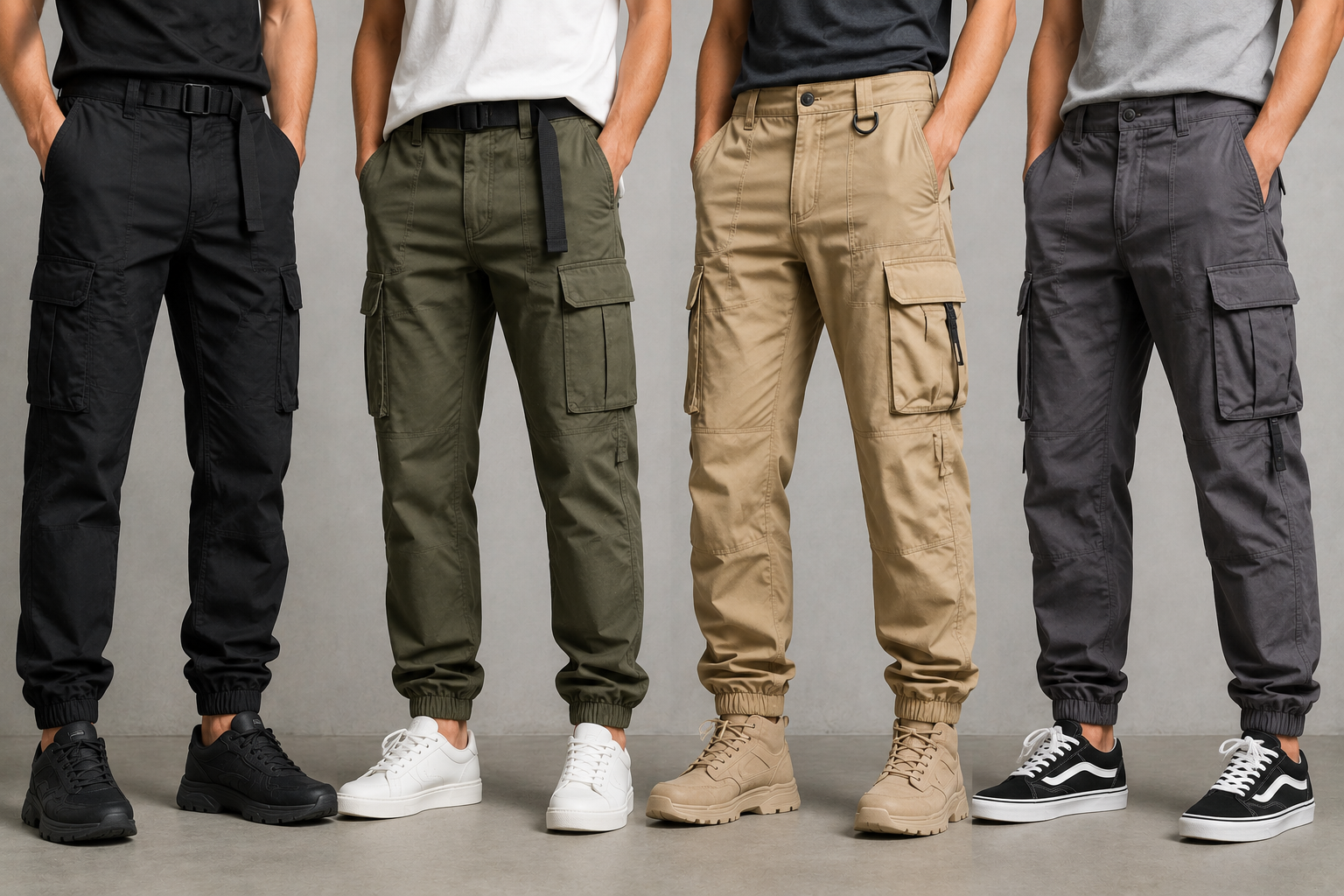
Utility pants are similar to cargo pants as far as workwear goes. However, unlike cargo pants, utility pants are made with durability and reinforced stitching in mind. Wear utility pants if you want pants that will stand the wear and tear of work/hiking or any other tough environment.
Pants for Hot, Humid Climates: What Actually Works
In the event that your location is hot and humid most of the time, the fabric is what is most important, not the style. From the most breathable to least, linen is the first, then lightweight cotton chinos and seersucker pants, then joggers. Denim and wool trousers must only be worn when indoors or in cooler weather as they trap heat quite easily. When out looking, one can always check the label for the materials, and those which are less than about 180 GSM of a natural material feel cooler.
FAQs
1.How many pairs of pants does a man need?
For a proper wardrobe, you need five to eight pairs of pants that fall into three categories – one or two dress trousers, two to three versatile pants (chinos, jeans) and two to three special occasions pants (linen trousers for summer, joggers for casual wear, cargos or shorts).
2.What is the difference between chinos and khakis?
Both are very similar: khaki is a color and more durable cotton twill fabric, while chinos are lighter and tailored fabric. However, nowadays both are used as synonyms and should be judged by material and style, not the name.
3.Can cargo pants look dressy?
It’s possible if you take slim or tapered cargo in neutral color, not baggy with multiple pockets and match it with fitted shirt and proper shoes like sneakers or boots.
4.Which pants suit men with broader body type?
Straight or relaxed fit on thighs that taper at the ankles are usually better than slim fit that is too tight and draws attention. Slim and skinny cuts will pull the trousers in the wrong place.
5.Are wide-leg pants appropriate for shorter guys?
Yes, but you should control volume and take high-rise, less voluminous pants with slightly tapered ankles to avoid overloading your figure. Wide-leg unstructured cuts better suit taller builds.
Related Post:
Wedding Formal Pant Shirt Style