
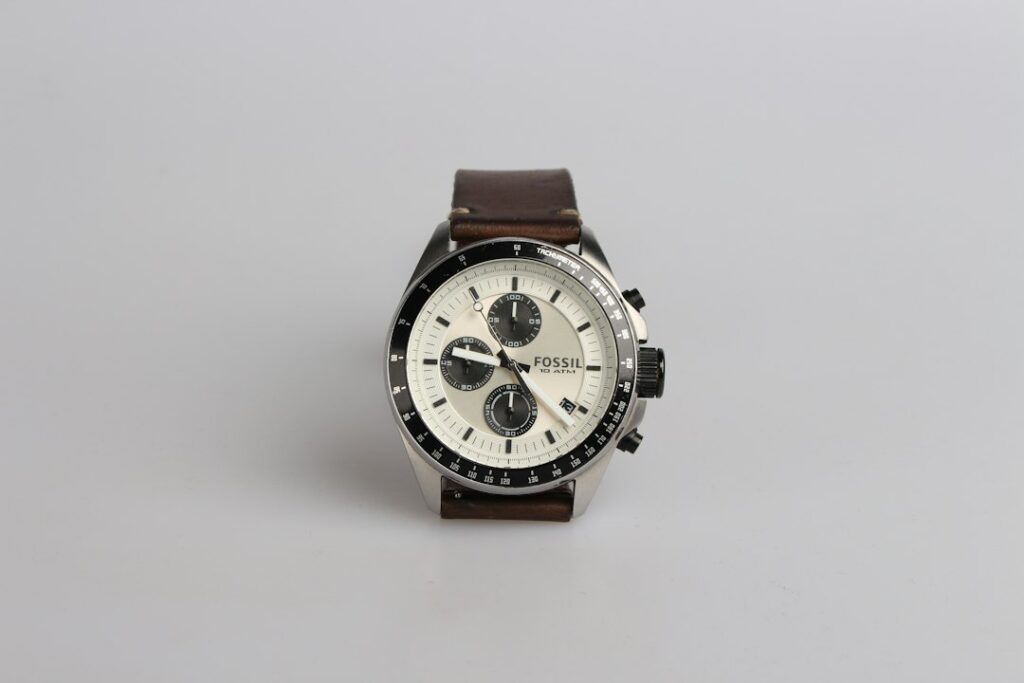
A watch tells the time, but it also says something about how you dress. The choice can feel overwhelming: analog or digital, quartz or automatic, dive or dress. This guide explains 20 types of watches, covering how they work and how they look, so you can pick one that suits your wrist, your budget and your day.
The table below matches six popular watch types to what they are best at.
| Type of watch | Best for | Main trade-off |
|---|---|---|
| Quartz | Accuracy and low upkeep | Needs a battery |
| Automatic | Craft and wearing daily | Costs more, needs servicing |
| Smartwatch | Notifications and fitness | Frequent charging |
| Dress watch | Formal outfits | Limited water resistance |
| Dive watch | Water and rough use | Thicker and heavier |
| Digital watch | Sport and quick reading | Less formal look |
1. Analog watch

An analog watch shows the time with hands moving over a dial. It is the classic style and suits formal and casual outfits. Look for a clear dial with hour markers that are easy to read at a glance.
2. Digital watch

A digital watch shows the time as numbers on a screen. It is easy to read and often includes a stopwatch, alarm and backlight. Digital watches suit sport and casual wear.
3. Smartwatch

A smartwatch connects to your phone and shows notifications, tracks activity and sometimes your heart rate. It needs charging every day or every few days. It suits people who want fitness tracking and messages on their wrist.
4. Fitness tracker
A fitness tracker is a slim band focused on steps, sleep and workouts. It has fewer apps than a smartwatch but usually lasts longer between charges, and it costs less.
5. Hybrid smartwatch
A hybrid smartwatch looks like a traditional analog watch but includes basic smart features such as activity tracking and notifications. The battery lasts longer than a full smartwatch.
6. Quartz watch
A quartz watch uses a battery to send a small electric pulse through a quartz crystal, which keeps very steady time. Quartz watches are accurate, affordable and need little maintenance apart from a battery change every few years.
7. Mechanical (hand-wound) watch
A mechanical watch runs on a spring that you wind by turning the crown. It has no battery. It is valued for craftsmanship, and it needs regular winding and servicing.
8. Automatic watch

An automatic watch is mechanical, but the motion of your wrist winds the spring for you. If you do not wear it for a day or two, it can stop and needs resetting. It suits people who wear one watch regularly.
9. Solar watch
A solar watch charges its battery from light, so it rarely needs a battery change. It is a practical choice if you want low upkeep and spend time outdoors or near windows.
10. Dress watch

A dress watch is slim, simple and elegant, often with a leather strap and a plain dial. It fits under a shirt cuff and suits formal events and offices. It is not made for water or rough use.
11. Dive watch

A dive watch is built to resist water at depth and has a rotating bezel for timing. It is tough, easy to read in low light and works well as an everyday sport watch. Check the water-resistance rating, since it varies between models.
12. Chronograph

A chronograph has a built-in stopwatch, operated by pushers on the side, with small sub-dials on the face. It looks busy and sporty and is useful for timing events.
13. Pilot watch
A pilot watch has a large, high-contrast dial and big numerals so it can be read quickly. Many have large crowns that are easy to use with gloves. It suits casual and smart-casual outfits.
14. Field watch
A field watch is simple and rugged, with a clear dial, strong lume and a hard-wearing strap. It was designed for soldiers and now suits anyone who wants a no-fuss everyday watch.
15. GMT watch
A GMT watch shows a second time zone using an extra hand. It is handy if you travel often or keep in touch with people in another country.
16. Skeleton watch

A skeleton watch has a dial cut away so you can see the movement inside. It looks intricate and is popular as a conversation piece, though the busy dial can be harder to read.
17. Moon phase watch
A moon phase watch has a small window showing the current phase of the moon. It is decorative and traditional and suits people who like fine detail on a dial.
18. Racing watch
A racing watch is a chronograph with a tachymeter scale around the edge of the dial. It has a sporty look and suits casual outfits and people who like motorsport.
19. Pocket watch

A pocket watch is carried in a pocket and attached to a chain. It is a traditional, old-fashioned accessory and suits waistcoats and formal or vintage outfits.
20. Kids’ watch
A kids’ watch is light, colourful and tough, often with a simple dial to help children learn to tell time. Look for a soft strap and a secure clasp.
How to choose the right watch
Start with how you will wear it. A dress watch suits offices and formal events, a dive or field watch suits everyday and outdoor use, and a smartwatch suits people who want fitness tracking.
Then choose the movement. Quartz is accurate and cheap to run, automatic watches offer craft and a smooth sweep, and solar watches need little upkeep. Decide how much maintenance you are happy with.
Check size and fit. A case diameter of around 36 to 42 millimetres suits many wrists, but the best size depends on yours. The watch should sit flat on your wrist without sliding, and a thin case will slip under a cuff more easily.
Match the strap to your outfits. Leather suits smart and casual wear, metal bracelets suit almost everything, and rubber or fabric straps suit sport. Finish the look with matching shoes and a bag from our guide to types of bags. For more accessories, see types of sunglasses.
How to care for your watch
Wipe the case and strap with a soft cloth. Keep leather straps away from water and sweat. Check the water-resistance rating before swimming, and do not press buttons underwater unless the watch is made for it. Quartz batteries should be replaced by a professional, and mechanical watches usually need servicing every few years.
FAQs
What are the main types of watches?
By movement, the main types are quartz, mechanical, automatic and solar. By style, they include analog, digital, smart, dress, dive and chronograph watches.
What is the difference between a quartz and an automatic watch?
A quartz watch runs on a battery and is very accurate. An automatic watch has no battery and winds itself from the movement of your wrist.
Which watch is best for everyday wear?
A field watch, a simple analog quartz watch, or a solar watch is a practical choice, because each is tough and needs little upkeep.
Is a smartwatch better than a regular watch?
It depends on what you want. A smartwatch adds fitness tracking and notifications but needs frequent charging. A regular watch lasts longer and suits formal outfits better.
About the author
Dev Panchal is a fashion and lifestyle enthusiast with an interest in clothing trends, personal style, and everyday fashion inspiration. Through Fashiqa, he shares practical styling tips, outfit ideas, fashion guides, and lifestyle articles to help readers discover new trends and make confident style choices.
Last updated: October 2026 | More from Dev | About Fashiqa