
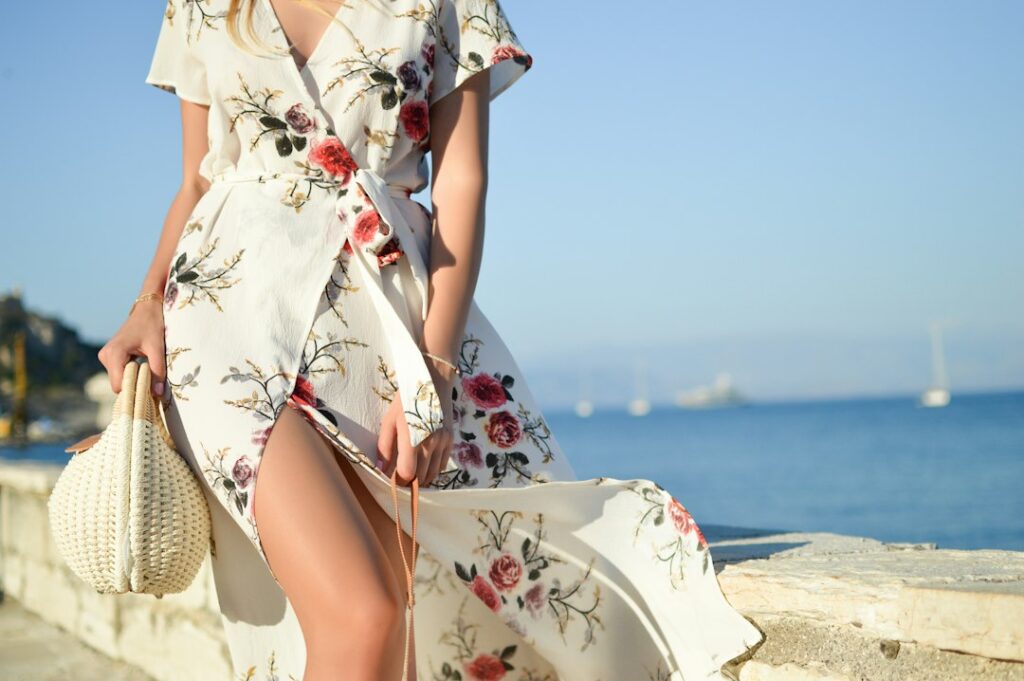
A dress is the simplest outfit to put on, but the names can be confusing. A sheath, a shift and a bodycon can all look similar on a hanger and fit very differently on the body. This guide explains the main types of dresses, how each one is cut, and which occasions and shoes suit them, so you can choose with confidence.
The table below matches six common dresses to the situations they handle best.
| Type of dress | Best for | Pairs well with |
|---|---|---|
| A-line dress | Work, dinners, everyday | Flats, block heels |
| Wrap dress | Smart-casual, brunch | Sandals, ankle boots |
| Maxi dress | Holidays, warm days | Flat sandals |
| Bodycon dress | Parties, nights out | Heels, clutch |
| Shirt dress | Office, casual days | Sneakers, loafers |
| Ball gown | Formal events, weddings | Heels |
1. A-line dress

An A-line dress is fitted at the shoulders and bust, then widens gently to the hem, like the letter A. It flatters most body shapes and works for the office, dinners and everyday wear. Flats or block heels both suit it.
2. Sheath dress
A sheath dress follows the body’s line without clinging, usually with a knee-length hem and a structured cut. It is a classic work dress. Add a blazer and neat heels for formal settings.
3. Shift dress
A shift dress hangs straight from the shoulders with little shaping at the waist. It is easy to wear and comfortable, and it suits casual days and warm weather. A belt can add shape if you want it.
4. Wrap dress
A wrap dress crosses at the front and ties at the waist, so you control how snug it feels. The V-neckline and defined waist suit many shapes. It works for brunch, work and casual events.
5. Maxi dress

A maxi dress reaches the ankles or the floor. It is cool, comfortable and good for holidays and warm days. Hem length matters, so check that it clears the ground in the shoes you plan to wear.
6. Midi dress

A midi dress ends between the knee and the ankle. It looks polished without being too formal, and it suits the office, dinners and weddings. Slim heels or ankle boots balance the length.
7. Mini dress

A mini dress ends above the knee. It is a good pick for summer, parties and casual outings. Choose a fabric with some weight so it does not ride up when you walk.
8. Bodycon dress
A bodycon dress is close-fitting and stretchy, and it follows every curve. It suits parties and evenings out. Pick a thicker knit if you prefer a smoother look.
9. Fit-and-flare dress
A fit-and-flare dress is fitted through the bodice and waist, then flares out into a full skirt. It defines the waist and works for dates, parties and weddings.
10. Empire-waist dress
An empire-waist dress is fitted just under the bust and flows loosely from there. It is comfortable, skims the middle, and suits casual days, summer weddings and maternity wear.
11. Shirt dress

A shirt dress has a collar, buttons down the front and often a belt. It is practical and smart, which suits the office and casual days. Sneakers or loafers keep it relaxed. See our guide to types of shoes for more pairing ideas.
12. Slip dress

A slip dress is a slim, bias-cut dress with thin straps, usually in satin or silk. It looks elegant on its own and layers well under a jacket or over a T-shirt.
13. Peplum dress
A peplum dress has a short, flared ruffle at the waist. It adds shape to the hips and works well for office and dinner wear.
14. Ball gown

A ball gown has a fitted bodice and a very full skirt that reaches the floor. It is meant for the most formal events, such as galas and weddings. Plan how you will sit and move before you commit.
15. Mermaid dress
A mermaid dress fits closely through the body to the knee, then flares out into the skirt. It is dramatic and suits receptions and formal evenings, though it limits long strides.
16. Halter dress

A halter dress has straps that tie or fasten behind the neck, leaving the shoulders bare. It is cool in summer and shows off the shoulders and arms.
17. Off-shoulder dress
An off-shoulder dress sits below the shoulders and leaves them bare. It is light and feminine and suits beach days, parties and summer events. A snug elastic neckline helps it stay in place.
18. Skater dress
A skater dress is fitted at the top and ends in a flared, above-the-knee skirt. It is youthful and easy to move in, and it suits casual days and parties.
19. Kaftan dress
A kaftan is a loose, flowing dress, often with wide sleeves and embroidery or prints. It is comfortable in heat and works as beachwear or relaxed evening wear.
20. Anarkali dress
An Anarkali is a long, flared dress that fits snugly to the waist and falls in a full skirt, usually worn with a churidar. It is popular at festivals and weddings. For other Indian formal wear, see our guide to types of sarees.
How to choose the right dress
Start with the occasion. A sheath or A-line suits the office, a wrap or shirt dress suits casual days, and a ball gown or mermaid suits formal events. Then think about comfort: can you sit, walk and reach comfortably in it?
Check where the dress hits your body. The waistline should sit where your natural waist is, and the hem should fall at a length you like. Shoulder seams should sit at the edge of your shoulders. A tailor can fix hems and straps cheaply, but cannot easily fix a bodice that is too small.
Choose the fabric for the weather. Cotton and linen suit heat, crepe and jersey drape well, satin looks formal, and wool blends suit winter. Add a structured bag from our guide to types of bags, and if you want to pair the dress with trousers underneath for modesty or warmth, see types of pants for women.
How to care for dresses
Check the care label before washing, because satin, silk and embellished dresses often need gentle or dry cleaning. Hang structured dresses on padded hangers, and fold knits to avoid stretching. Store formal dresses in a breathable garment bag, away from direct sun.
FAQs
What are the most common types of dresses?
The most common are A-line, sheath, wrap, maxi, midi, mini and shirt dresses. Most other styles are variations of these.
Which dress suits most body types?
A-line and wrap dresses suit many shapes because they define the waist and skim the hips. Fit is more important than the style name.
What is the difference between a shift and a sheath dress?
A sheath dress follows the body’s shape with a fitted cut. A shift dress hangs straight and looser from the shoulders.
Which dress is best for a wedding guest?
A midi, maxi or fit-and-flare dress in a soft fabric is a safe choice. Avoid white and check the dress code on the invitation.
About the author
Dev Panchal is a fashion and lifestyle enthusiast with an interest in clothing trends, personal style, and everyday fashion inspiration. Through Fashiqa, he shares practical styling tips, outfit ideas, fashion guides, and lifestyle articles to help readers discover new trends and make confident style choices.
Last updated: October 2026 | More from Dev | About Fashiqa