
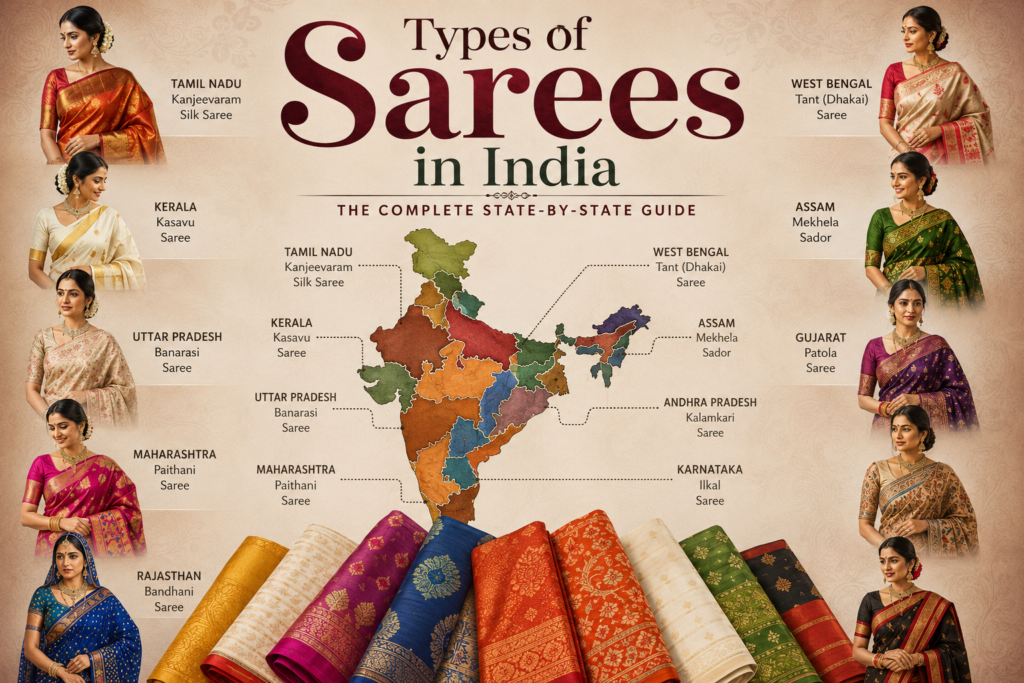
The saree is a six (or nine) yard-long unstitched cloth, yet somehow not a single state in India drapes, weaves, or embellishes it like any other. Travel from Kashmir to Kanyakumari, and you’ll see that the saree varies with the languages spoken, weather conditions, weaving methods, and purposes; silk in South India, cotton in Eastern India, tie & dye in Western India, and embroidery in North India.
In this guide, we’ve categorized the 40+ traditional sarees by their regions so that you get what you want, whether it be silk for weddings or cotton for everyday wear.
Quick Answer: How Many Types of Sarees Are There in India?
No single number exists since the figures differ from 30 to well over 100 depending on the type of regional weave included. However, the following information will help you to get acquainted with some 40+ varieties that are acknowledged worldwide.
North India
1. Banarasi Saree — Uttar Pradesh
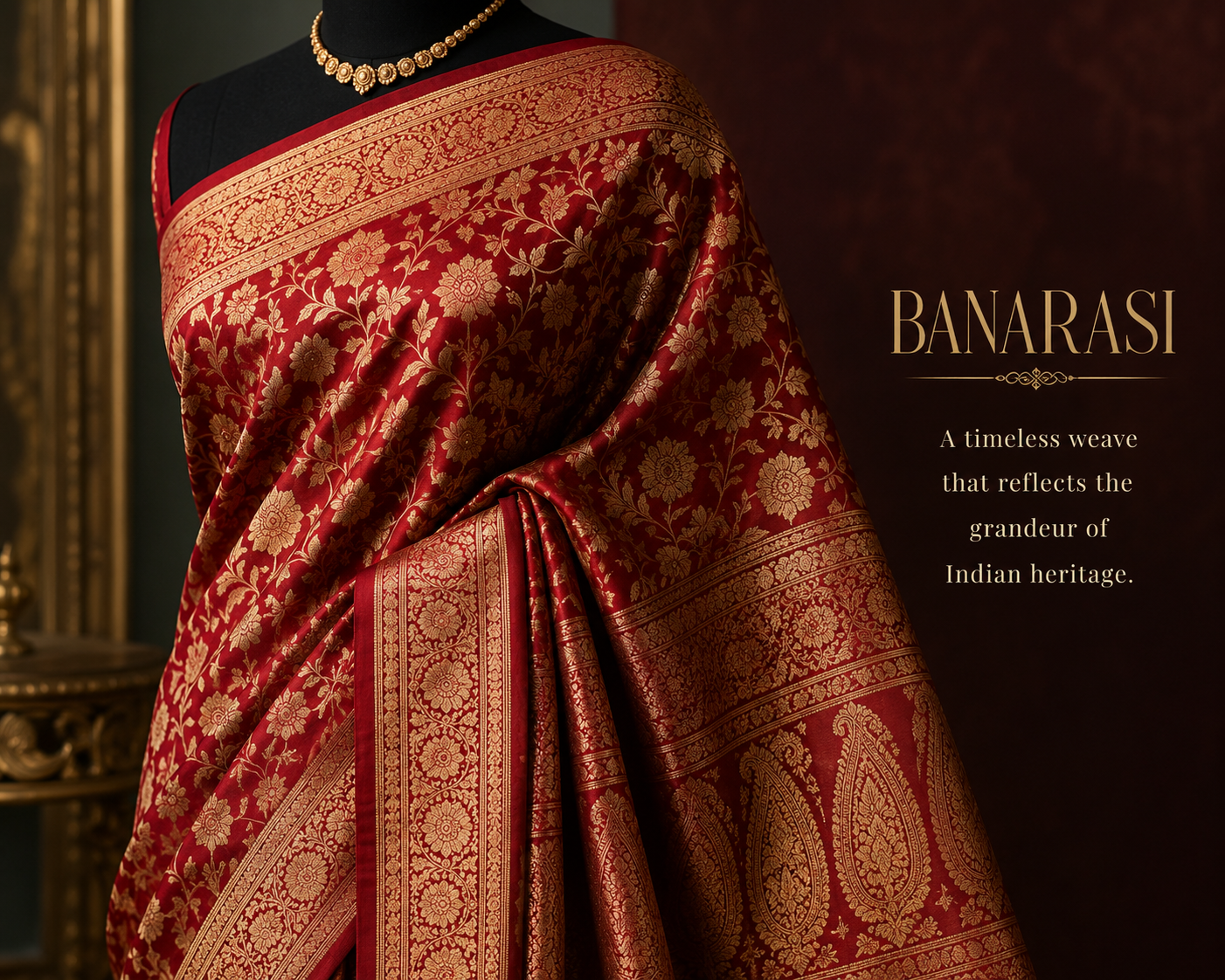
Made in Varanasi, the Banarasi is the saree every bride visualizes first in India. Based on the heritage of Mughal era brocade sarees using the gold and silver zari threads, which are weaved in floral jaal, kalga, and bel motifs. Some of the variations of the Banarasi in the family are pure Katan silk, Organza (Kora), Georgette and Shattir, all with varying weights and textures.
2. Chikankari Saree — Lucknow
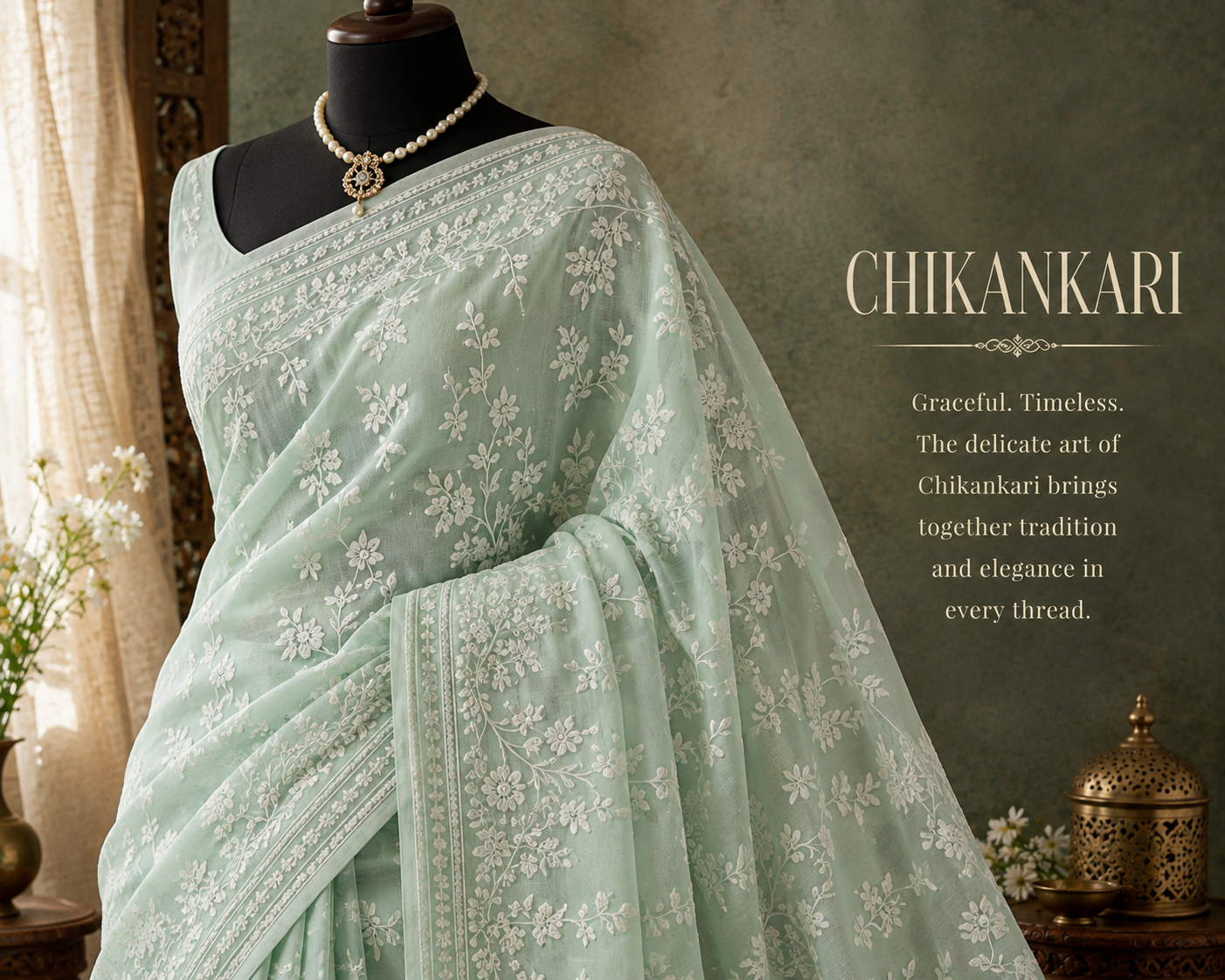
The technique of shadow work and stem stitch embroidery on fine cotton, muslin, and georgette, usually done in white-on-white colors but also found in soft pastel and rich jewel tones. Famous for its lightness and breathability.
3. Pashmina Saree — Jammu & Kashmir
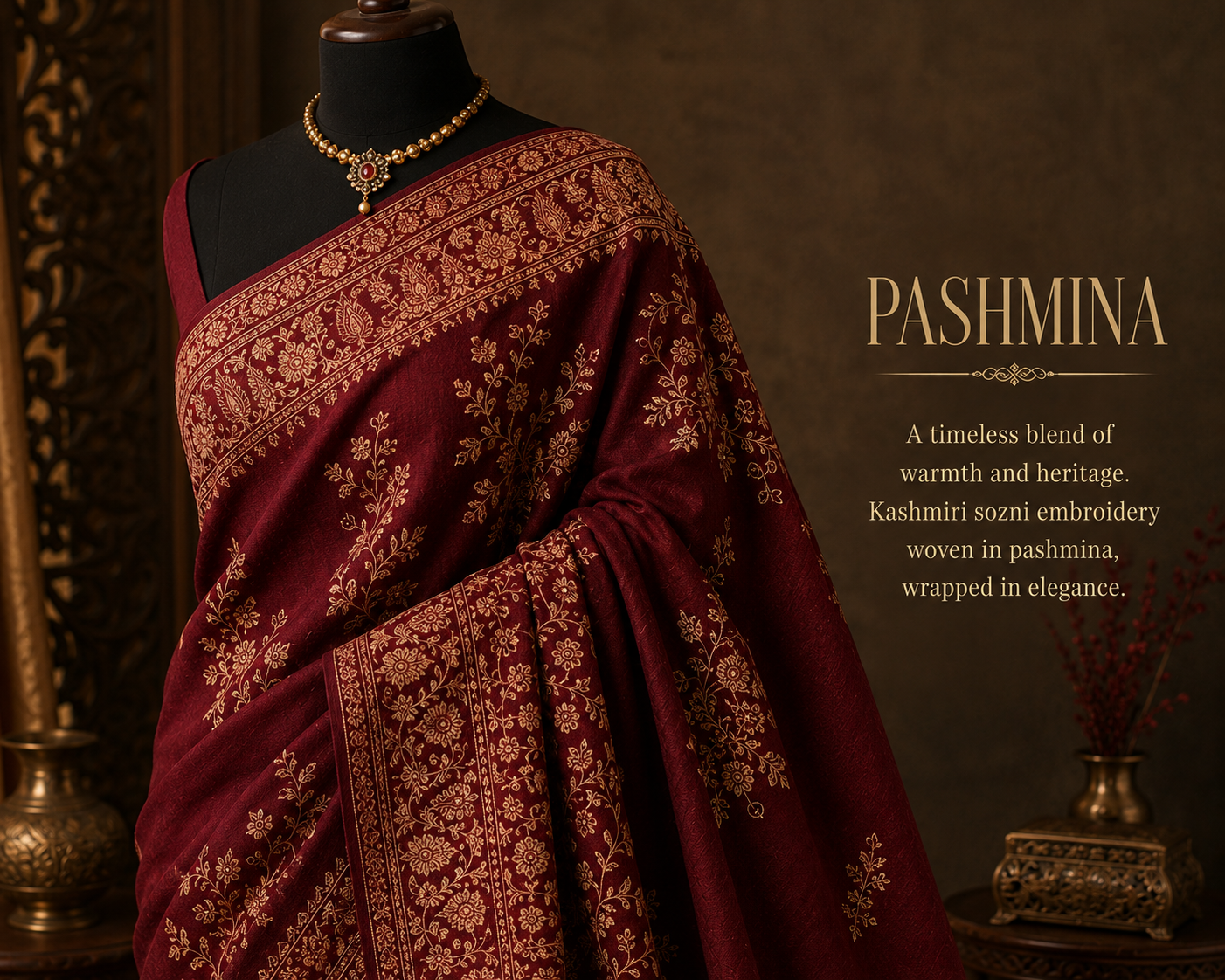
A fine woolen fabric made from cashmere yarns, and may also be found with Kashmiri embroidery work called Sozni or Aari work, used as winter sarees.
4. Tanchoi Saree — Varanasi
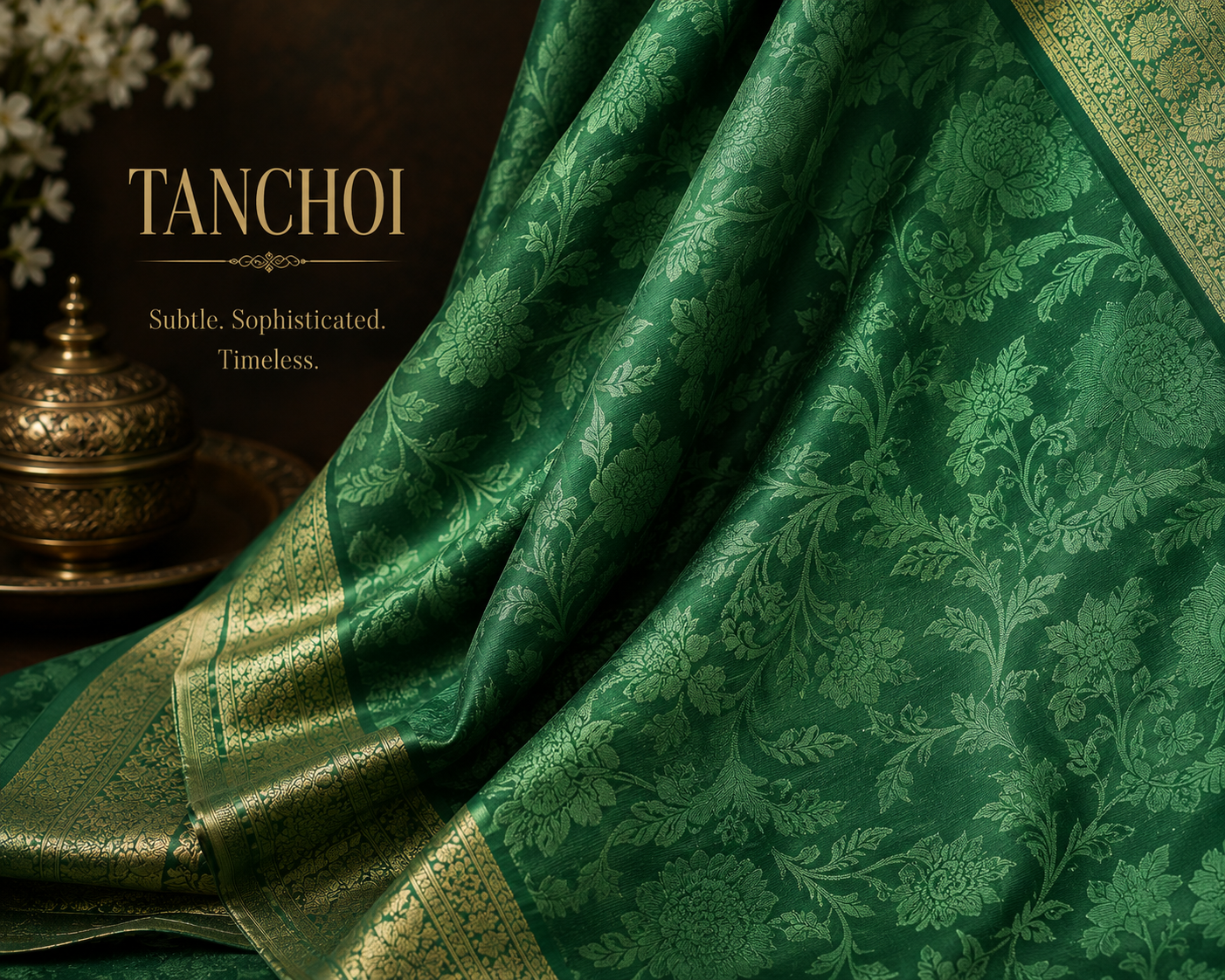
A satin weave silk fabric where the pattern is woven along with the fabric instead of embroidered on top of it.
South India
5. Kanjeevaram (Kanchipuram) Saree — Tamil Nadu
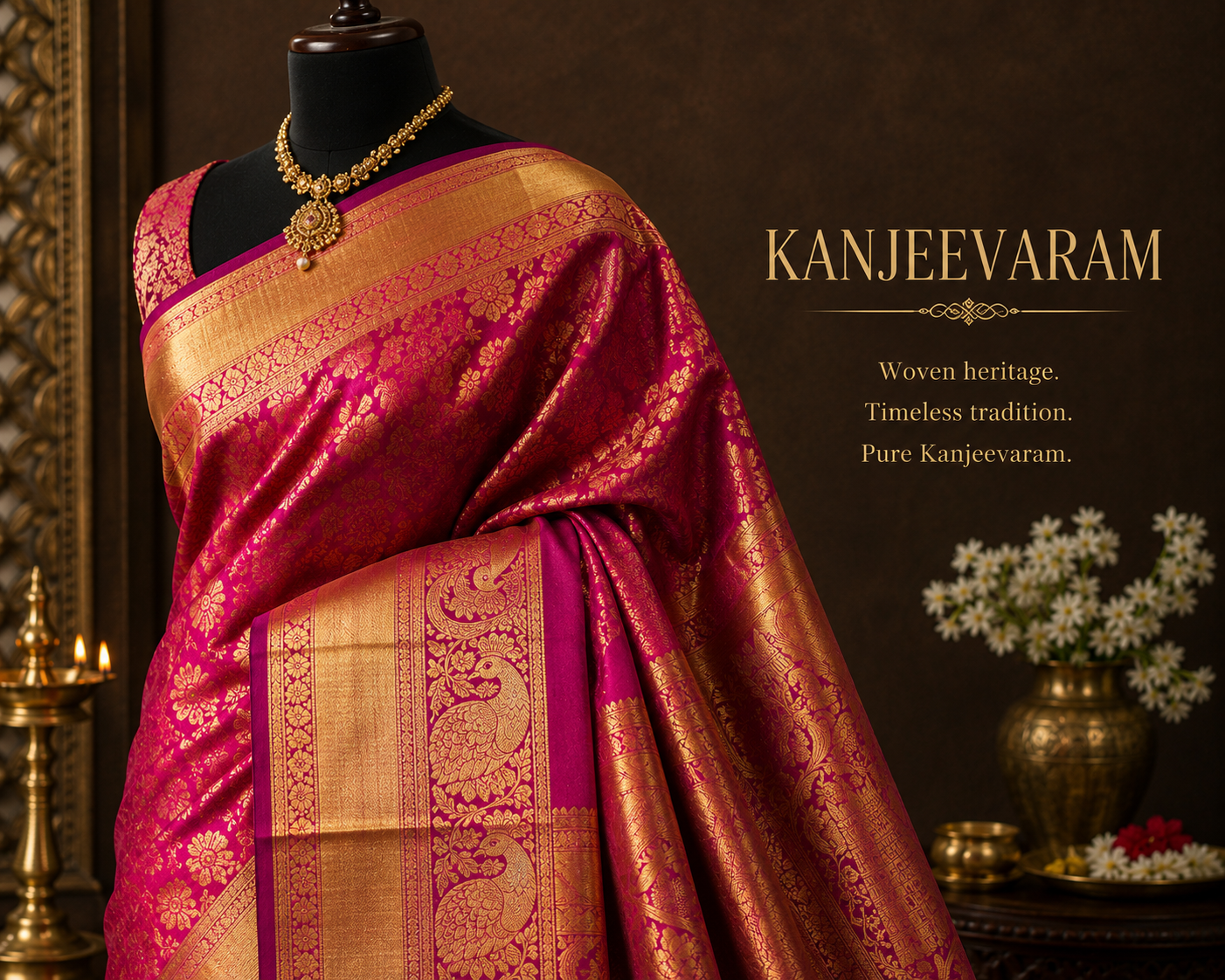
A heavy mulberry silk saree characterized by its contrasting zari borders and temple patterns. Its unique feature in terms of technique is the use of korvai weaving — that is, the body and the border of the saree are separately woven and then interlocked in the loom, which ensures that the border of a real Kanjeevaram saree doesn’t fray or wear out any differently than the body of the saree.
6. Mysore Silk Saree — Karnataka
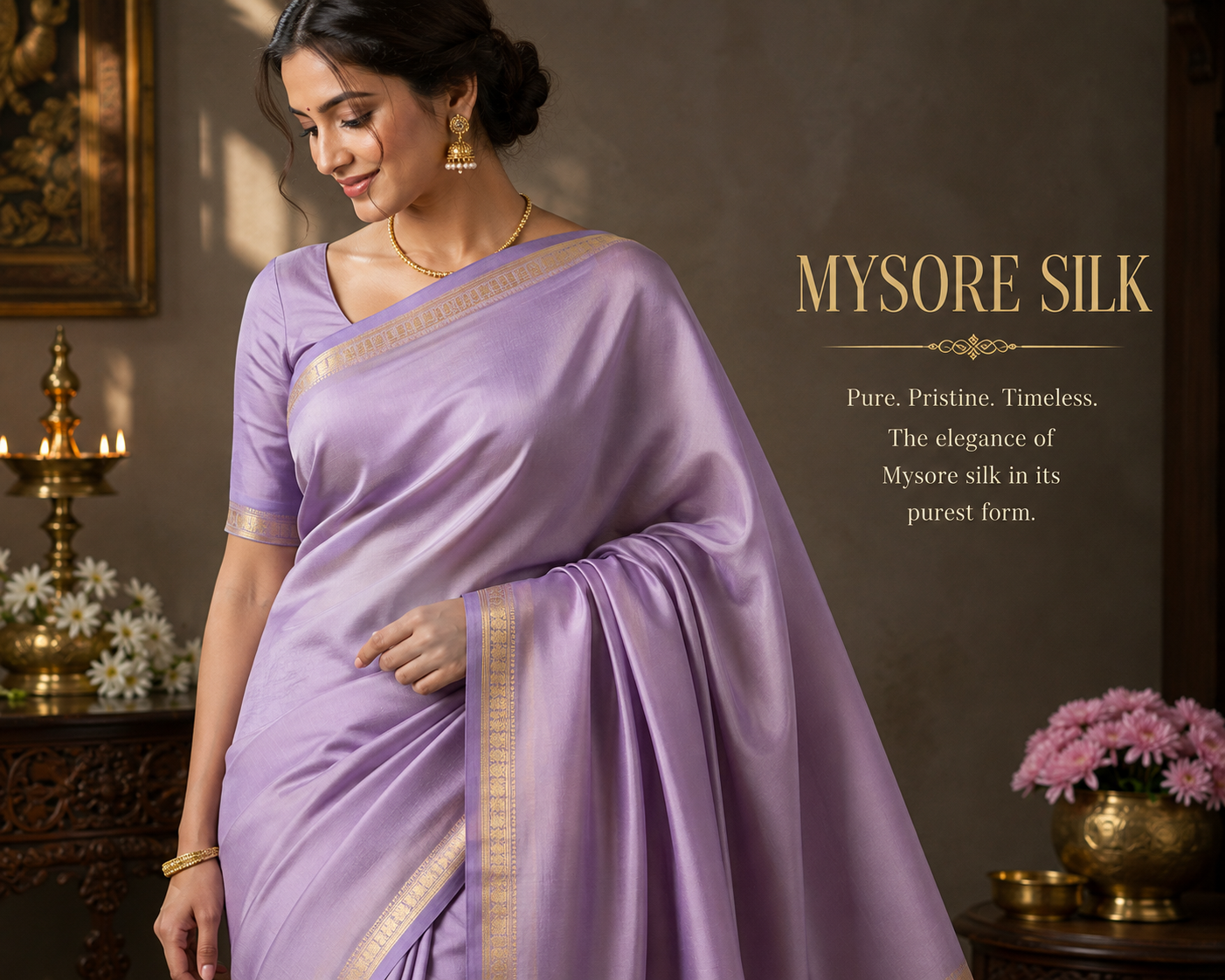
Made of pure mulberry silk and zari from the state-owned Karnataka Silk Industries Corporation, these sarees are lighter and glossier than the Kanjeevarams and also have more subtle and less pronounced borders.
7. Kasavu Saree — Kerala
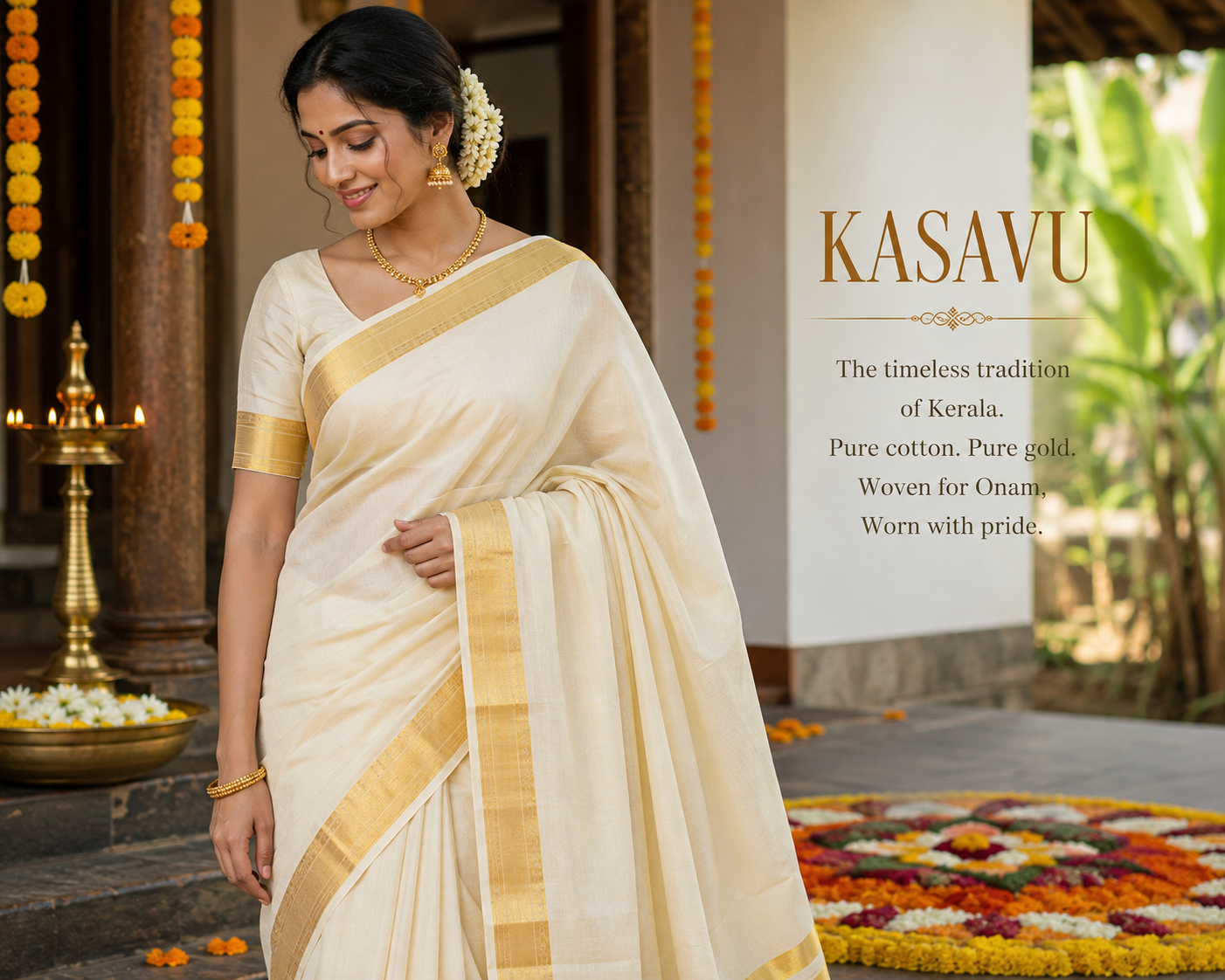
The light off-white (“mundum neriyathum”) saree of cotton with a golden-zari border, which is worn during the Onam festival and other festivals in Kerala. The simplicity of its composition, which consists only of cream-colored body and a golden border, is its main feature.
8. Pochampally Ikat Saree — Telangana
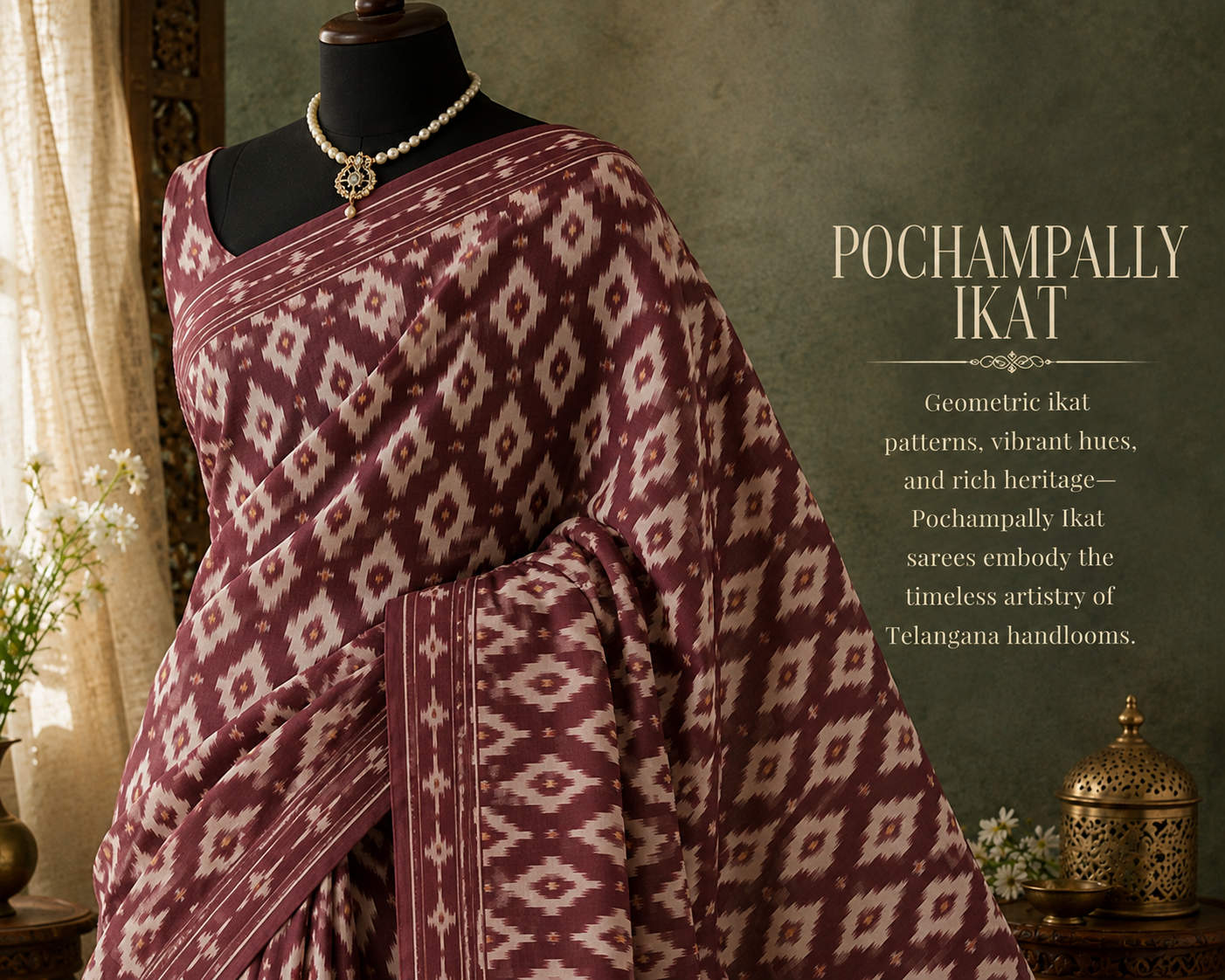
Geometric and GI-tagged saree of ikat weaving from Bhoodan Pochampally, where dyeing of the yarn is done prior to weaving, so that the pattern seems to be slightly blurred on the edges.
9. Gadwal Saree — Telangana
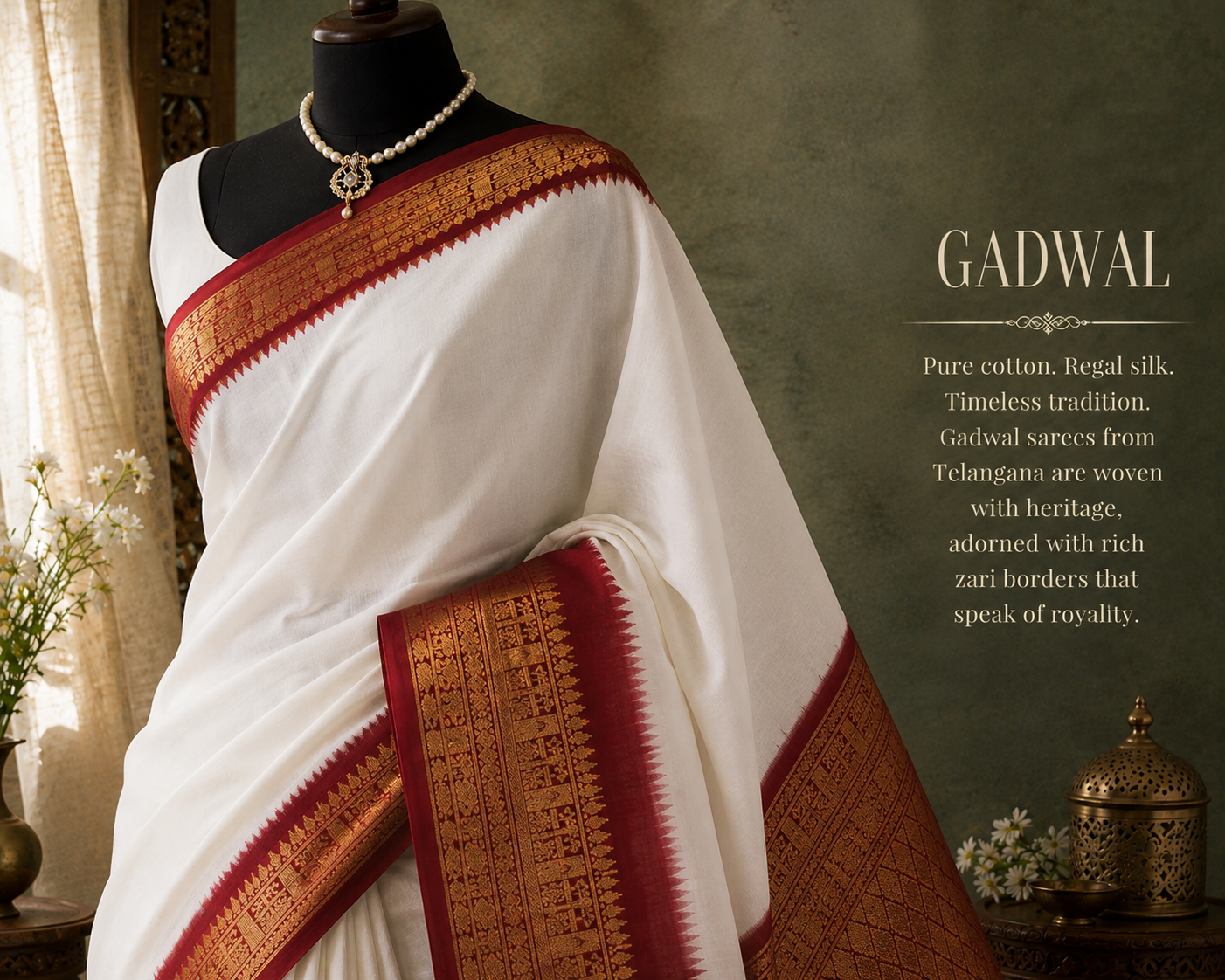
Made of cotton for the body and silk for the border and pallu, with the silk bits being removable, this saree is a classic example of something that was made due to the expensive nature of silk.
10. Narayanpet Saree — Telangana
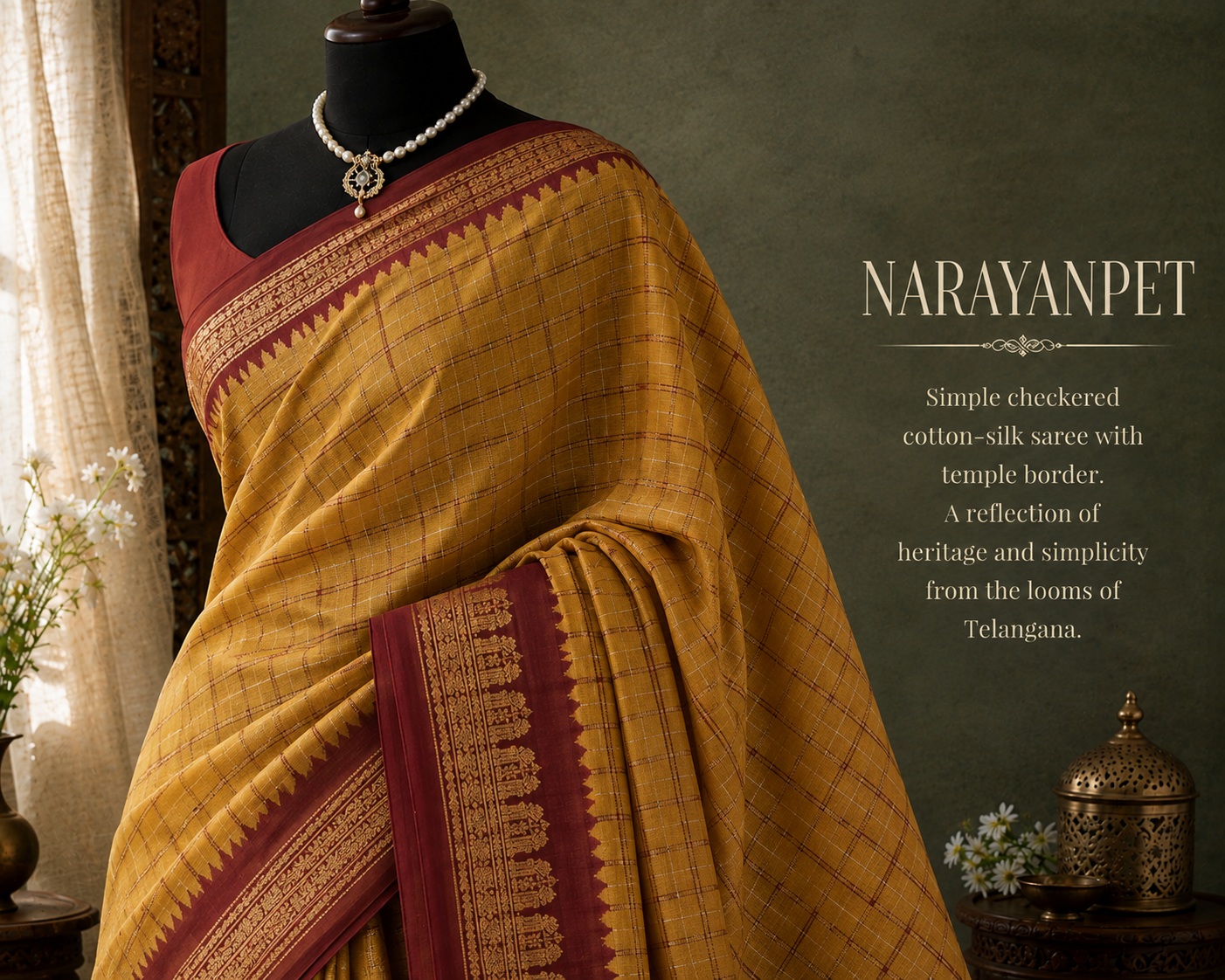
Features checks and temple borders; traditionally a day wear saree made from cotton and silk weave.
11. Ilkal Saree — Karnataka
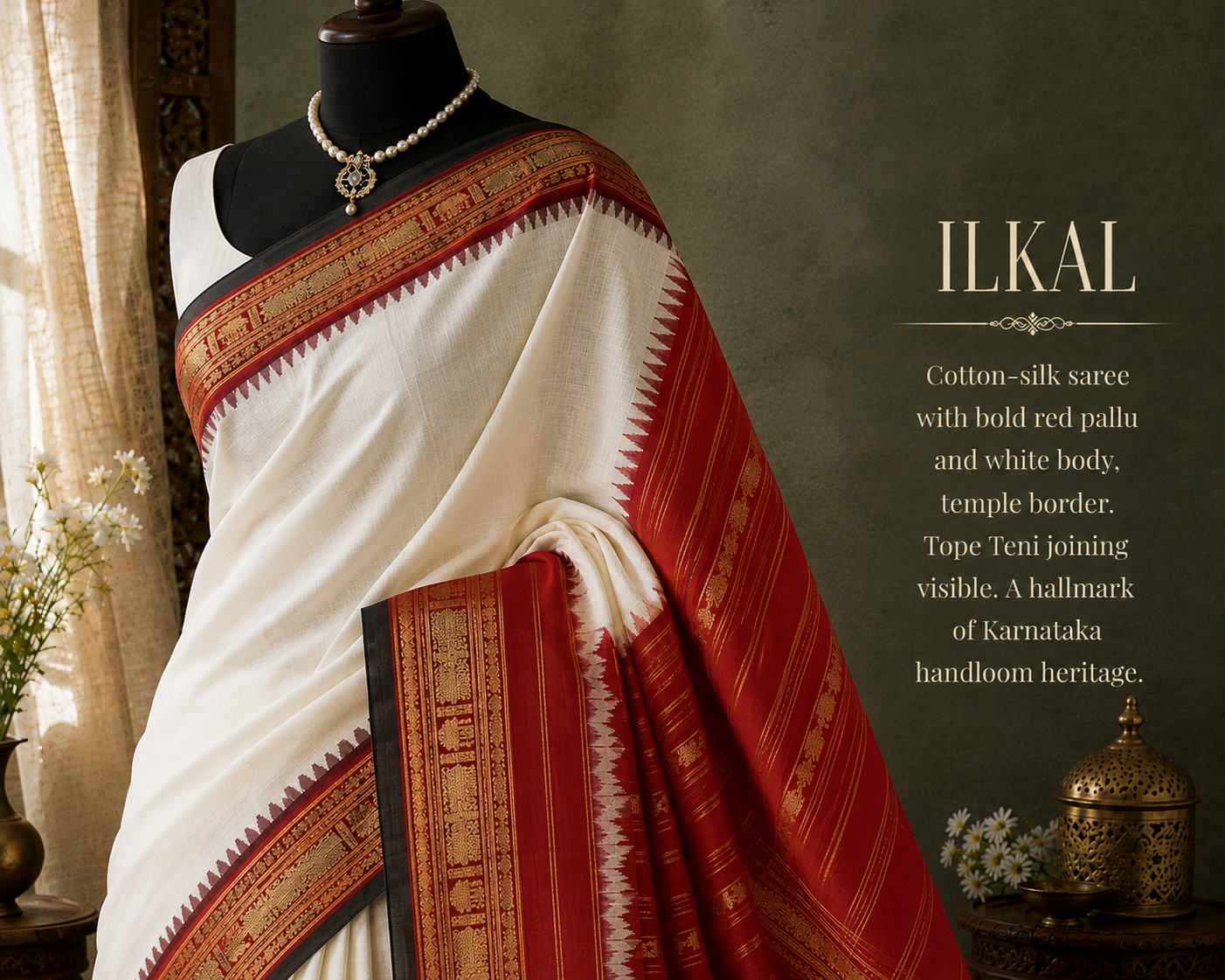
This type of saree is characterized by a contrasted red pallu and tope teni weave which uses the method of interlocking the body and pallu (woven separately), thread by thread, rather than sewing them together.
12. Uppada Saree — Andhra Pradesh
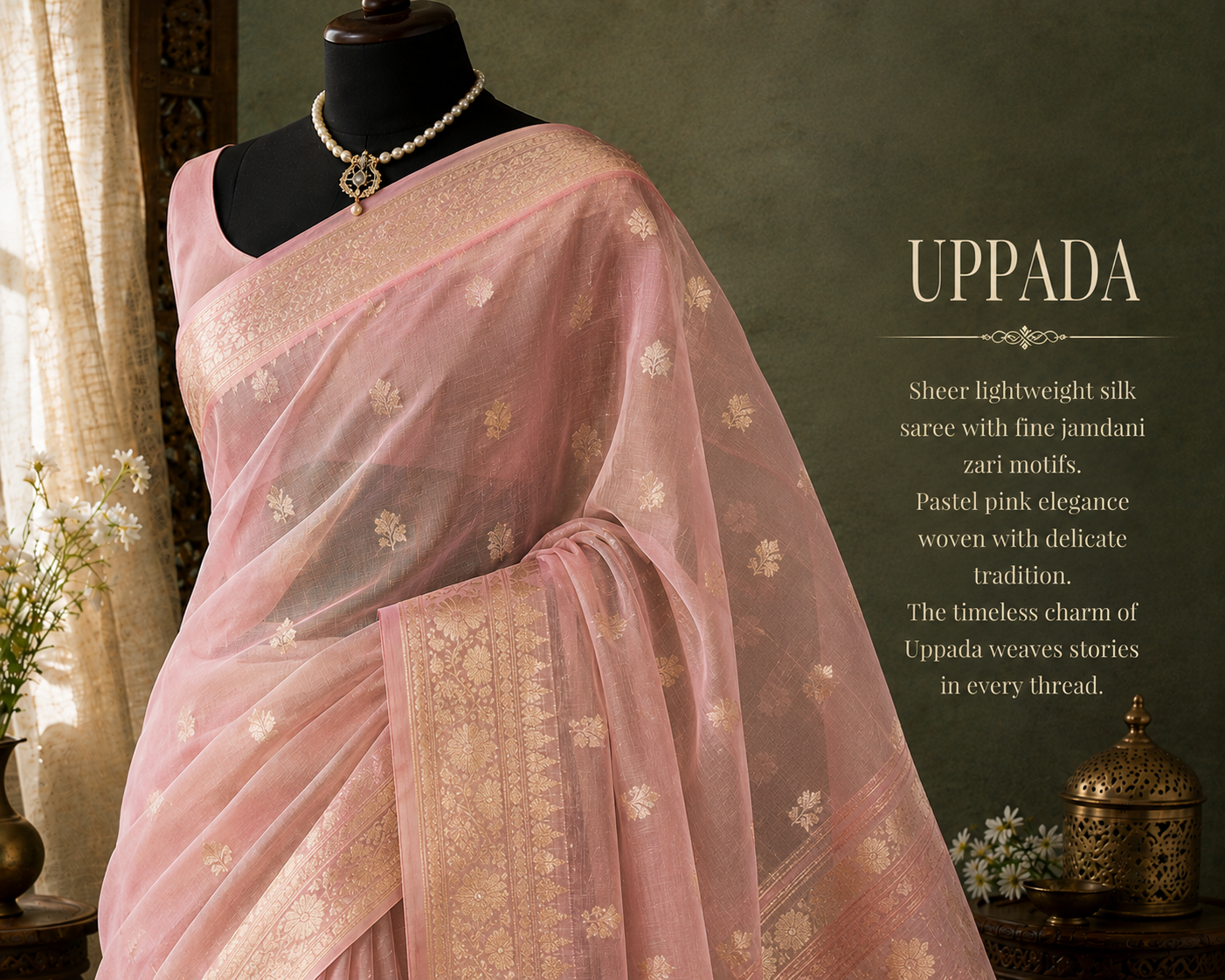
Light-weight jamdani handloom silk that features zari work and looks like Banarasi, preferred by brides.
13. Dharmavaram Saree — Andhra Pradesh
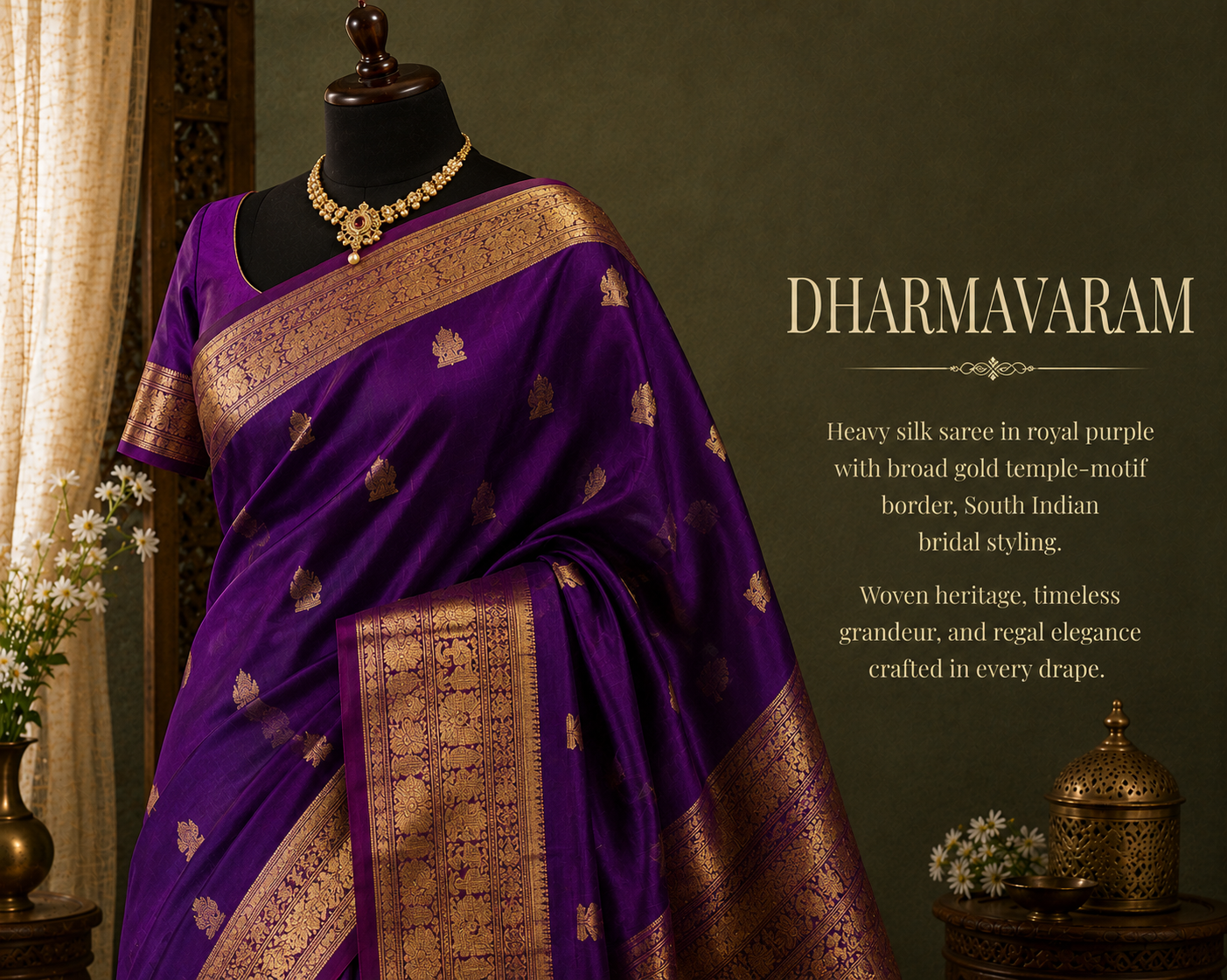
Heavy silk saree with broad borders and temple designs; one of the famous wedding wear sarees in south India along with Kanjeevaram.
14. Mangalagiri Saree — Andhra Pradesh
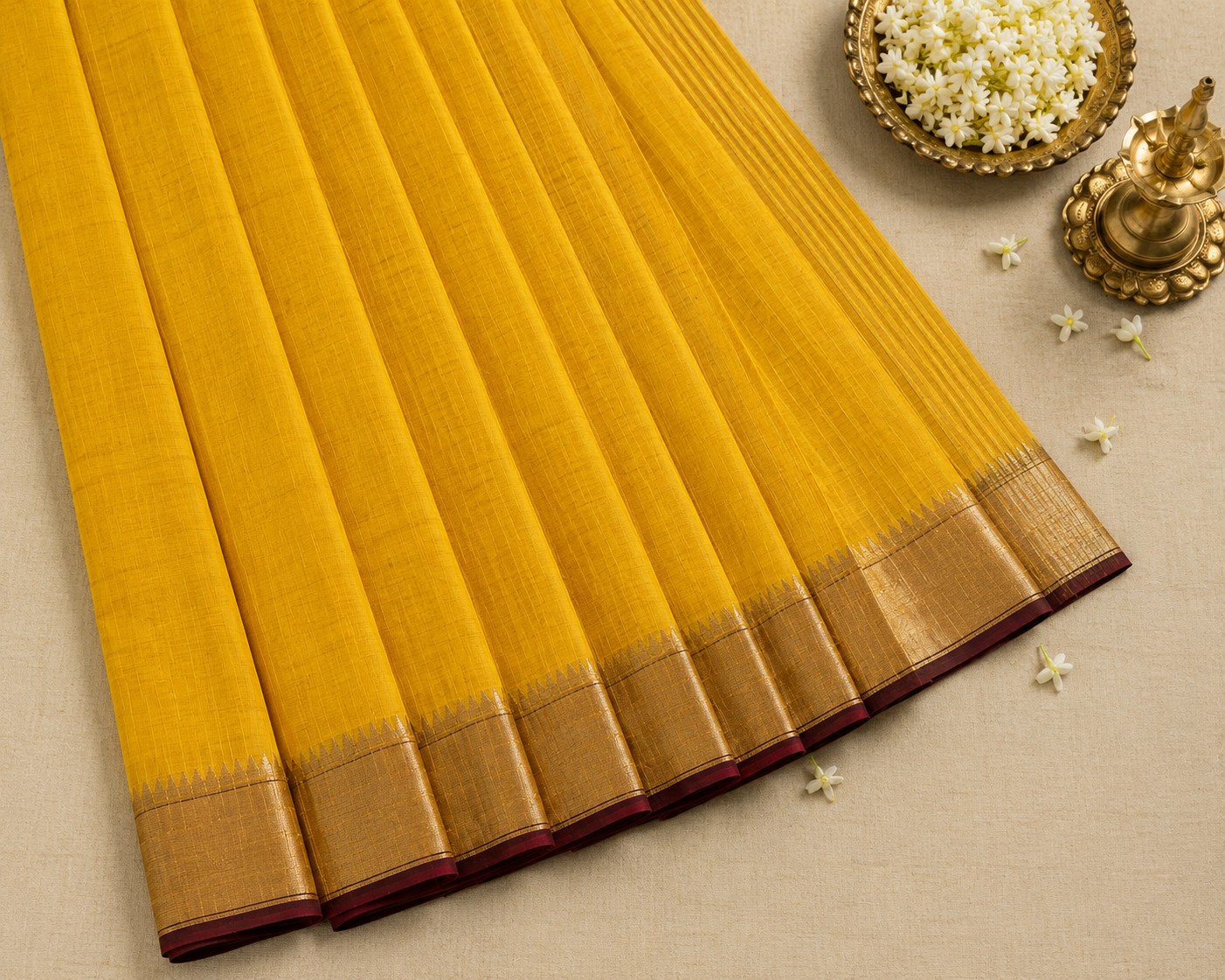
Cotton hand-woven fabric that is weaved very tight with almost no gaps between yarns, giving this saree exceptional strength for cotton; usually comes with a plain zari border called ‘nizam’.
15. Venkatagiri Saree — Andhra Pradesh
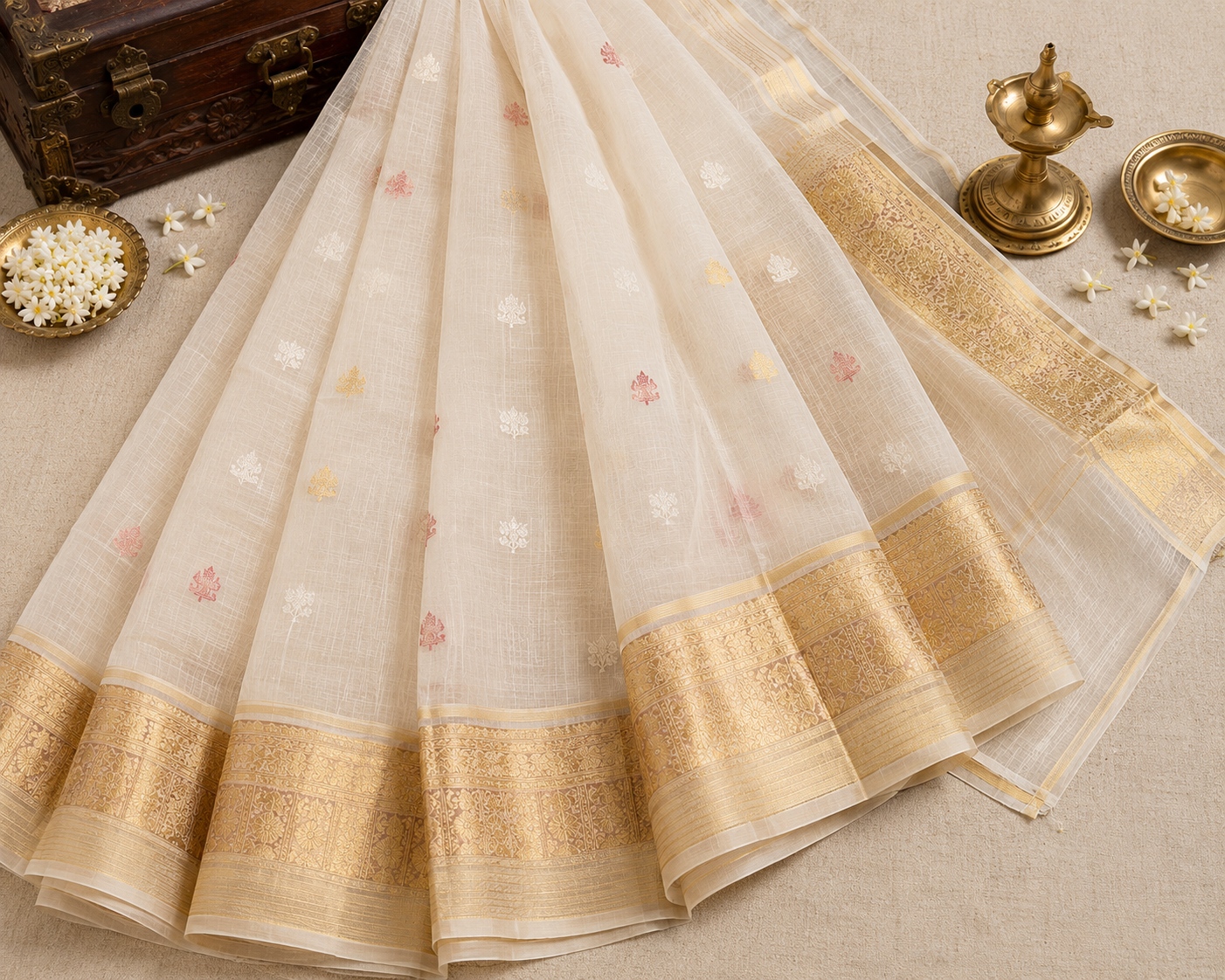
Fine cotton or cotton silk weave produced initially for the royal Venkatagiri family; characterized by very detailed motifs created using the jamdani technique and a light and semi-sheer body of the saree.
16. Chettinad Cotton Saree — Tamil Nadu
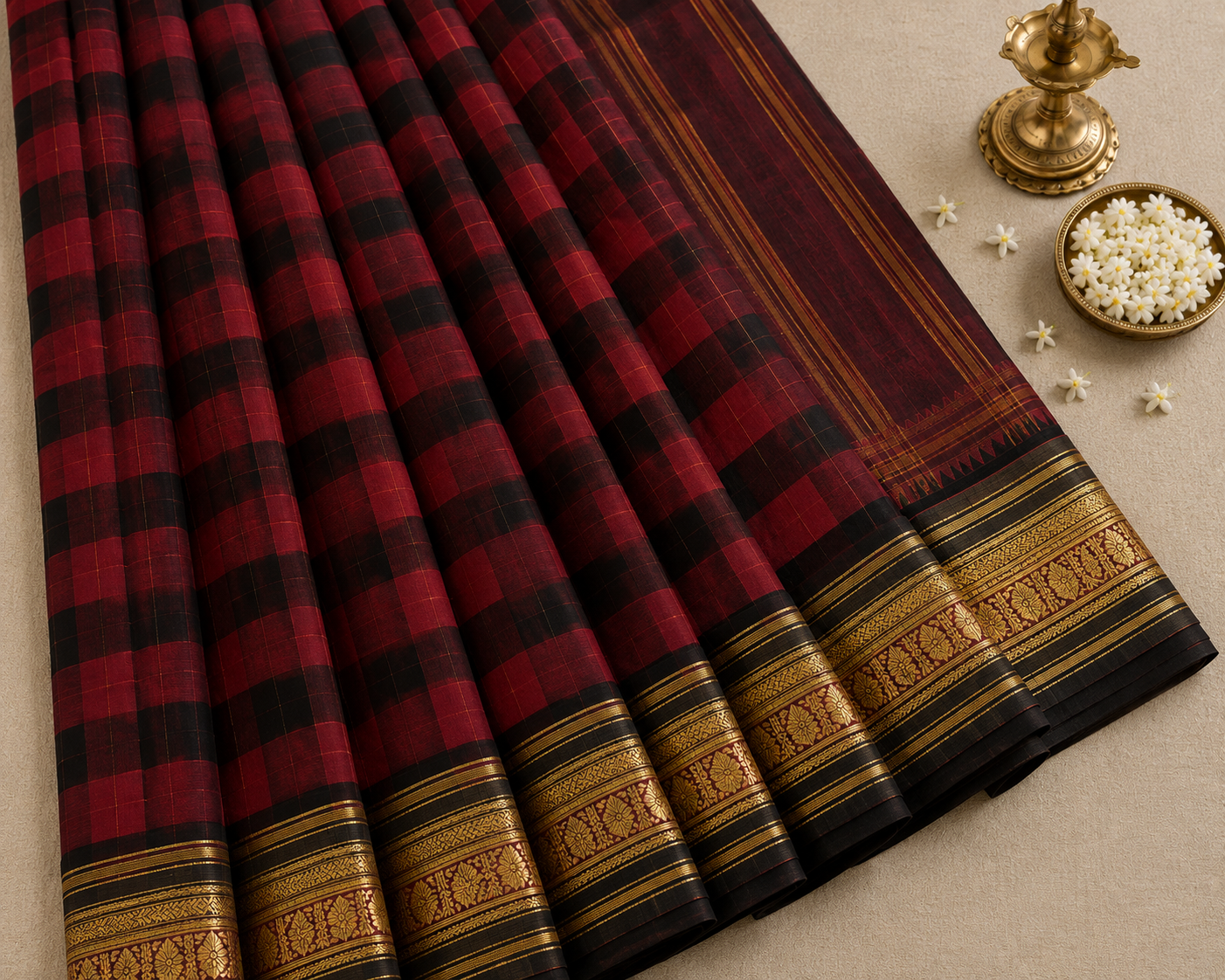
Dramatic checks and stripes in rich jewel-like colors, contrasted by broad borders; traditional saree of the Chettiar community in Tamil Nadu.
East India
17. Baluchari Saree — West Bengal
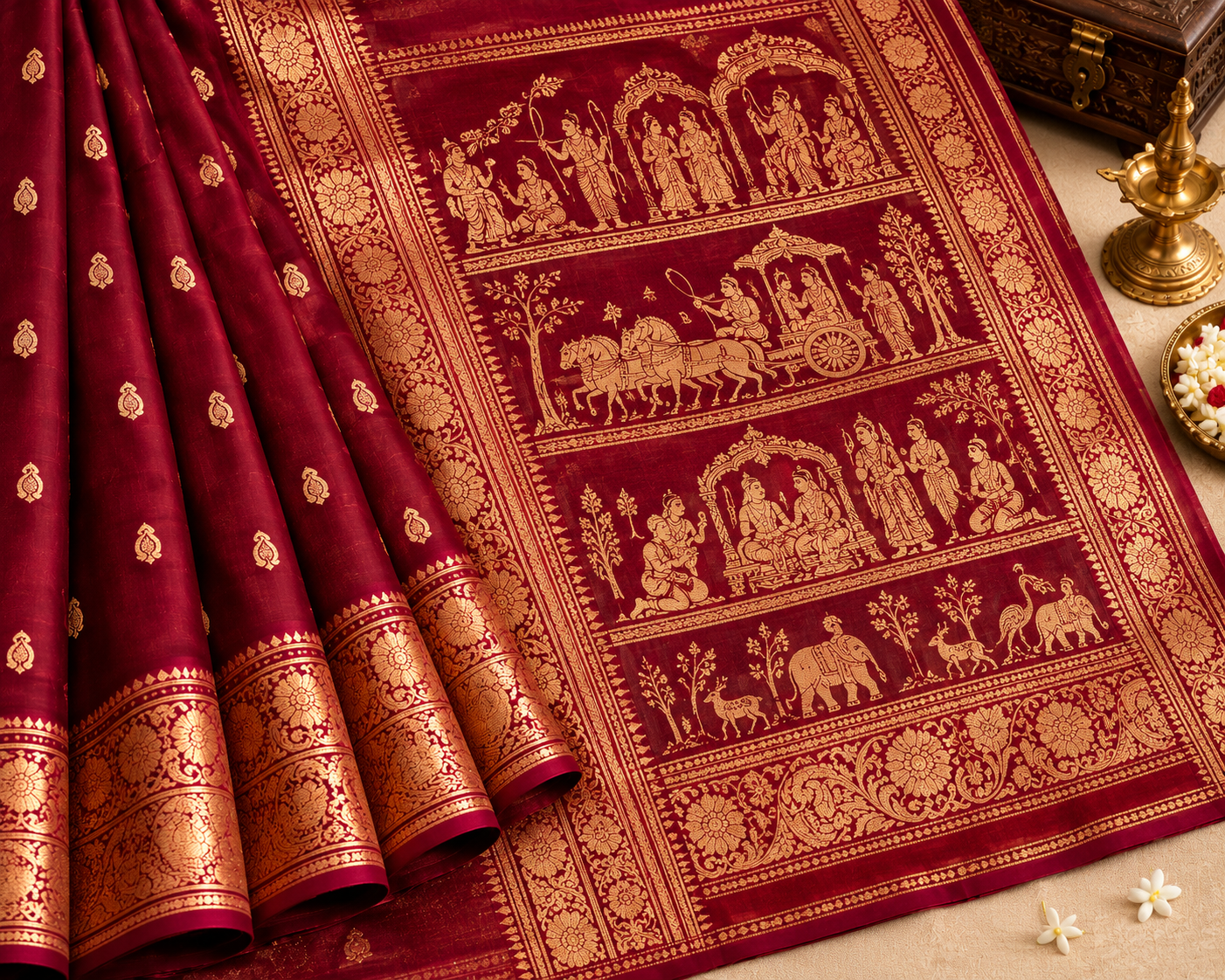
Silk sarees from the Bishnupur area, embroidered with mythological or court scenes in entire panels of the Ramayana or Mahabharata story in the pallu.
18. Jamdani Saree — West Bengal
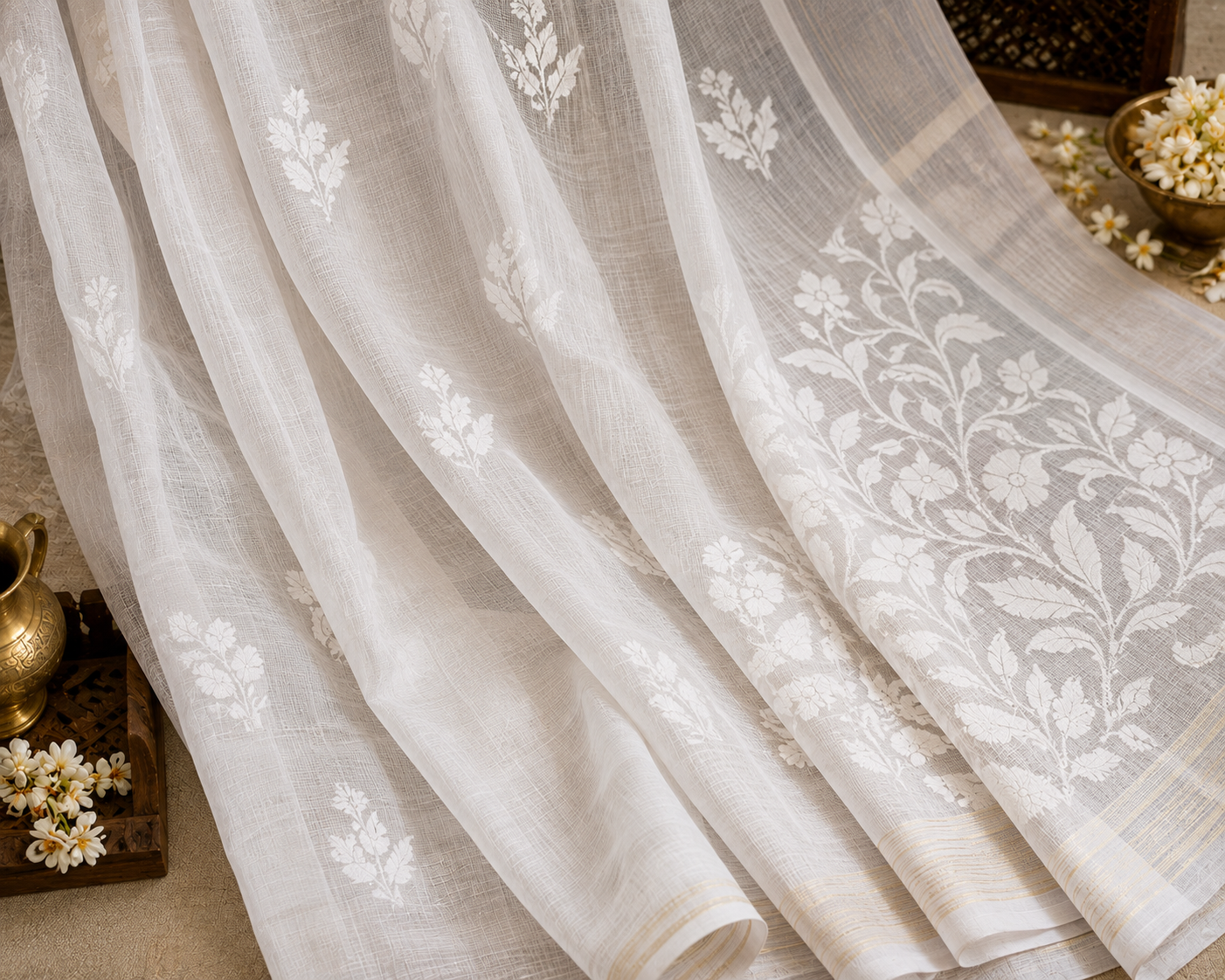
UNESCO recognized handlooms where motif designs are introduced into the weaving process, needing two weavers to work on one saree each. Made originally of fine muslin cotton.
19. Tant Saree — West Bengal
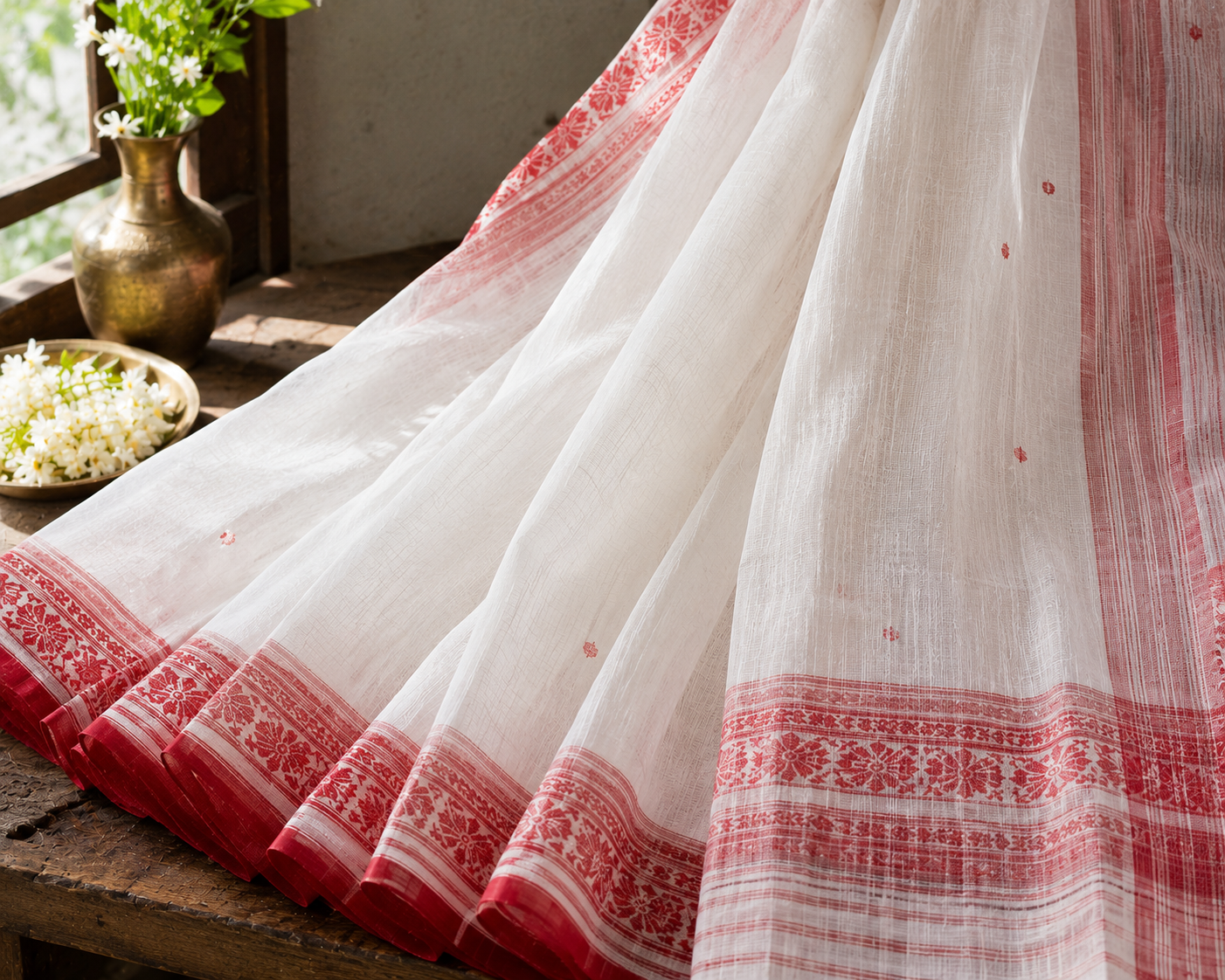
Daily life cotton saree that has a border design and is very airy, being woven on pit looms and known for being breathable.
20. Kantha Saree — West Bengal
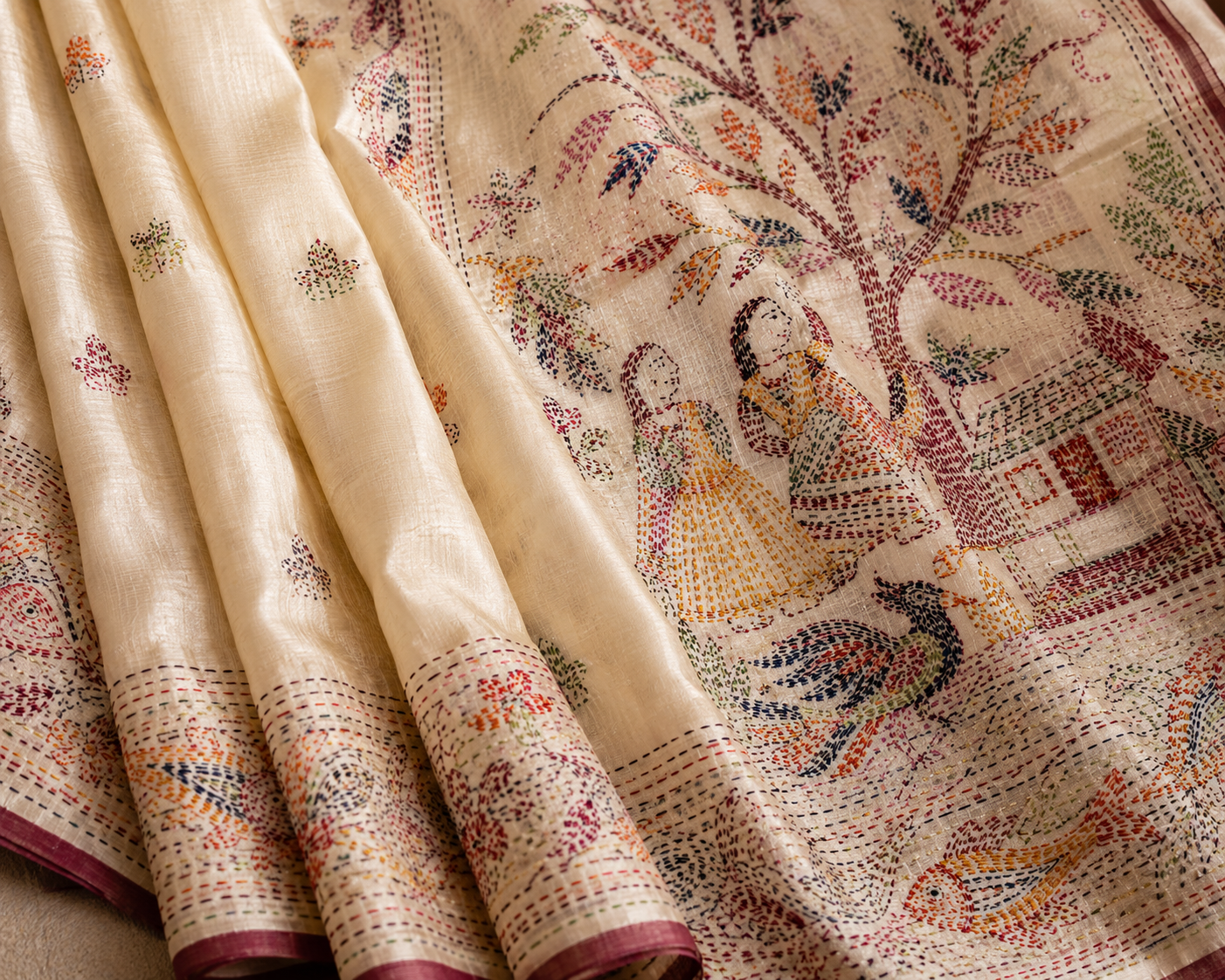
Base material, either silk or cotton, with kantha running stitch embroidery, which is an ancient recycling practice. The stitch is hand-stitched without any design pattern to be followed.
21. Bomkai Saree — Odisha
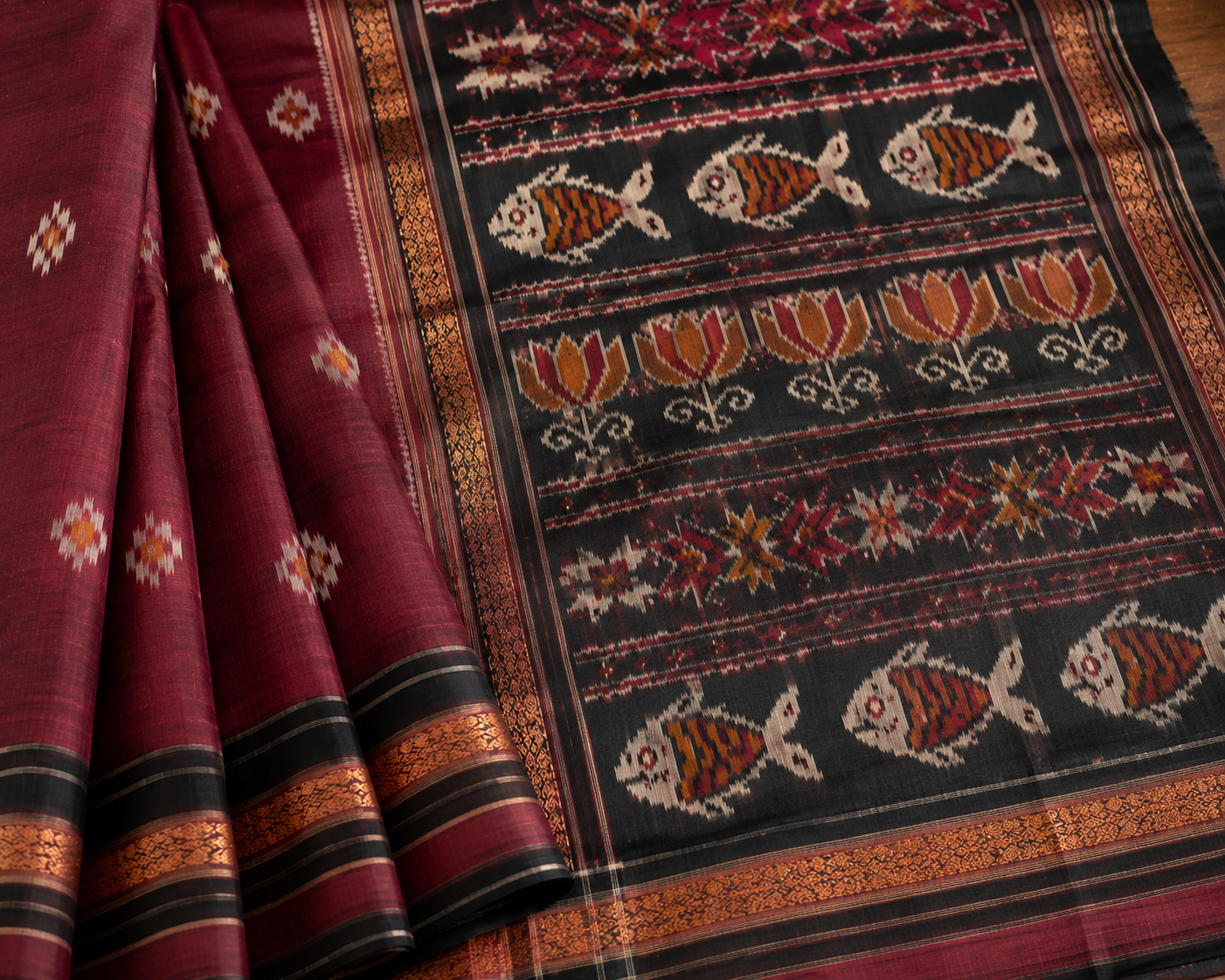
A combination of extra weft and ikat with patterns taken from folk arts of Odisha like tortoise, fish, birds with silk and cotton mix.
22. Sambalpuri Saree — Odisha
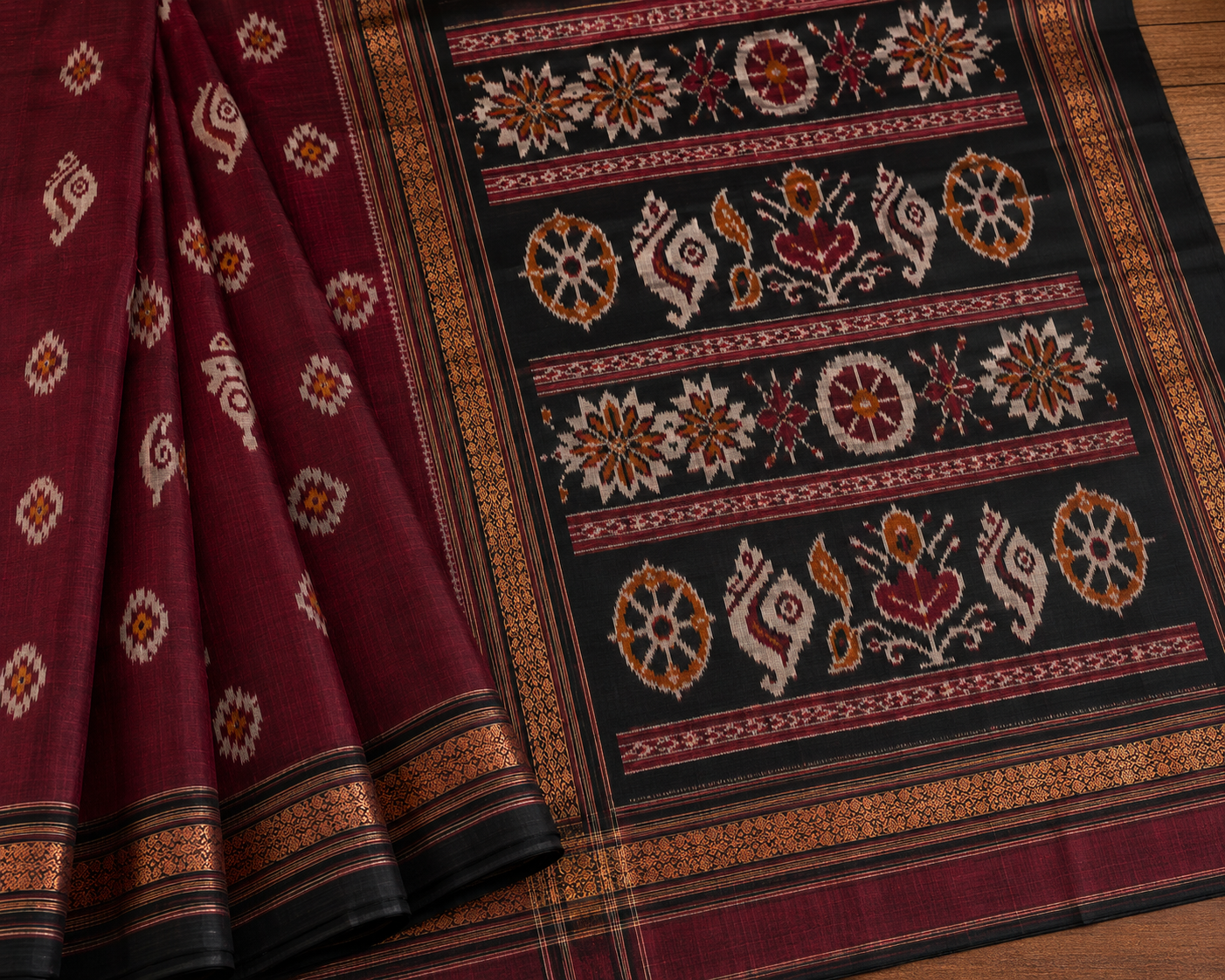
Bandha weaving with motifs such as shankha, chakra, phula that are dyed into the threads before weaving on the loom.
23. Muga Silk Saree — Assam
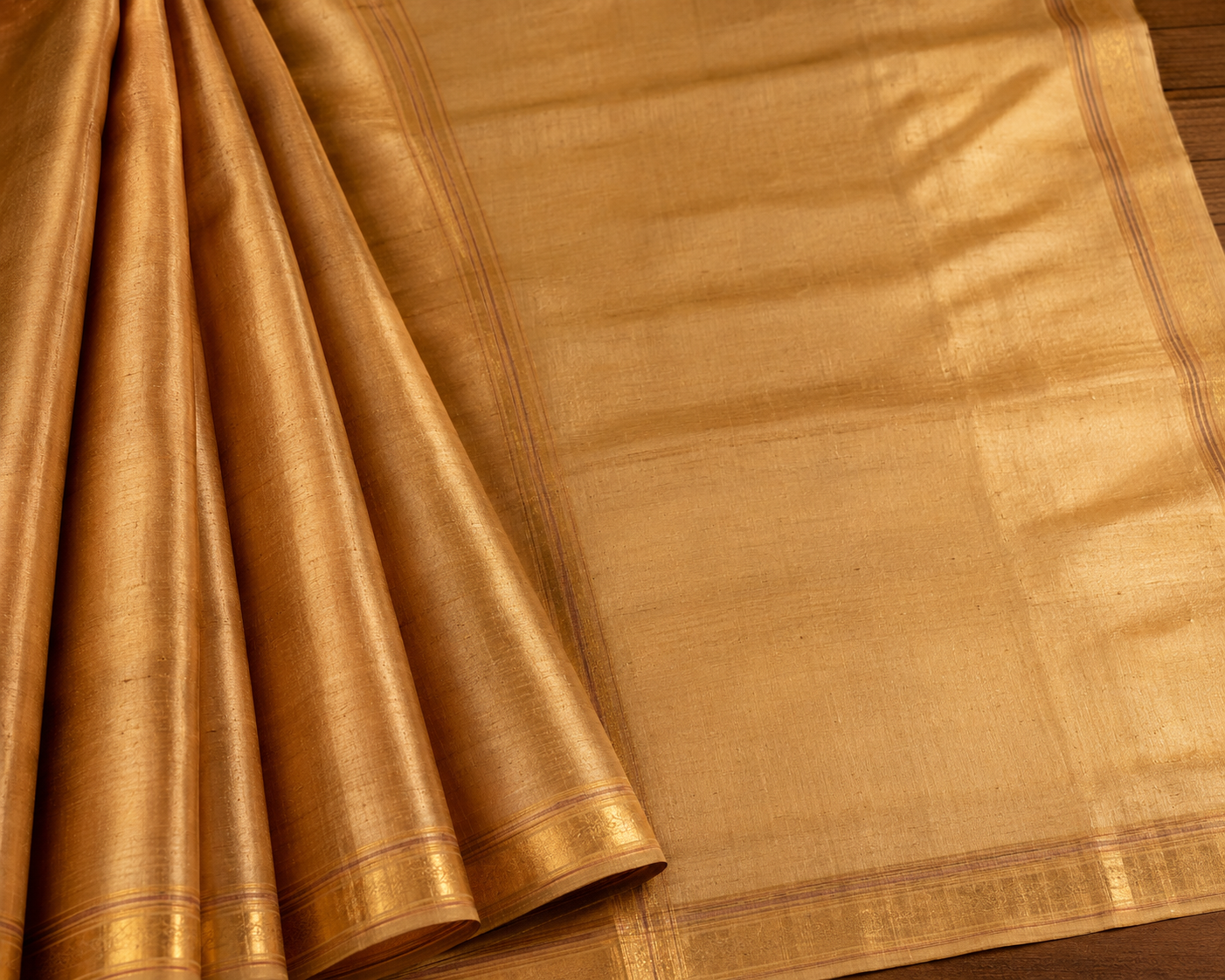
A silk found only in Assam, with a natural golden hue and the oddity of getting shinier every time it is washed.
24. Eri Silk Saree — Assam
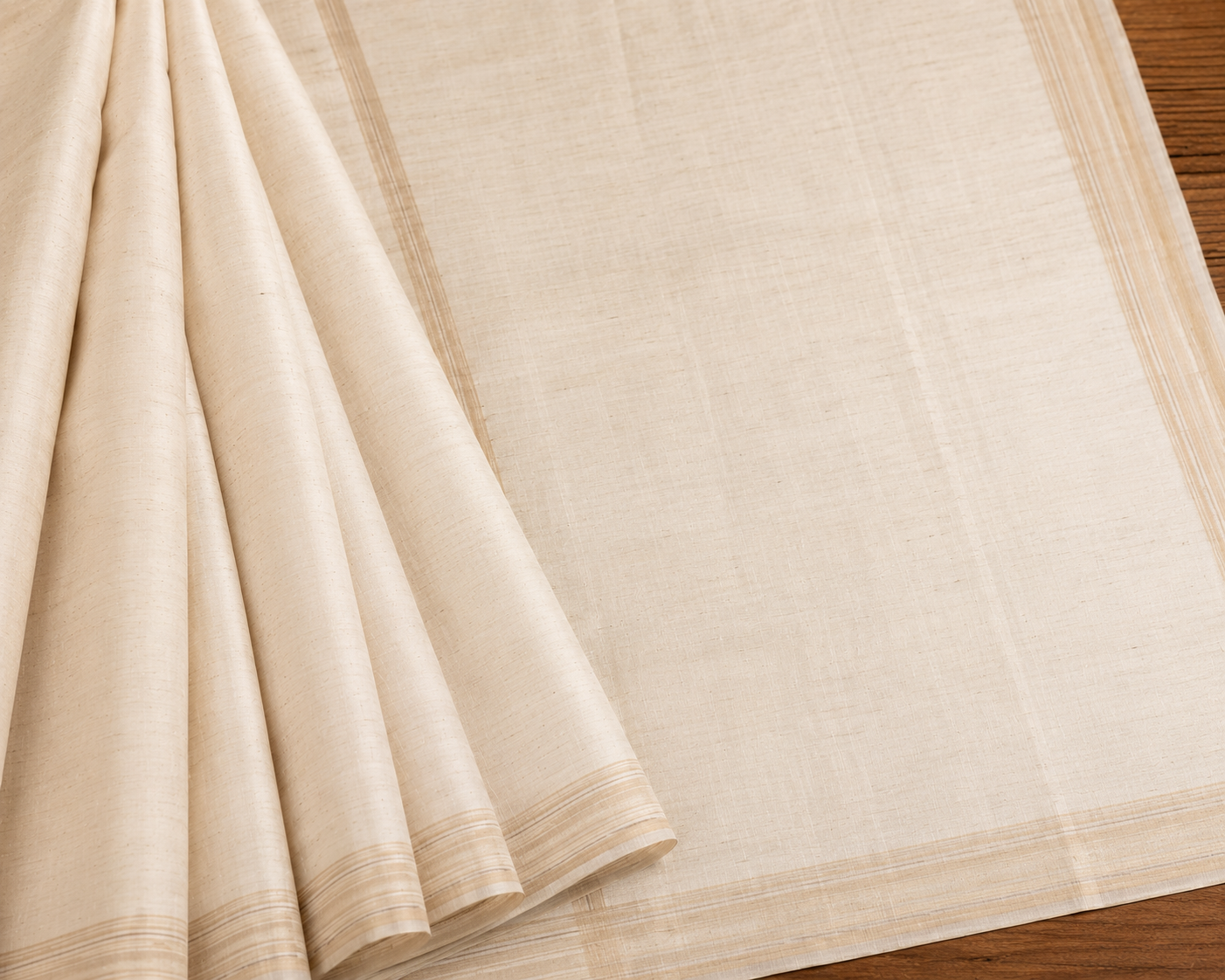
“Peace silk” from the Assamese word “eri”, meaning “castor” as these moths feed on castor leaves and the silk is collected when they have metamorphosed into moths.
25. Bhagalpuri Silk (Tussar) Saree — Bihar
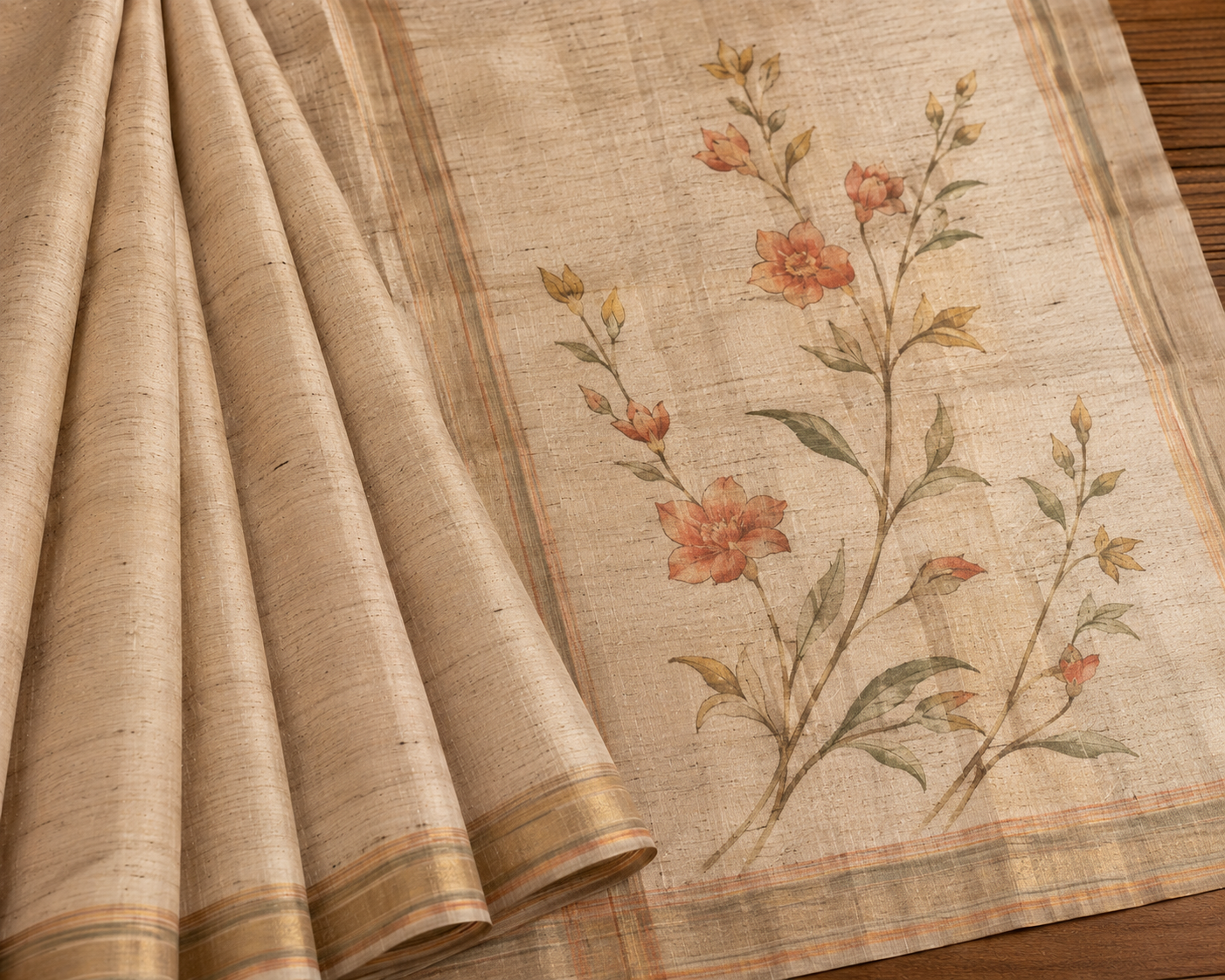
Tussar silk sarees woven in the city of Bhagalpur, Bihar, which is known as the “Silk City”. Made with the raw Tussar/Kosa silk with a natural textured appearance.
26. Phulkari Saree — Punjab
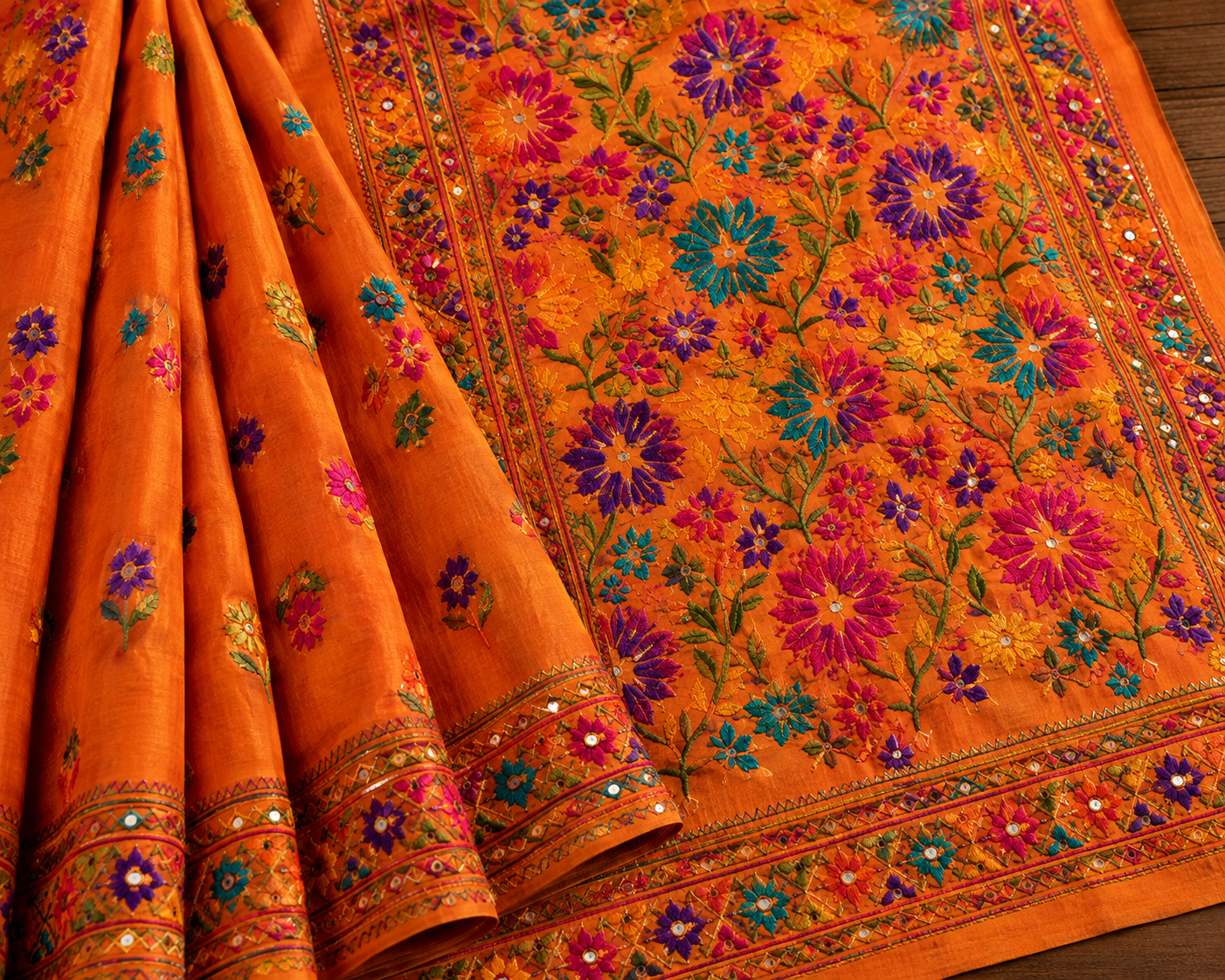
Strictly speaking, not a weave but an embroidery technique where floral designs were made by brides for their wedding trousseau with such heavy stitching that the base fabric was hardly visible.
West India
27. Patan Patola Saree — Gujarat
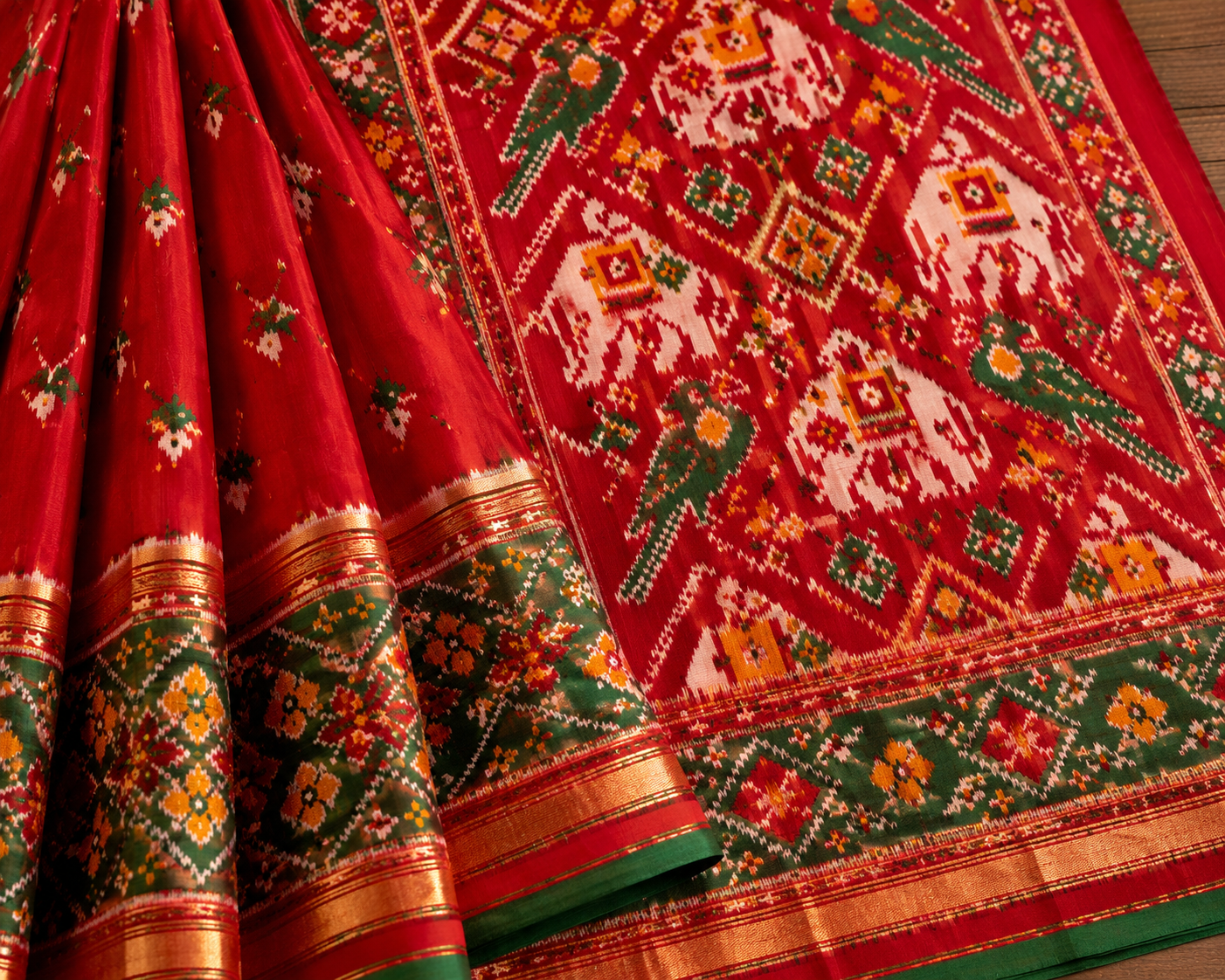
Most technically complex fabric from India, a double-ikat silk, wherein the warp and the weft threads are individually tie-dyed before weaving, thus building the design completely into the fabric instead of printing or embroidering the design onto it. It takes several months to even a year for a single saree to be made, making them extremely costly in the realm of Indian handlooms.
28. Rajkot Patola Saree — Gujarat
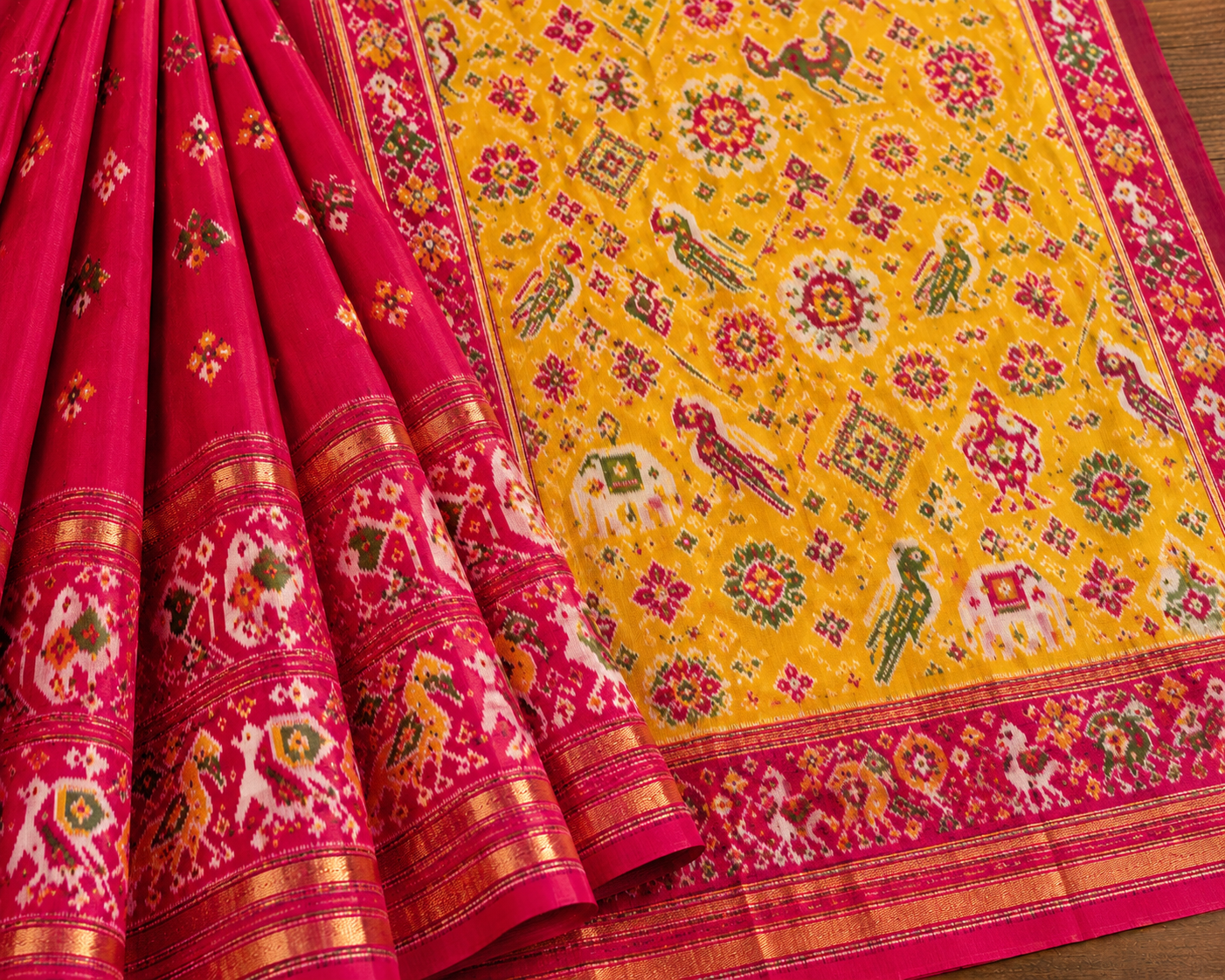
The single-ikat counterpart of Patan Patola, a much lighter and cheaper version with typical Patola designs of parrots and elephants.
29. Bandhani Saree — Gujarat & Rajasthan
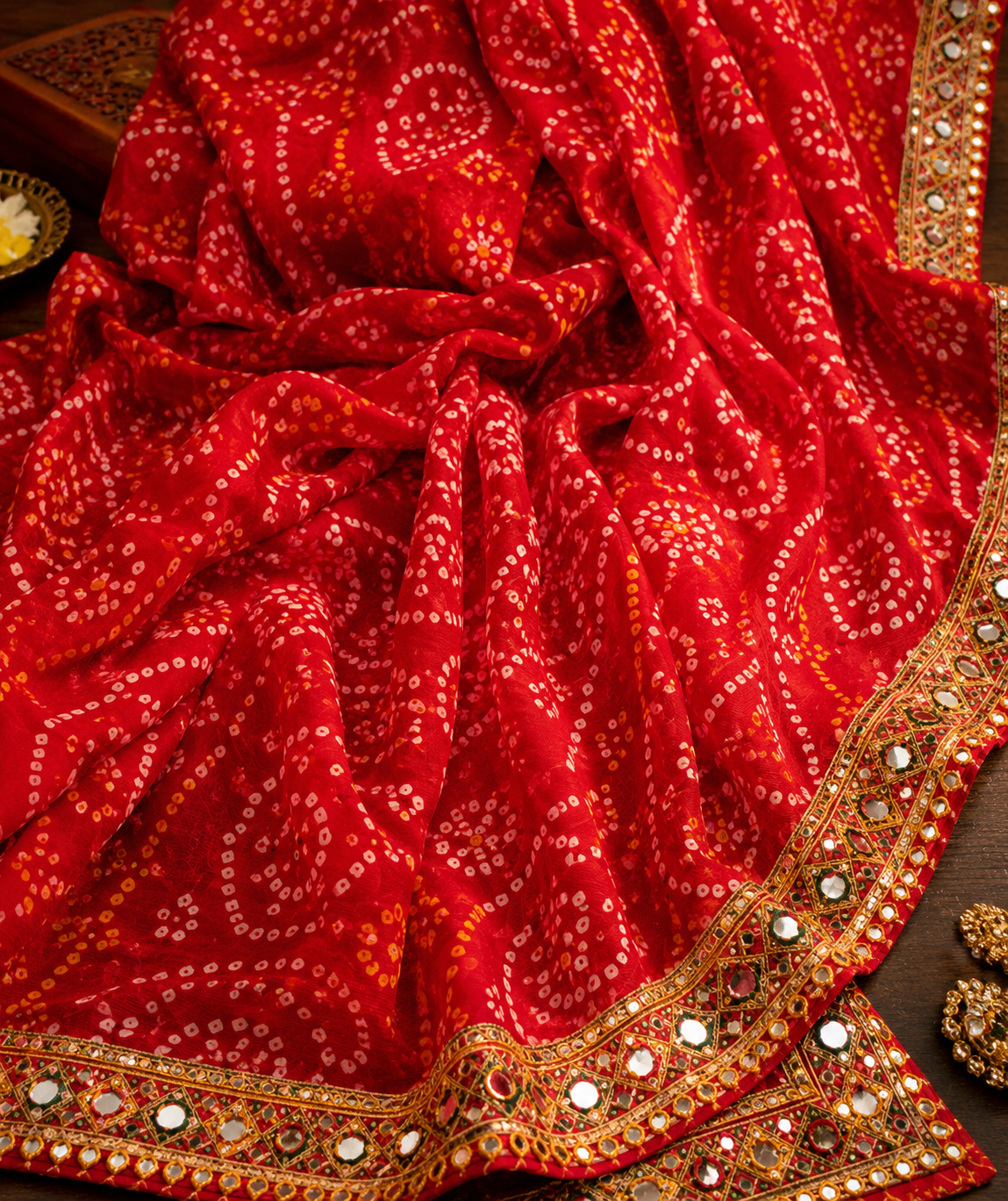
Traditional tie-dye saree, in which numerous dots are created in the fabric by tying numerous knots onto it before dyeing.
30. Leheriya Saree — Rajasthan
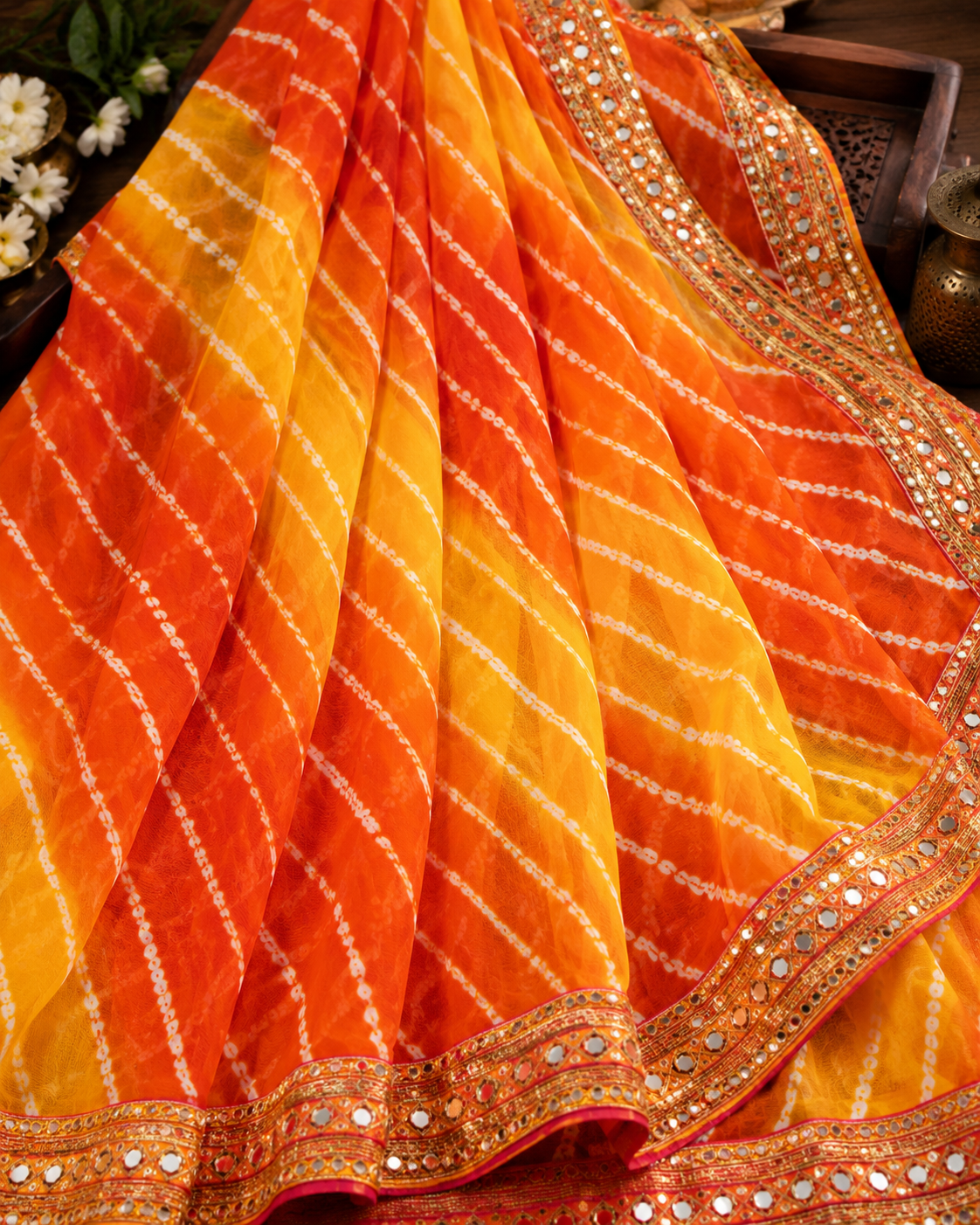
Resist-dye process creating diagonal waves in design called leheriya, named after the rains and Teej festivities.
31. Kota Doria Saree — Rajasthan
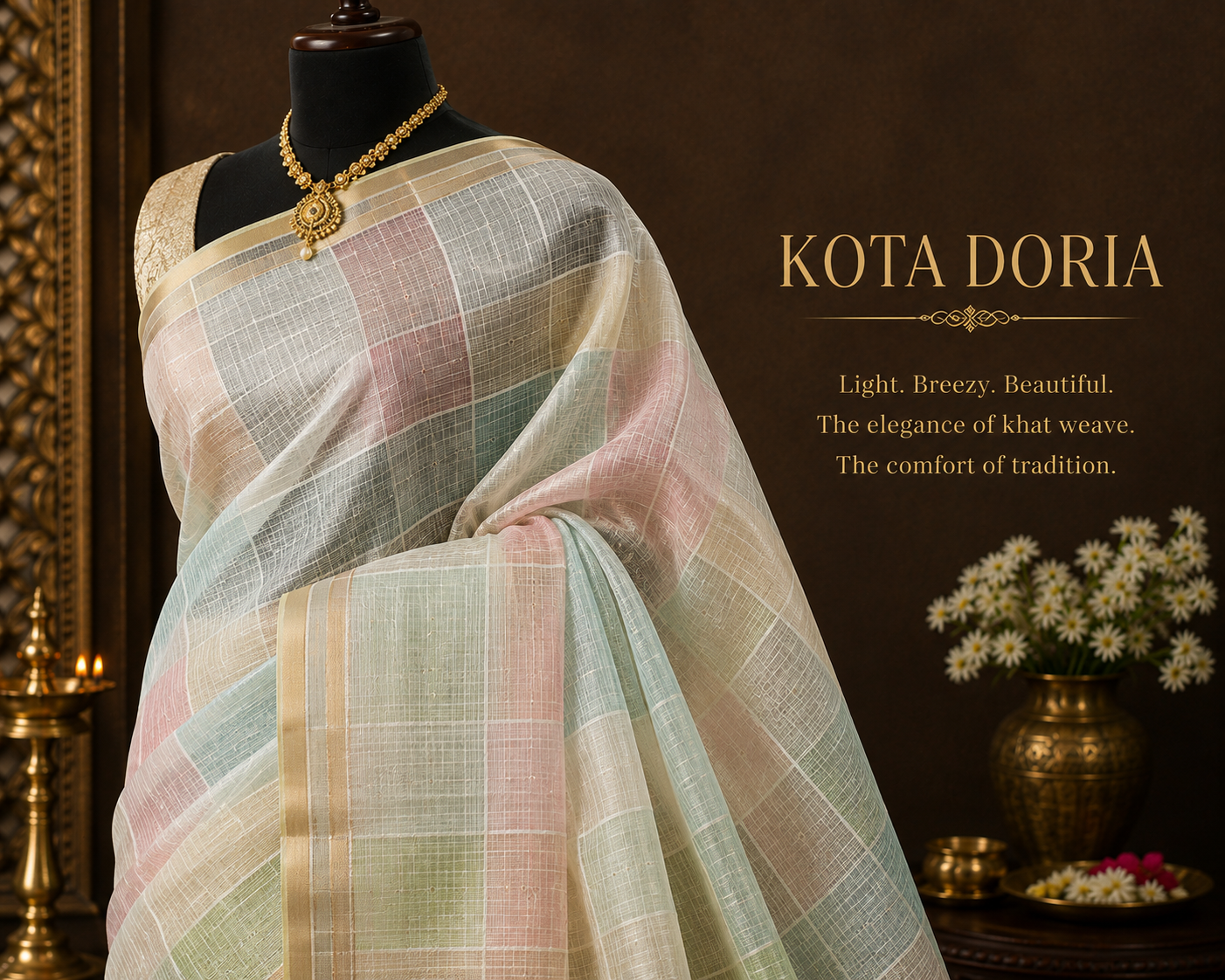
This is a blend of cotton and silk, and the design features a unique square check pattern that is known as the khat, and is as lightweight and airy as it gets, perfect for Rajasthan’s scorching summers.
32. Paithani Saree — Maharashtra
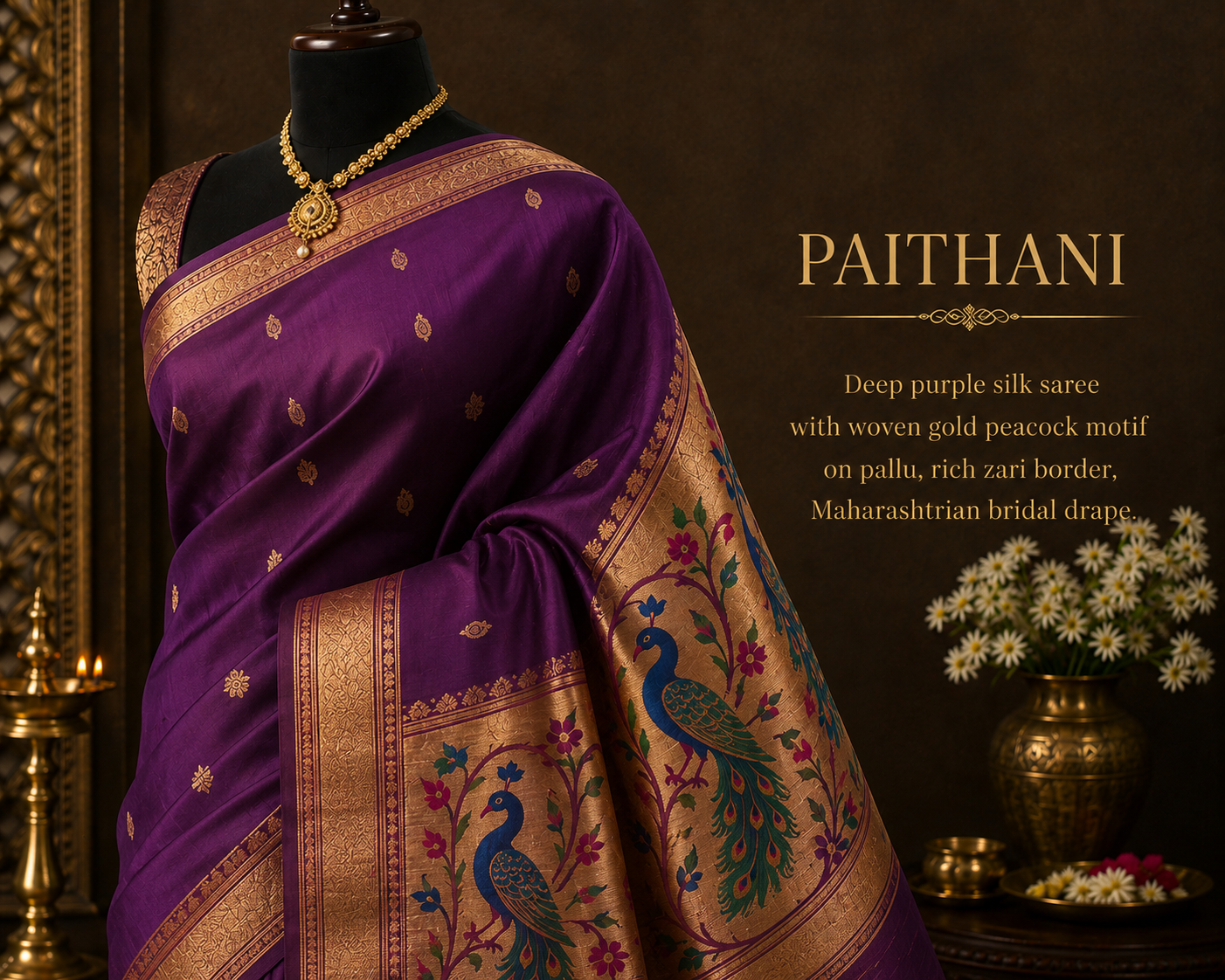
It is a beautiful piece of silk, which is known for its distinctive woven pattern of peacock, and the pallu is also intricately designed. The paithani saree is considered one of the best silk sarees of India.
33. Nauvari Saree — Maharashtra
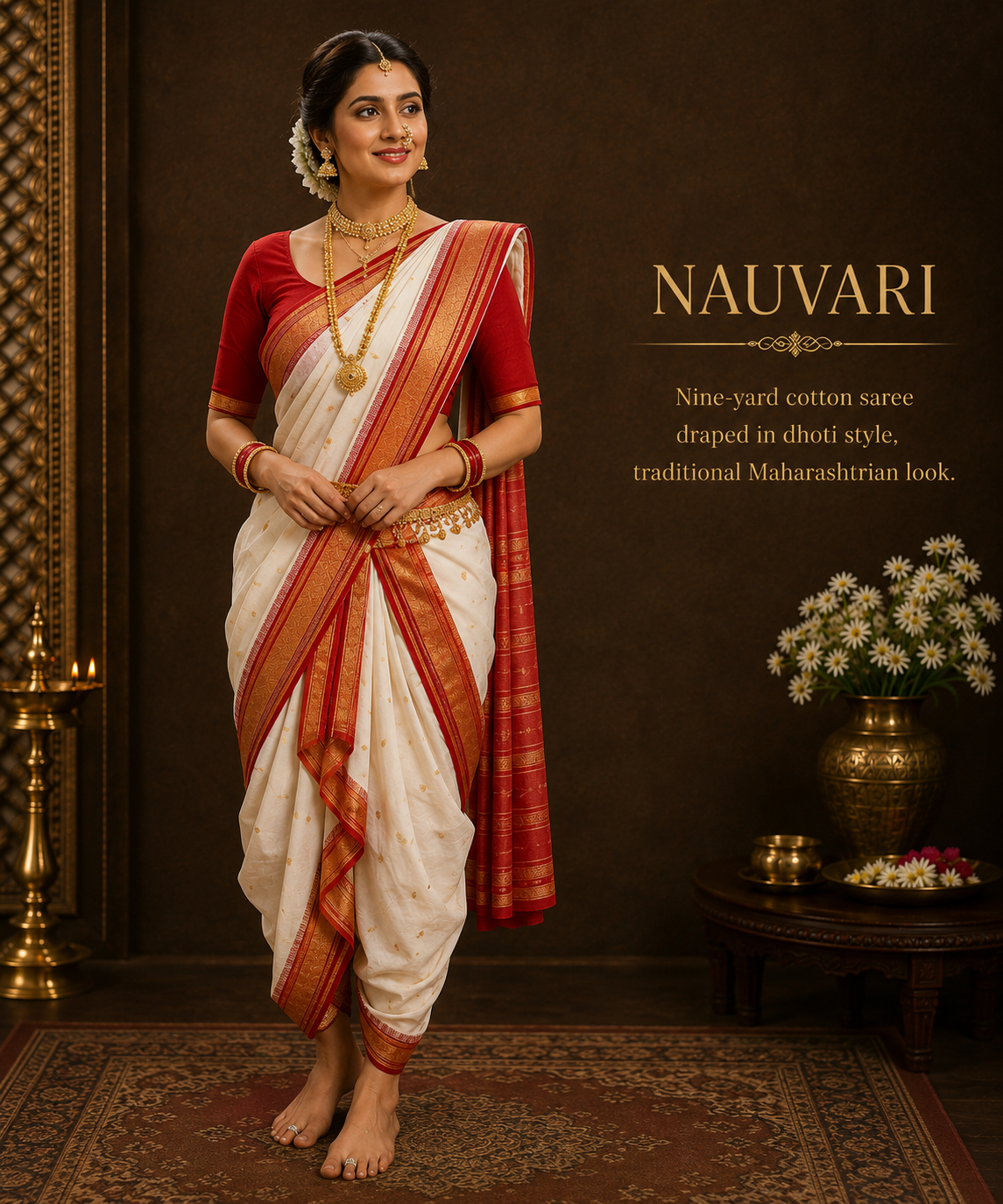
This is a special saree of Maharashtra that consists of nine yards of fabric draped like a dhoti and tucked inside the legs rather than being pleated in the front.
Central India
34. Chanderi Saree — Madhya Pradesh
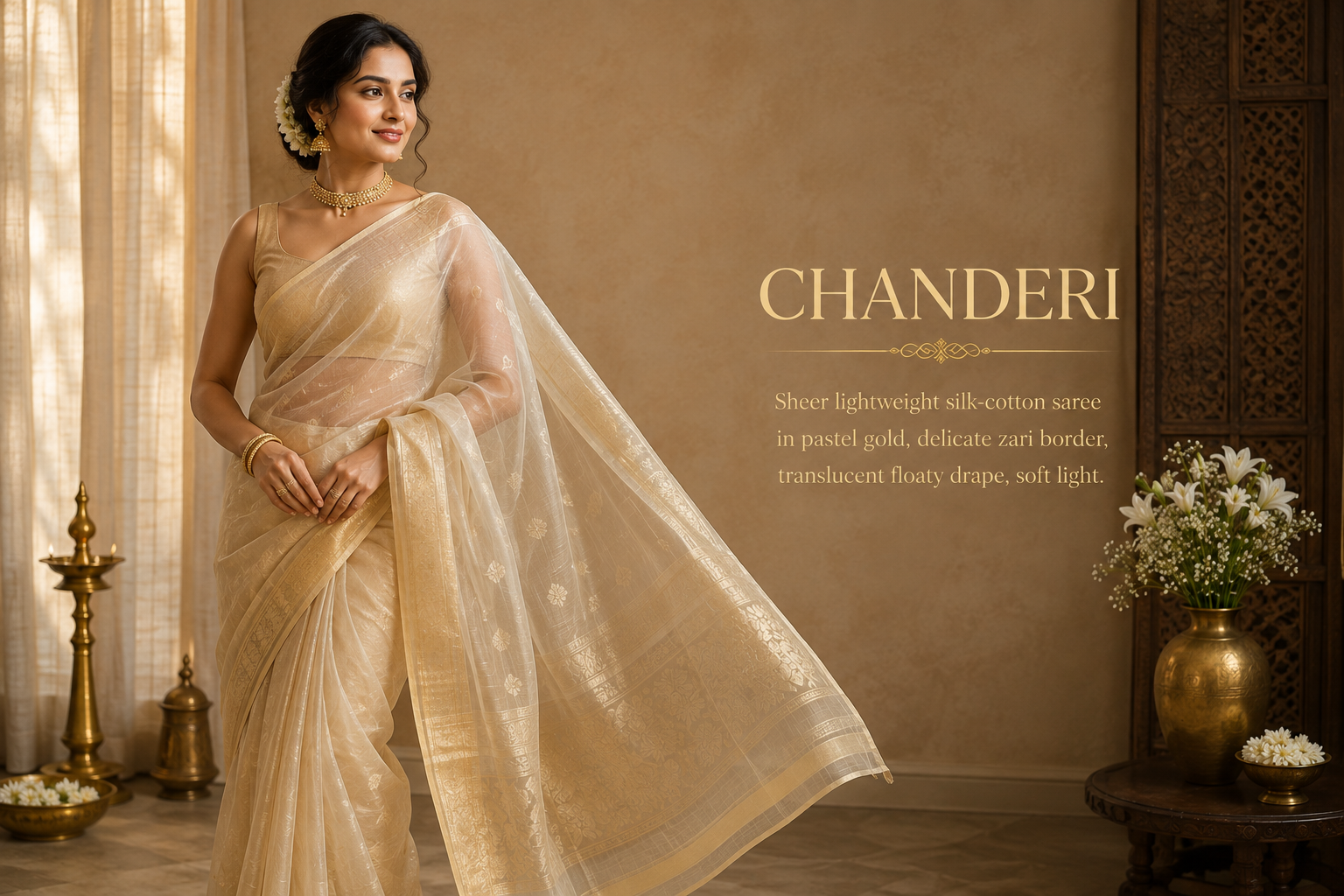
A sheer, lightweight silk-cotton fabric from the town of Chanderi famous for its transparent texture and intricate zari border—a very comfy silk-like saree for wearing over extended periods of time.
35. Maheshwari Saree — Madhya Pradesh
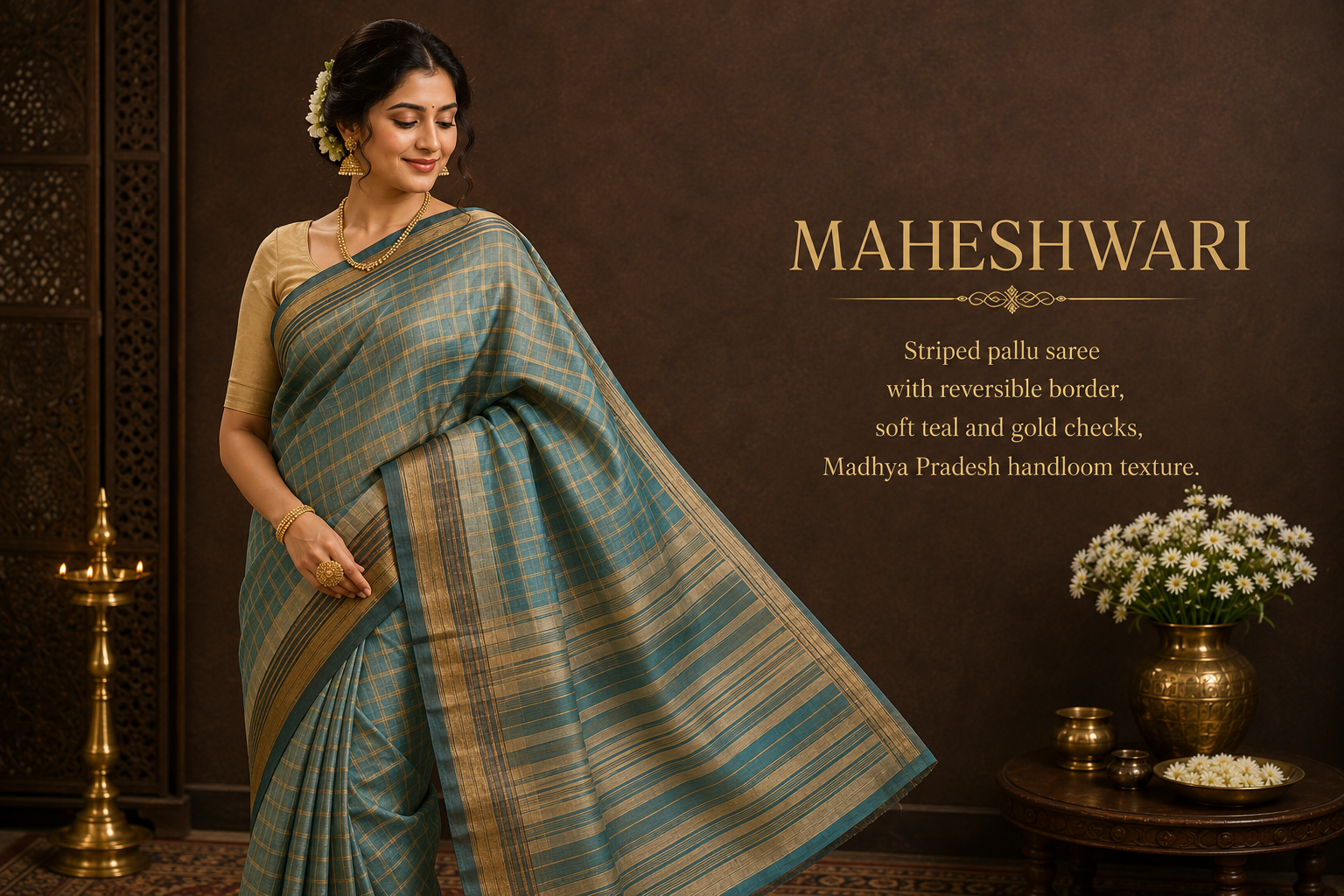
Identifiable by the stripes on the pallu and reversible border that makes the saree look elegant from either side; a saree style that originated during the reign of queen Ahilyabai Holkar in the 18th century.
36. Kosa Silk Saree — Chhattisgarh
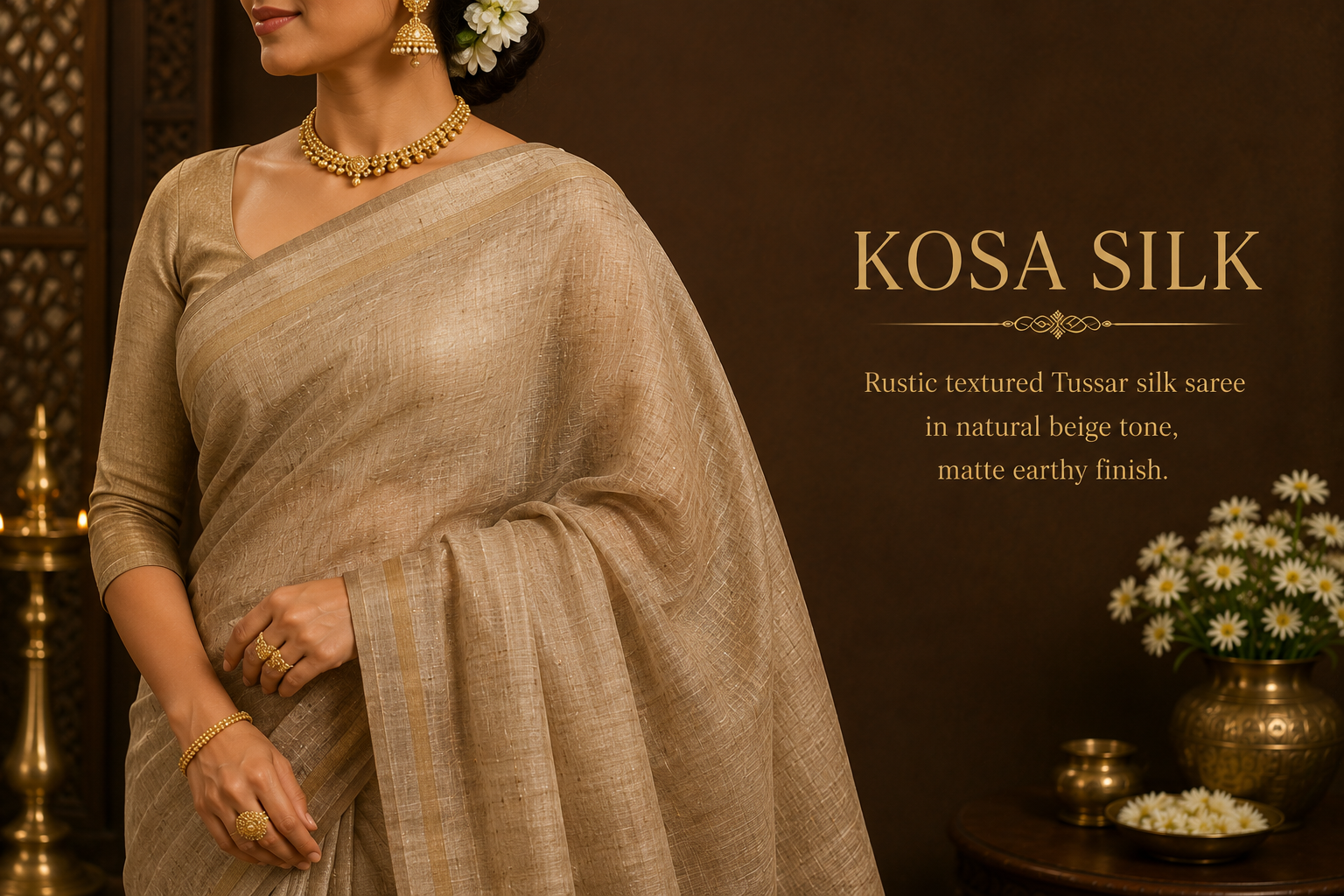
A rough-textured Tussar variety of silk that has a dull surface and is usually made in natural or slightly colored versions to highlight the texture of the fabric.
Fabric-Based Sarees Worn Pan-India
These aren’t tied to one state — they’re defined by fabric and are worn across the country, especially as modern, easy-care alternatives to handloom silk.
37. Georgette Saree
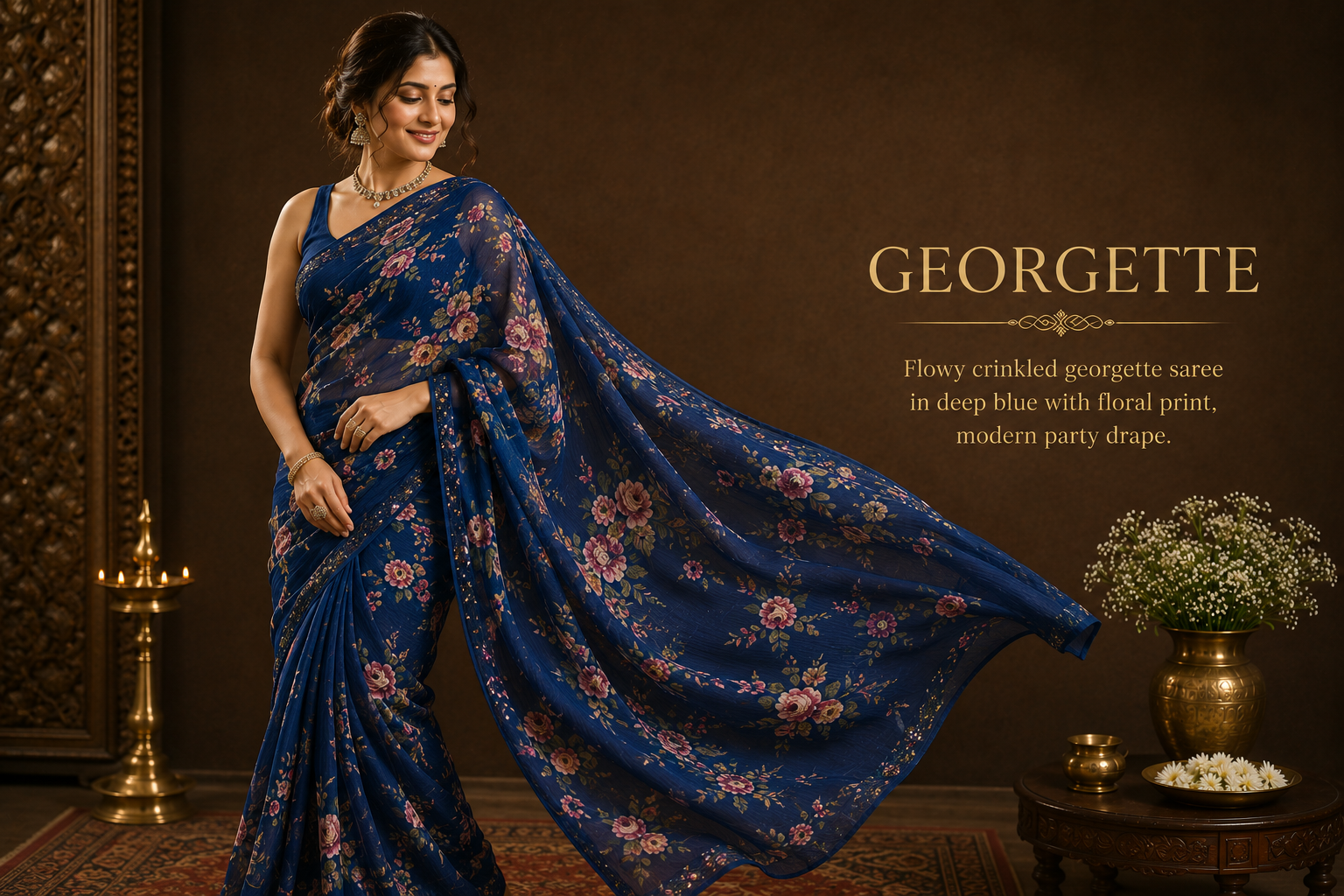
A slightly wrinkled, matte artificial or silk blend fabric which falls gracefully and can print well; ideal for parties and contemporary draping.
38. Chiffon Saree
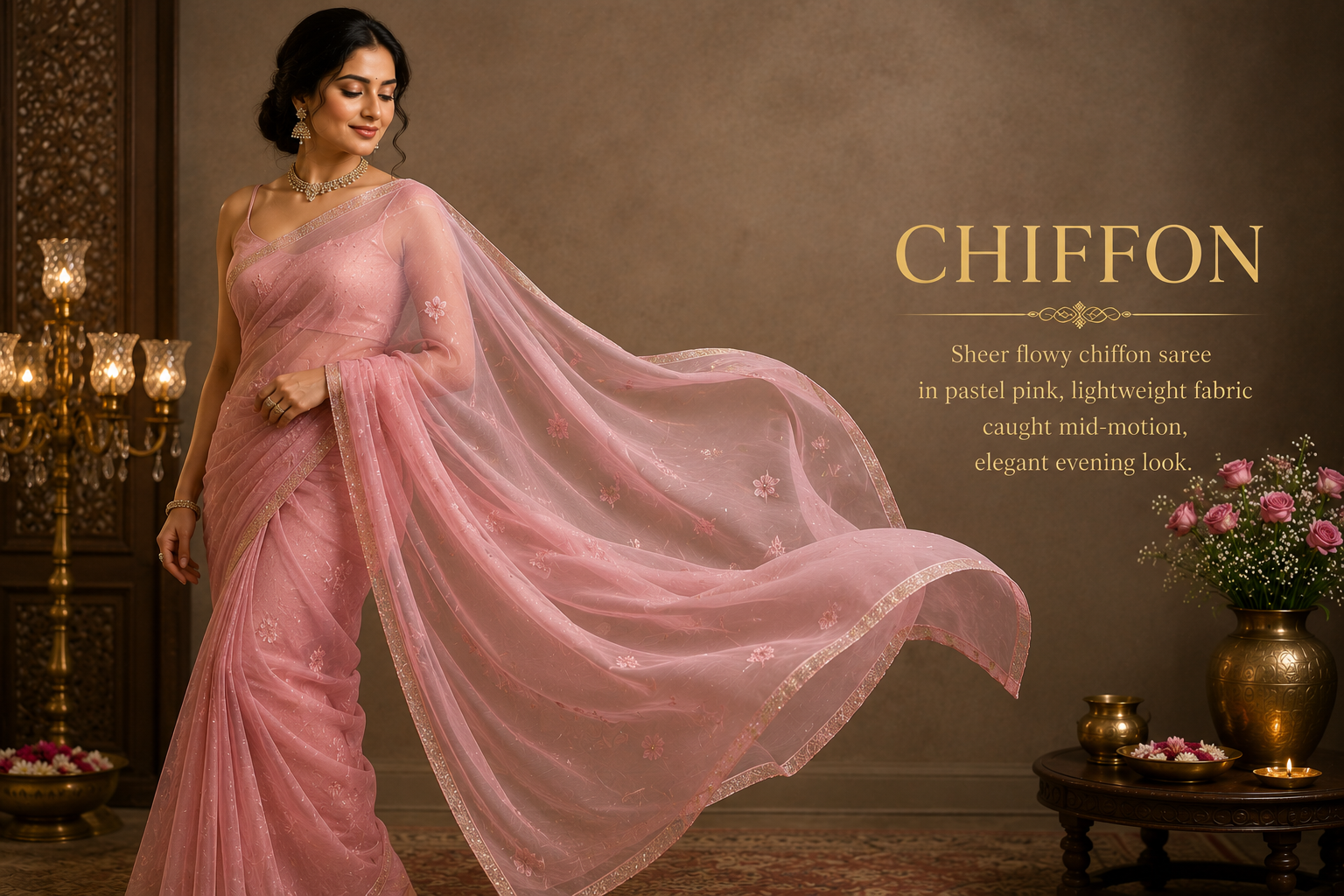
Lightweight and flowing, this fabric gained popularity due to Bollywood; great for both day and evening wear.
39. Organza Saree
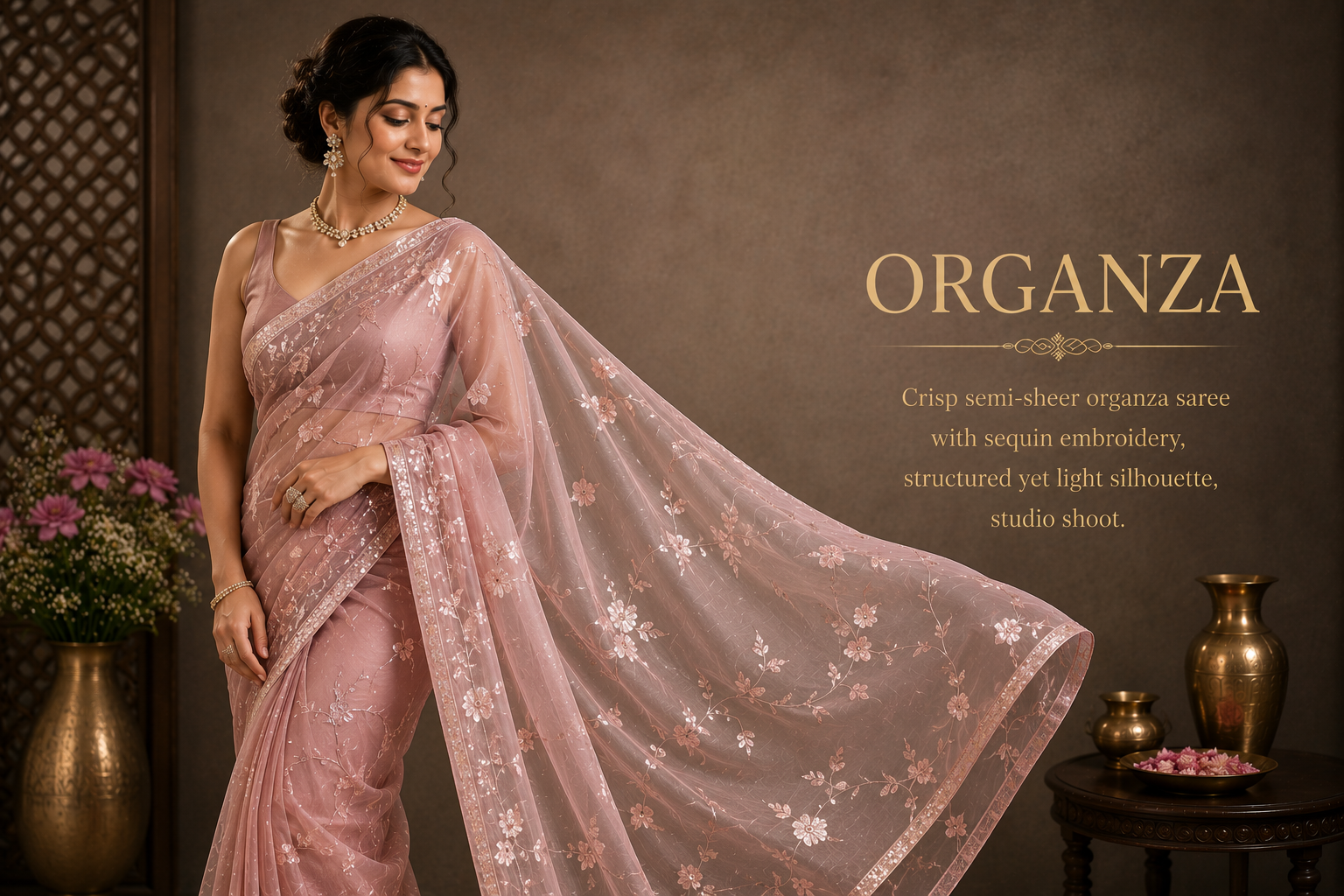
A structured, sheer fabric that usually includes embroidery or beadwork; now trendy because of its “structured yet light” look.
40. Satin Saree
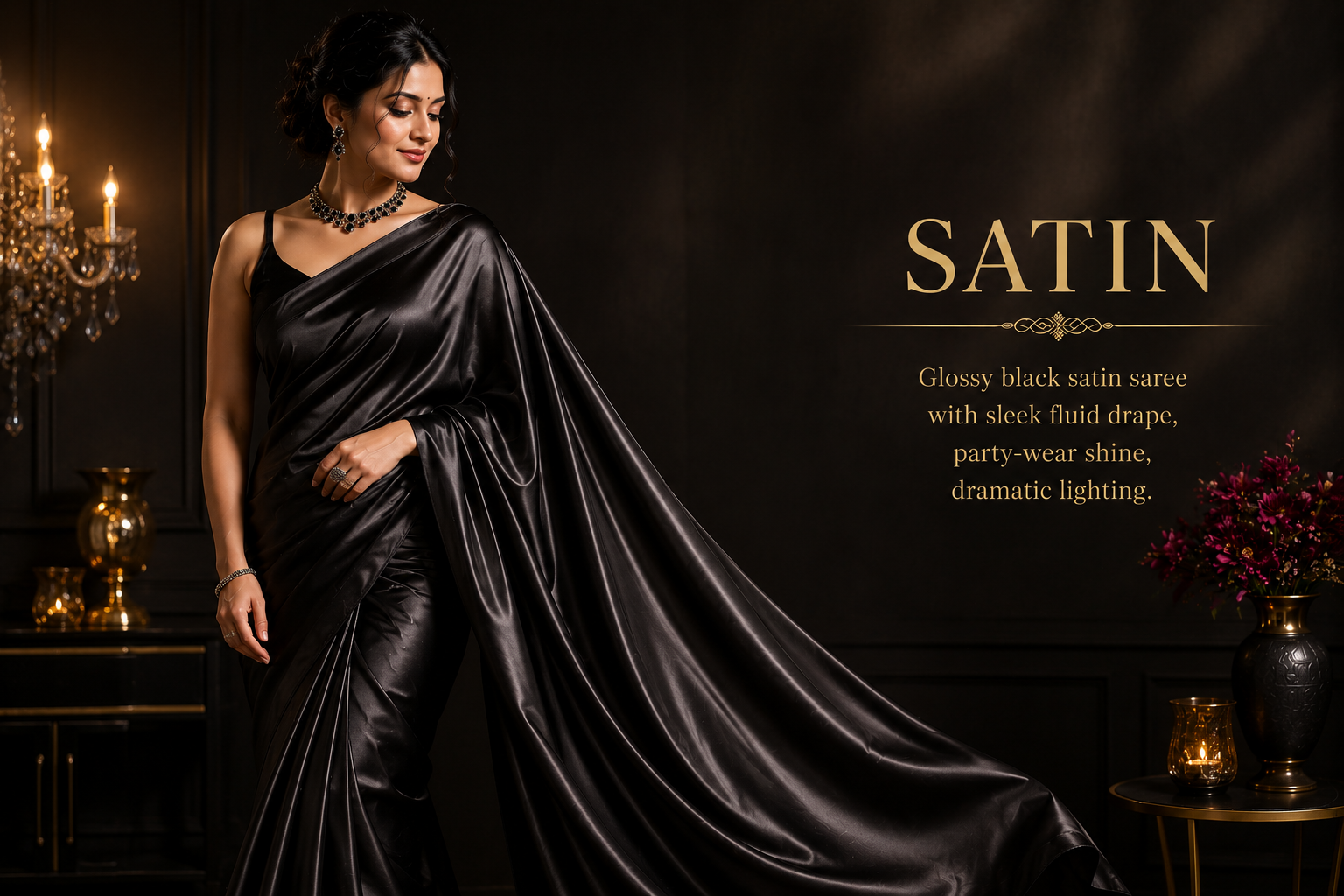
A glossy, flowing fabric; often selected for evening or party wear where a little glossiness adds value.
41. Linen Saree
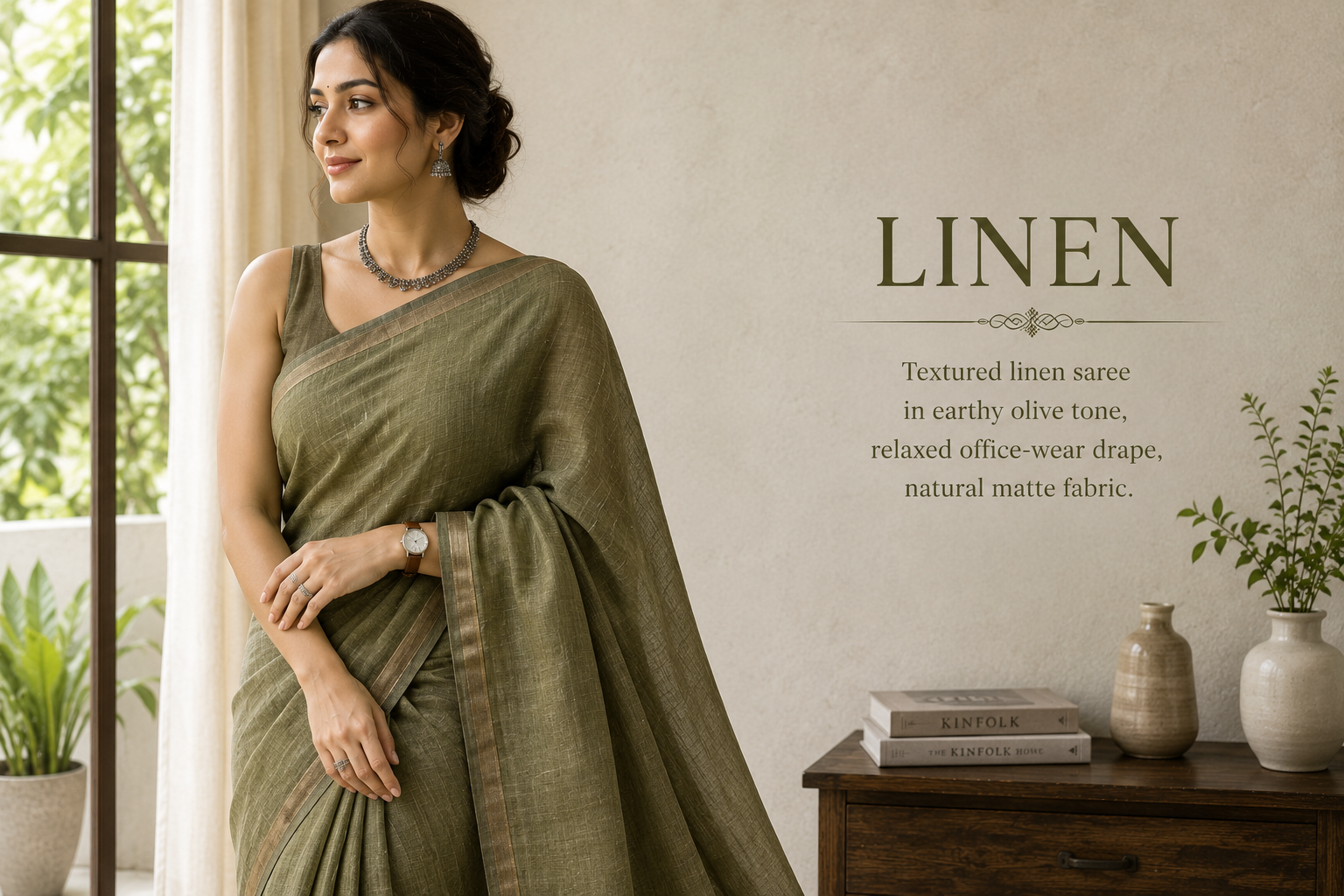
A breezy, textured and low maintenance fabric which is made from a cottonlike material; became trendy during the last ten years for office and regular use.
How to Choose a Saree by Occasion
Weddings and other big occasions: Banarasi, Kanjeevaram, Paithani, Patan Patola or Dharmavaram – heavy, zari and traditional craft sarees that photograph well and can survive an entire function.
Everyday wear and office: Tant, Chanderi, linen or Mangalagiri cotton – lightweight, low maintenance and easily drapable without assistance.
Summers and outdoors: Kota Doria, Chettinad cotton or Muga silk – all woven to beat the heat with Kota Doria being the most airy.
Winter functions: Pashmina or a heavier Banarasi or Kanjeevaram silk – where weight and heaviness will keep you warm.
Festivals: Bandhani, Leheriya or Sambalpuri – color and pattern dominated sarees that are meant to be worn at festive times not solemn ones.
For gifting and heritage investment: Patan Patola, Jamdani or Baluchari – intricate and GI and UNESCO tagged weaving traditions that retain their value for decades.
Saree Care Basics
- Silk (Kanjeevaram, Banarasi, Paithani, Patola): dry cleaning is a must; should be kept in folds in muslin and away from light and refolded at irregular intervals to ensure no permanent creases are formed.
- Cotton (Tant, Chettinad, Mangalagiri, Chikankari base fabric): wash in cold water by hand for the first few washings because natural dyed cotton may bleed; hang to dry in shade to avoid fading.
- Zari sarees: ironing should not be done directly on zari; instead, iron the garment on the opposite side, or else place a cloth between the iron and the saree to prevent the thread from rusting.
- Ikat & tie-dye sarees (Pochampally, Sambalpuri, Bandhani, Leheria): first few washes must be done separately to prevent the colors from running off.
FAQs
1.How many sarees are there in India?
There’s no specific number — there are around 30 to 40+ main sarees across different regions, but the count is much higher when sub-types in each region are taken into consideration.
2.What kind of saree should be worn by someone who is buying a saree for the first time?
The sarees that are very easy to drape and take care of are Tant, Chanderi, and Chettinad sarees; these are recommended before trying out silk.
3.How is a Banarasi saree different from a Kanjeevaram silk?
A Banarasi saree has Mughal inspired brocade work done with zari weave all over the body of the saree; Kanjeevaram has a border that is contrasted to the body of the saree woven with korvai technique.
4.Which are the sarees with GI (Geographical Indication)?
Several sarees are under this category, like Kanjeevaram, Patan Patola, Pochampally Ikat, Banarasi, Muga Silk, Bomkai and Chanderi; a GI saree indicates that the saree is traditionally woven in its particular place of origin.
5.What is the costliest saree in India?
Patan Patola saree comes out to be the most costly because of its double ikat weaving process that takes months to complete a single saree; Kanjeevaram and Banarasi with pure zari work also go on the same expensive range.
6.What saree should one wear in summer season?
The most comfortable sarees during summers are Kota Doria, Chettinad Cotton, and Muga Silk.
Related Post: