
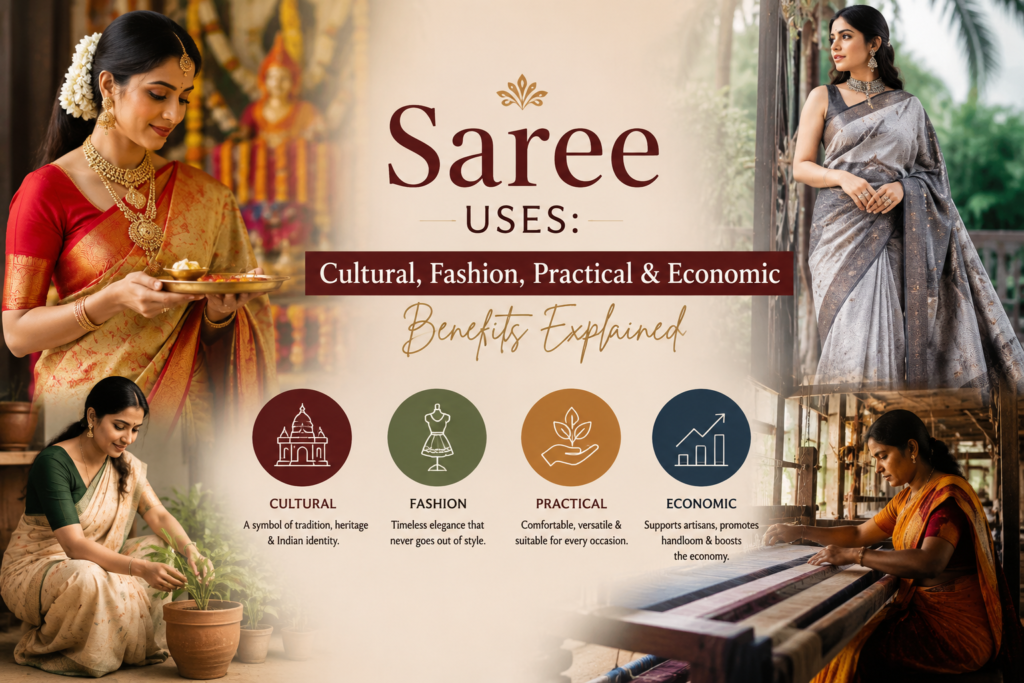
The saree stands among the most iconic and enduring garments worldwide. It has been part of the attire of millions of Indian women and many others outside India, and in effect, it is a lot more than simply a piece of clothing. It portrays culture, tradition, sophistication, and a high degree of adaptability. Traditional sarees and new-age designer sarees are equally gaining popularity as office wear, while wedding sarees and party sarees remain favorites among women of all ages.
This blog is going to discuss how sarees can be used in different ways, including the carry-overs of cultural values, benefits, and the reasons why they are still very much a part of women’s closets.
What Is a Saree?
Generally, a saree is known to be a length of fabric of varying lengths – it majorly ranges from five to nine yards – which is worn by wrapping and pleating it around the waist and then draping one end over the shoulder. Moreover, it is a complete ensemble on its own and is normally worn with a short tailored blouse and a petticoat or underskirt.
As for the types of sarees, they come in a wide variety of fibers, colors, patterns, and styles, which means they can easily become the go-to option whether you are getting ready for a formal occasion or something more casual. Their adaptability is a great reason why they have remained fashionable.
Cultural and Traditional Uses of Sarees
1. Symbol of Indian Heritage
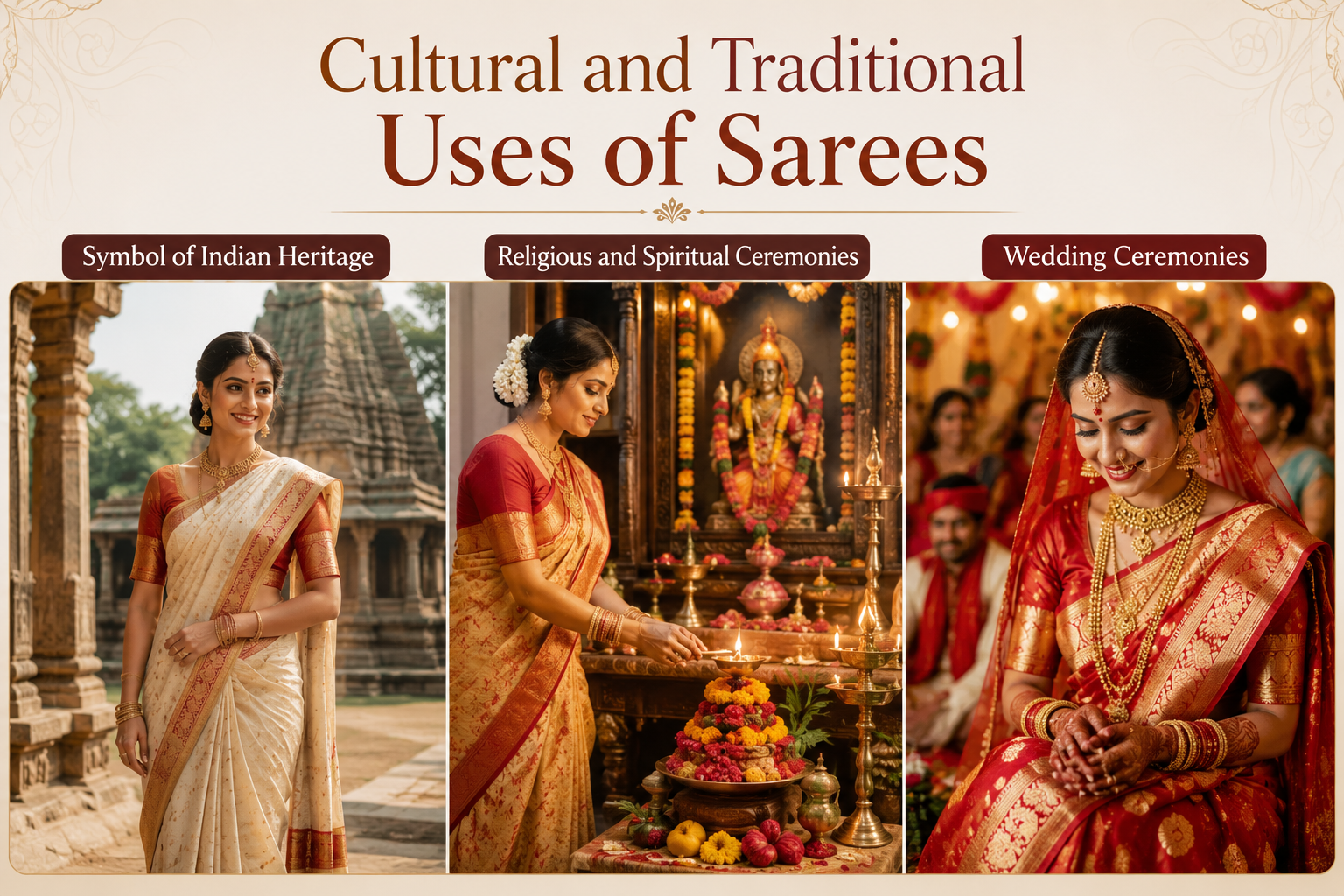
One of the foremost uses a saree is put to is serving as a means of preserving and presenting Indian culture to the world. Different states and communities in India portray their culture comprehensively and distinctively through their styles of sarees, weaving techniques, and draping methods.
Some Indian sarees that are well known are:
- Banarasi Saree
- Kanjivaram Saree
- Bandhani Saree
- Chanderi Saree
Such textiles not only help preserve the heritage but also the craft tradition of the weavers who hand-make them forming a sustaining livelihood.
2. Religious and Spiritual Ceremonies
Sarees are a cultural symbol and thus a preferred attire for temple visits, religious ceremonies, pujas, festivals, spiritual meetings, etc.
Women who wear sarees on religious occasions feel a traditional silk or cotton saree represents respect and emphasizes the devoted nature of a person.
3. Wedding Ceremonies
Sarees are an integral part of Indian weddings. Factors contributing to the beauty of the bride are the exquisite silk or designer sarees worn by her on different days of the wedding.
Wedding sarees are not only limited to the bride because they are worn by the following as well:
- Bridesmaids
- Parents of the bride and groom
- Family members
Besides that, sarees are also a part of wedding gifts and are considered good luck tokens in some communities.
Fashion and Style Uses of Sarees
4. Elegant Formal Wear
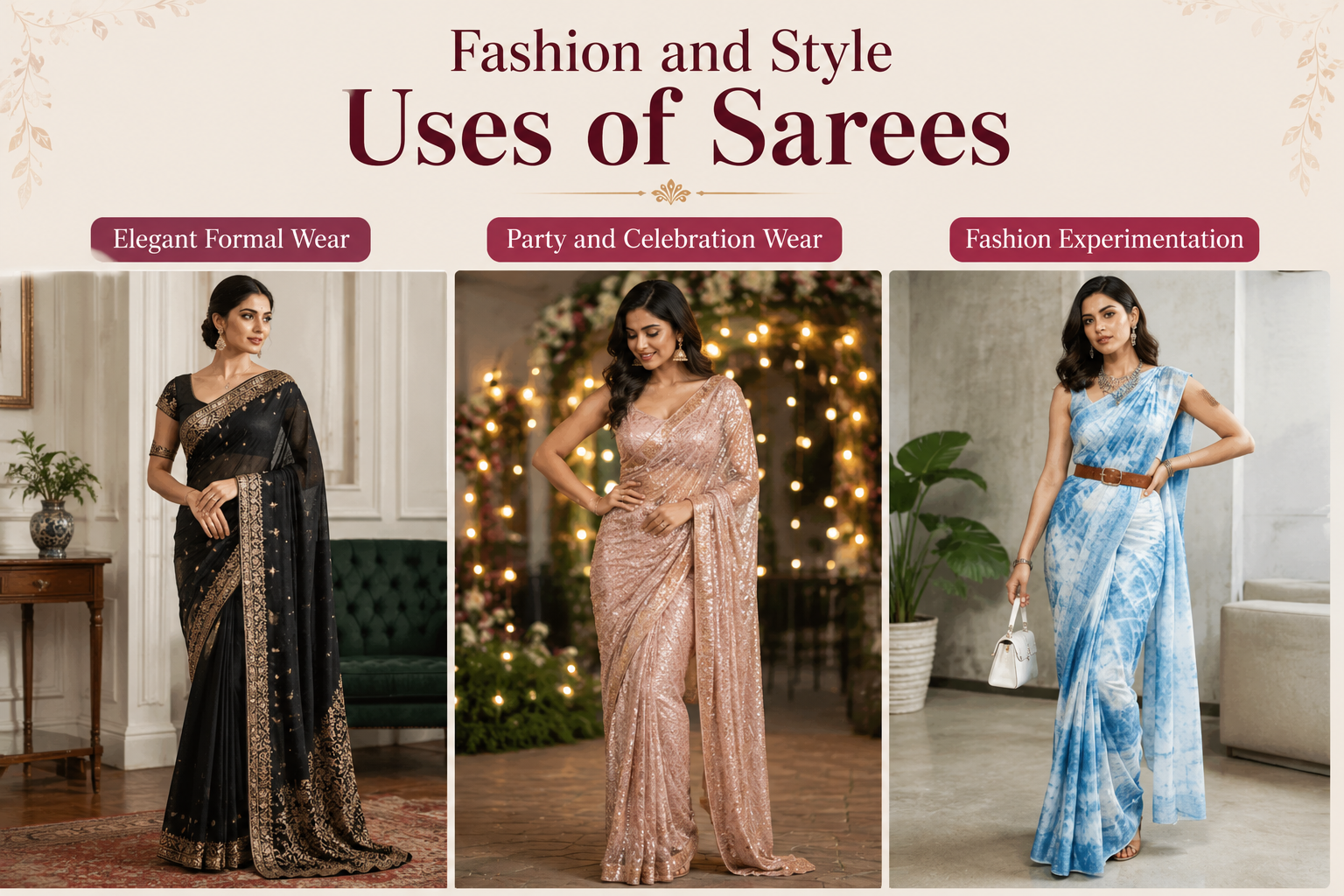
In general, sarees are used as formal wear because they give a stunning and elegant look to the person wearing them.
Women wear sarees as formal attire not only at offices but also at:
- Corporate events
- Business meetings
- Award ceremonies
- Conferences
- Official functions
Simple silk, linen, and cotton sarees offer the best professional look with maximum comfort.
5. Party and Celebration Wear
Sarees are a good choice for any sort of celebration especially when they are designer ones.
- Birthday parties
- Family functions
- Anniversary celebrations
- Social gatherings
- Cultural events
Embellishments like sequins, embroidery combined with contemporary draping styles have resulted in sarees becoming a popular fashion statement.
6. Fashion Experimentation
Live and let live is a fashion mantra and the saree has allowed doing that quite literally.
Over the years, fashion designers have created a range of saree styles for example, belted sarees, pre-stitched sarees, jacket sarees, ruffle sarees, and pant-style sarees.
These also aid the youngsters in continuing the celebration of the traditional fashion going forward by it being a part of the present one.
Practical Uses of Sarees
7. Comfortable Everyday Wear
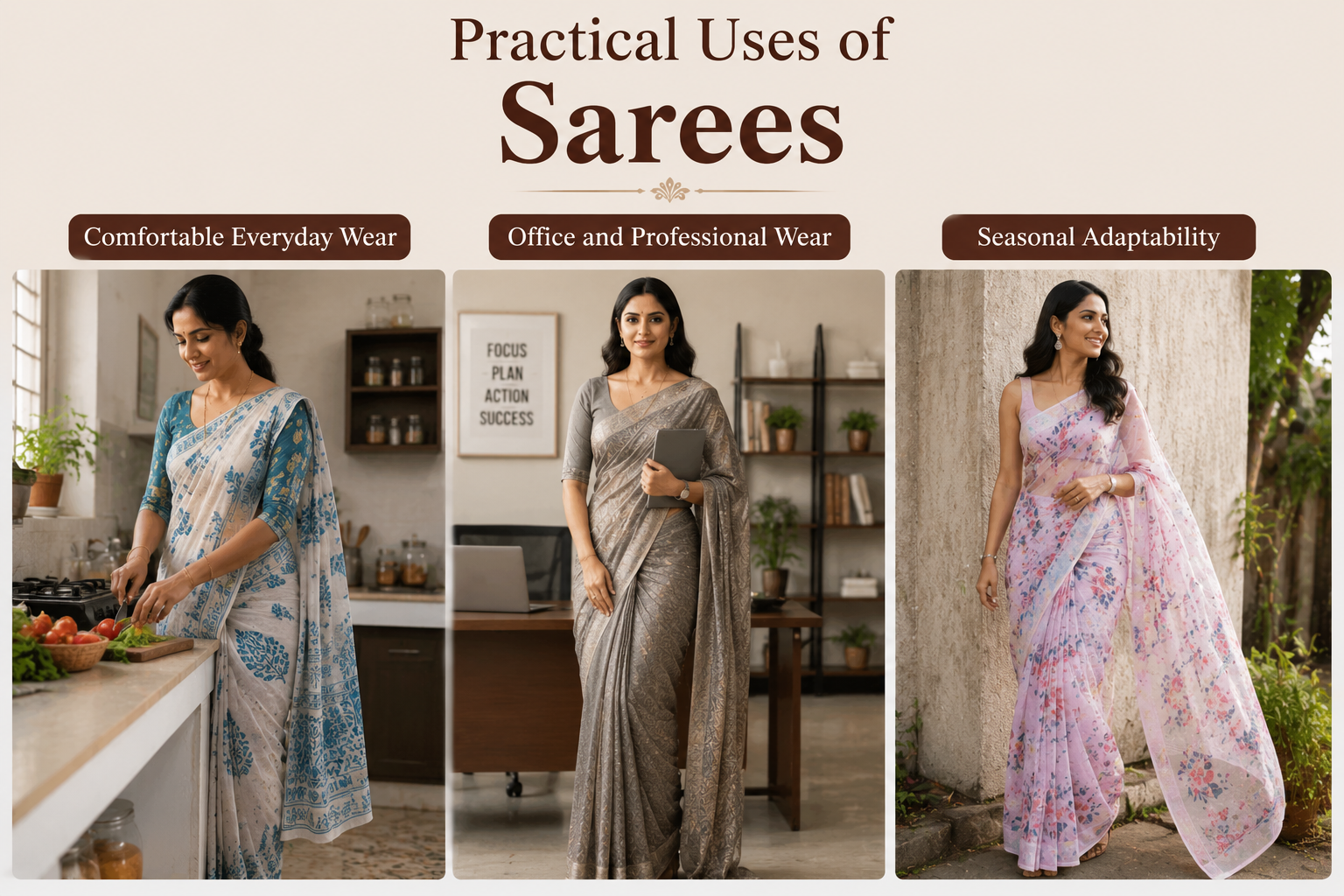
Most women prefer the use of cotton sarees when they go out for their day-to-day activities since they are breathable, comfortable, facilitate free movements, and adapt well to the climate.
In fact, for women living in hot and humid weather conditions, cotton sarees have always been their favorite choice as these provide a pampering effect to the skin.
8. Office and Professional Wear
Sarees are among the permissible formal dresses at work in areas like:
- Education
- Banking
- Government offices
- Healthcare
- Hospitality
Wearing sarees helps to project a professional image while at the same time maintaining one’s cultural identity through one’s outfit.
9. Seasonal Adaptability
Different saree fabrics are considered correct for different seasons in the year.
You could say summer sarees include:
- Cotton
- Linen
- Chiffon
Winter sarees most often comprise:
- Silk
- Velvet
- Wool blends
Due to this, sarees can be worn all year round without any issues.
Social Uses of Sarees
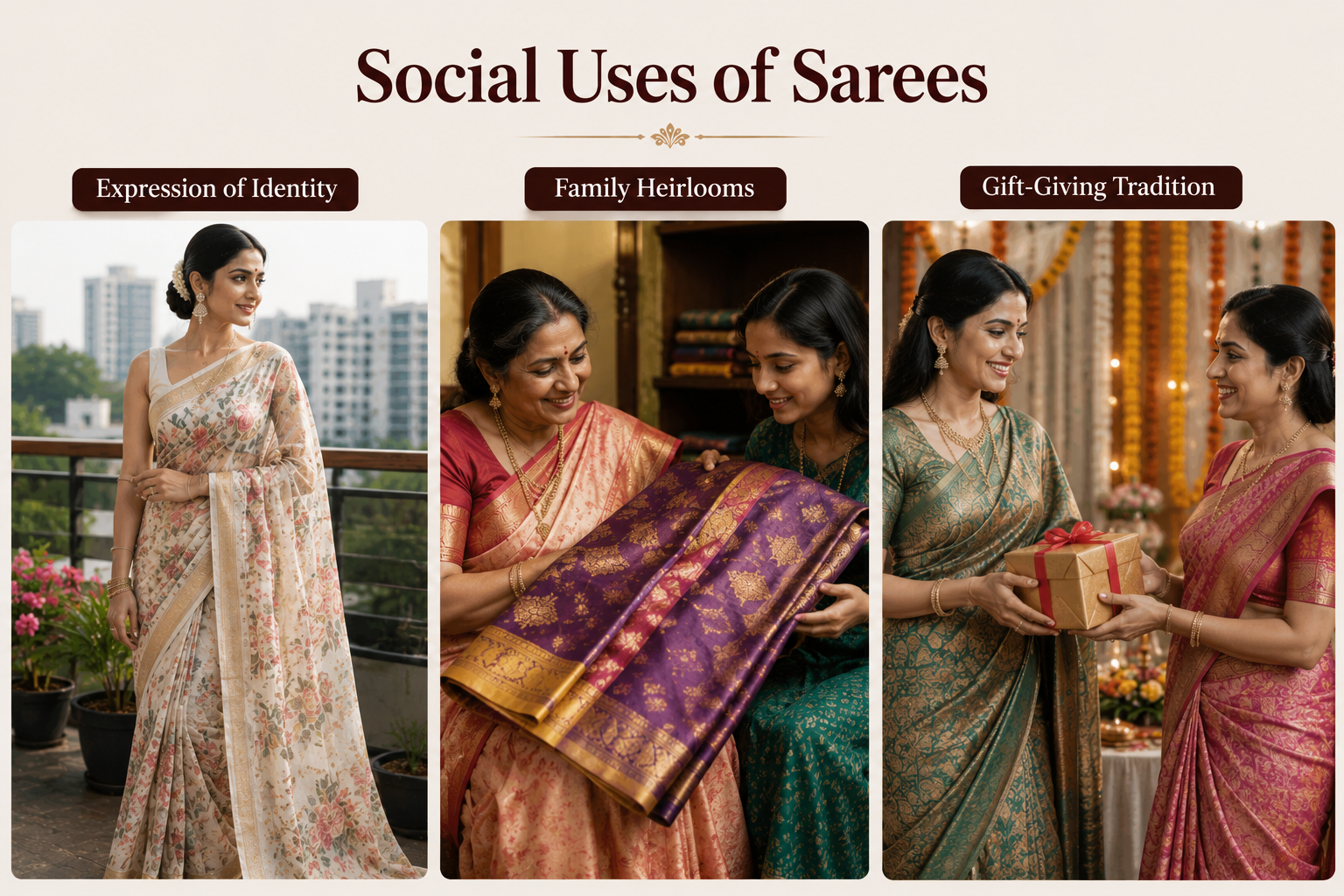
10. Expression of Identity
Sarees are often the codes for:
- Regional identity
- Family traditions
- Cultural heritage
- Personal style
One’s choice of material, color, and the manner in which the saree is draped can all convey an individual’s background and taste.
11. Family Heirlooms
It is a common custom for families to keep sarees in their possession for generations.
Besides bridal sarees, many of those that are handcrafted and woven silks eventually become heirlooms.
The cultural meaning attached to these heirloom sarees adds to their stature as symbols of family history.
12. Gift-Giving Tradition
Sarees are one of the most favorite gifts given during
- Weddings
- Festivals
- Anniversaries
- Housewarmings
- Religious ceremonies
They are thoughtful and meaningful gifts that are considered by many different cultures.
Economic Importance of Sarees
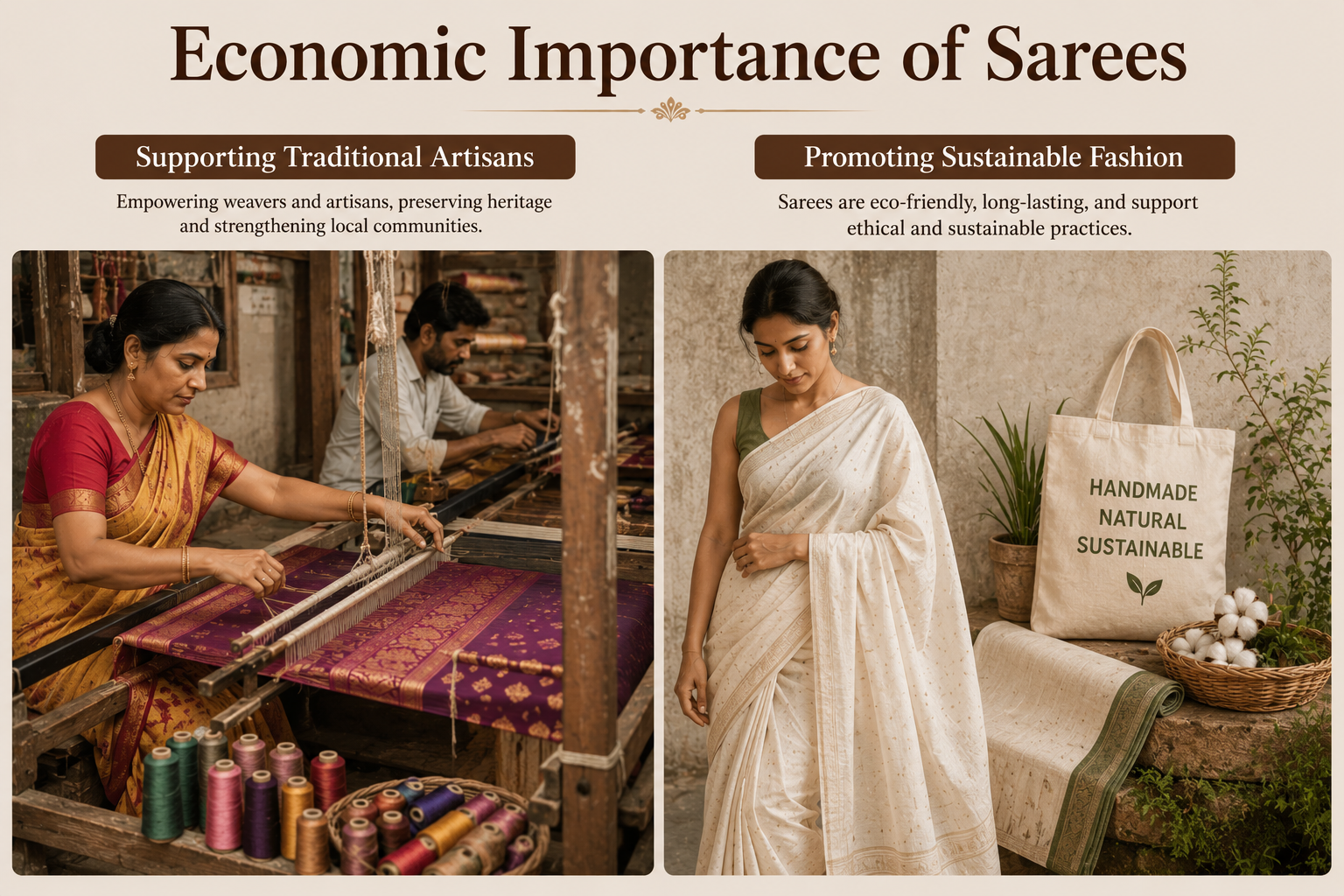
13. Supporting Traditional Artisans
It is no exaggeration to say that the saree industry is the lifeline of millions of Indian artisans; it includes weavers, dyers, embroidery workers, etc.
Buying handloom sarees will lead to continued survival of:
- Handloom weaving
- Traditional craft
- Rural employment
- Indigenous textile industries
Besides supporting the preservation of cultural heritage, this also serves to raise local economies.
14. Promoting Sustainable Fashion
Handloom and sarees made from natural fibers can be great environmentally friendly alternatives to fast fashion.
Some important benefits are:
- Longer lifespan
- Less production of textile waste
- Use of naturally sourced fibers
- Ensures that production methods remain efficient and sustainable
If one takes great care of their saree, it can be the owner’s dress for several years and even decades, thus adding a sustainable item to your wardrobe.
Health and Comfort Benefits of Wearing Sarees

15. Better Air Circulation
Since sarees don’t fit the body tightly like many other clothes, they allow good air to flow round the body. Because of that, they are really good to wear during hot and humid weather.
16. Flexible Fit
One of the most amazing features of a saree is that it can be adjusted easily to one’s needs. Unlike ready-made standard size clothes, sarees can be made to suit the different shapes and sizes of bodies in a very simple manner.
17. Freedom of Styling
Women can choose to drape their sarees in different ways based on:
- Which way is most comfortable for them
- How active they will be
- Keeping up with the latest fashion
- Following cultural norms
This adaptability is what keeps the garment so popular for such a long time.
Modern Uses of Sarees
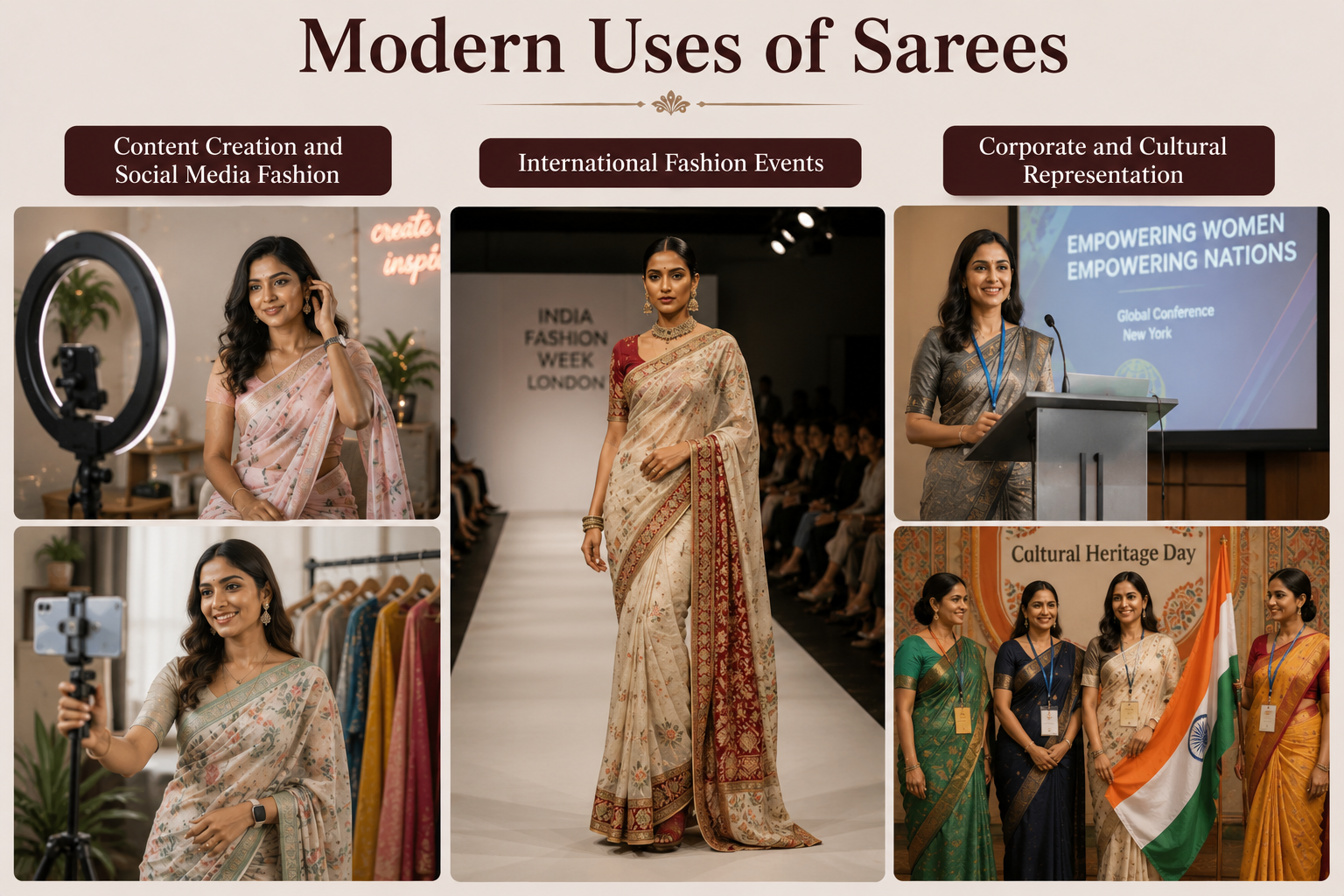
18. Content Creation and Social Media Fashion
In the world of today, sarees are a fashionable choice of clothing for content creation on the internet.
- Fashion blogs
- Instagram posts
- YouTube styling videos
- Cultural content
- Brand promotions
With the help of their creative hairstyles, fashion influencers successfully attract young people who want to stay trendy.
19. International Fashion Events
The presence of sarees in international fashion shows, cultural fairs, and other global events is increasing.
It creates an excellent platform for Indian textile art to reach worldwide audiences.
20. Corporate and Cultural Representation
Different companies use saree as a uniform during cultural programs and other special occasions in order to portray the message of diversity and traditional heritage preservation.
Tips for Choosing the Right Saree
You will be able to reap maximum advantages and optimized utilization of a saree if you:
- Select cotton or linen if the sari is meant for daily use.
- Choose silk sarees if you are planning to attend weddings or festivals.
- Pick lightweight fabric if it is a summer garment.
- Designer sarees, on the other hand, are used for social outings and parties.
- Handloom sarees, on the other hand, make a good choice if you are thinking in terms of sustainability and durability.
The right sari can figuratively put the person in the driver’s seat to fully experience the wonderful ride! It can be a wonderful thing to own a sari from which you can get maximum comfort, boost of confidence, and a great look.
The saree is way beyond being just a traditional garment. Its uses span culture, fashion, profession, comfort, and personal expression. Choosing to wear saree for a wedding, office meetings, religious ceremonies or just simply for casual outings is the best way to showcase your elegance and versatility.
A saree can be a timeless piece of clothing that can get you talking on the latest fashion trends without losing the essence of one’s cultural heritage. And it is only a matter of time before different generations keep falling in love with this timelessness and cultural heritage preserved in the piece of fabric called saree.
with this gorgeous outfit, the saree will continue to be the hallmark of elegance, tradition, and individuality that never fades away.
FAQ’S
1. What is a saree?
A saree is a piece of cotton, silk or any fabric, usually 5 to 9 meters long, which is worn by wrapping it around the waist, one end being thrown over the shoulder, and the other left hanging. It is mostly paired with a combination of petticoat and a blouse.
2. What are the cultural uses of sarees?
Sarees are the central part of the culture of a diverse nation as they are seen at religious ceremonies, weddings, and as symbols of cultural identity. They are also exchanged during significant occasions in the form of tokens of love.
3. How are sarees used in fashion and style?
Sarees are perfect for formal occasions such as corporate events and parties and are forever changing, and their style at present may not be the same tomorrow. They are precious for illuminating personal style and cultural heritage.
4. What practical benefits do sarees offer?
Sarees contribute to the comfort of the wearer and the silk material gives them the breathability that makes them ideal for day-to-day use, as well as office wear. They provide seasonal versatility since different fabrics are chosen for the summer and winter months.
5. How do sarees support the economy?
This is a step that the saree industry takes to conserve traditional craftsmanship and promote sustainable fashion by using natural fibers, handloom, and traditional weaving techniques, hence, preserving the cultural heritage and uplifting the local sector which finds its benefits here.
Related Post: