
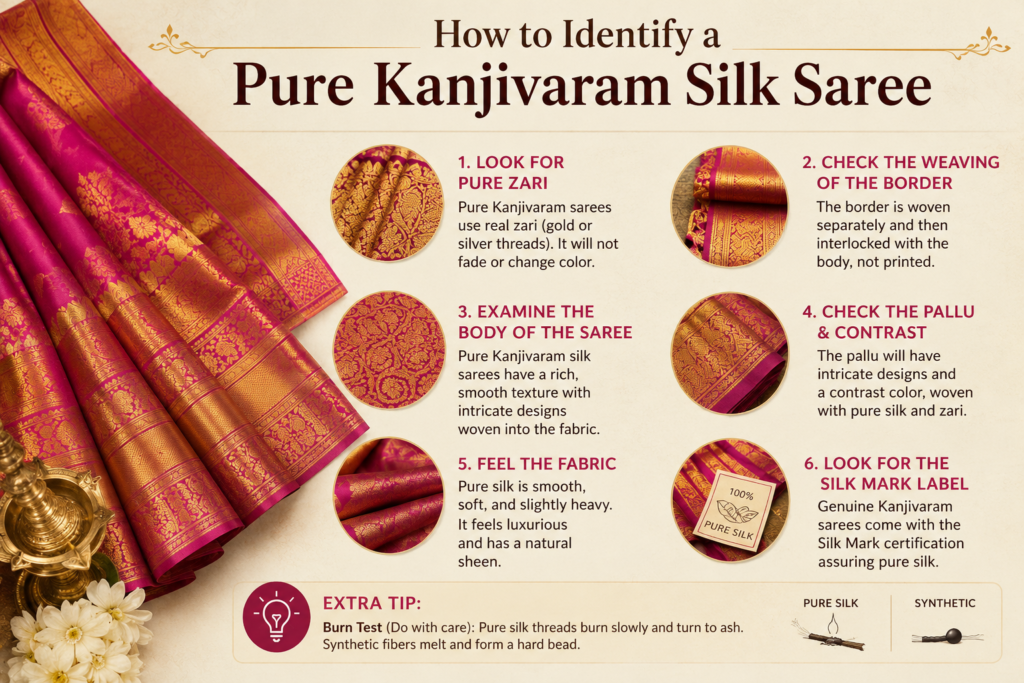
Kanjivaram silk sarees continue to be one of the most loved pieces of traditional Indian clothing. Their rich feel, bright hues, elaborate zari designs, and sturdy nature are the factors that made them popular. Apart from showcasing grace and culture, these sarees serve as a perfect investment, especially if they are brand-new and well taken care of, and you can hand them down to the successive generations.
However, along with the rising popularity of Kanjivaram sarees, the number of fake ones crowding the market has also increased. As a buyer, being able to differentiate a genuine Kanjivaram silk saree from a fake one is the right way to avoid counterfeits and at the same time get the finest craftwork of your choice.
Here is a full guide that outlines the true characteristics of a Kanjivaram silk saree, useful methods of recognition, and expert buying tips.
What Is a Kanjivaram Silk Saree?
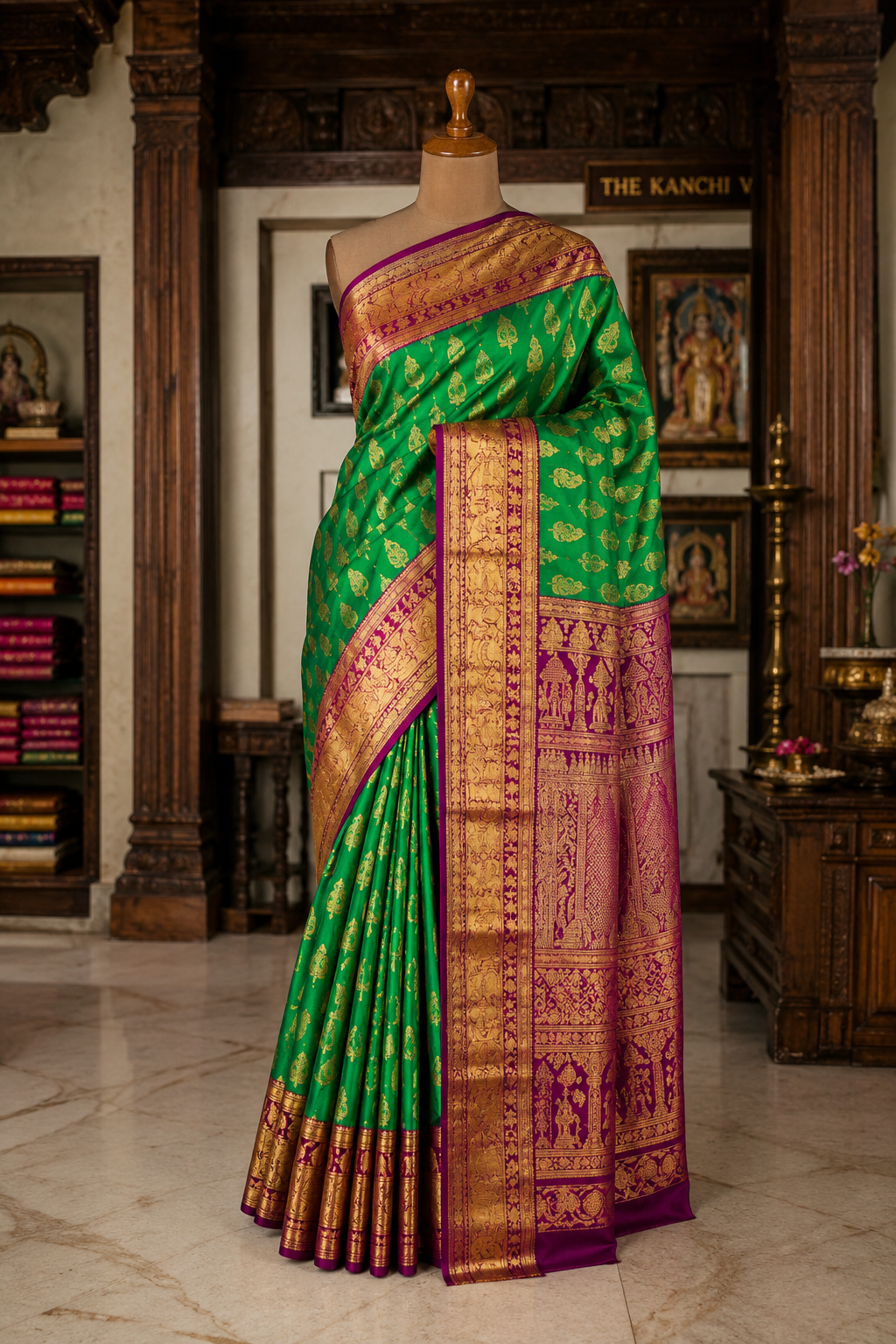
Kanchipuram, a town renowned for its traditional silk weaving arts is the birthplace of Kanjivaram silk sarees. These sarees are the product of expert weaving, the use of first-class silk yarns along with pure zari, a kind of gold or silver thread which is highly valued over the generations.
Kanjivaram sarees generally exhibit the following:
- Luxurious silk fabric
- Ornate borders of contrasting colors
- Temple motif designs in great detail
- Exquisite pallu work
- Excellent durability
- Graceful shine
In fact, with proper care, a Kanjivaram silk saree can be an heirloom of the family for a long time.
The Importance of Recognizing a Real Kanjivaram Silk Saree
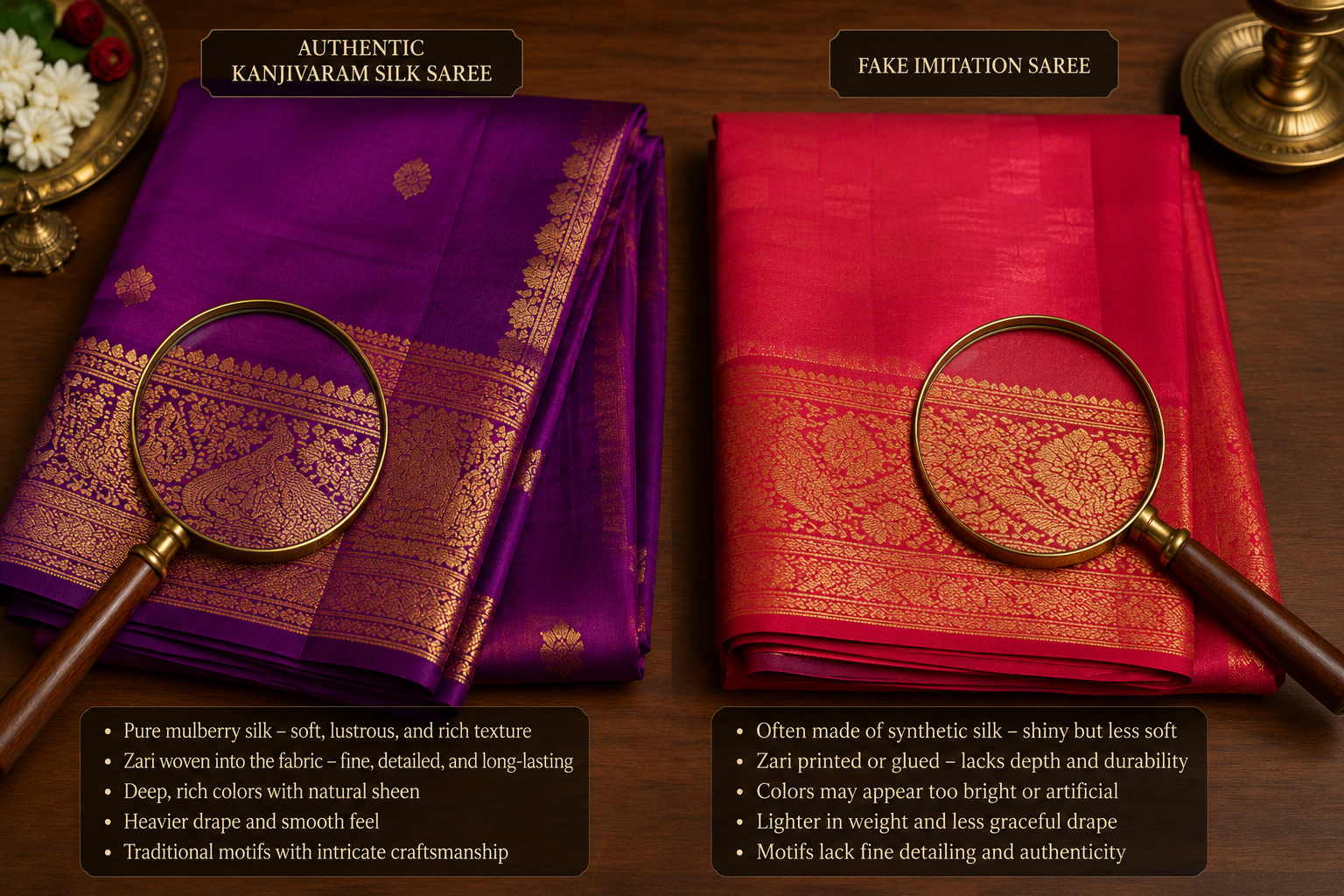
The fabric of an authentic Kanjivaram silk saree is a lavish textile that, when combined with zari, differs significantly in quality from those that are machine-made or synthetic.
The purchase of a native saree guarantees among others:
- Quality of superior fabric
- Greater durability
- Authentic handmade work
- Long-standing worth
- Discomfort-free wearing
- Local handicraft
- High second-hand value
Recognizing real silk and fakes is a step to safeguarding your financial commitment.
Indicators of a Genuine Kanjivaram Silk Saree
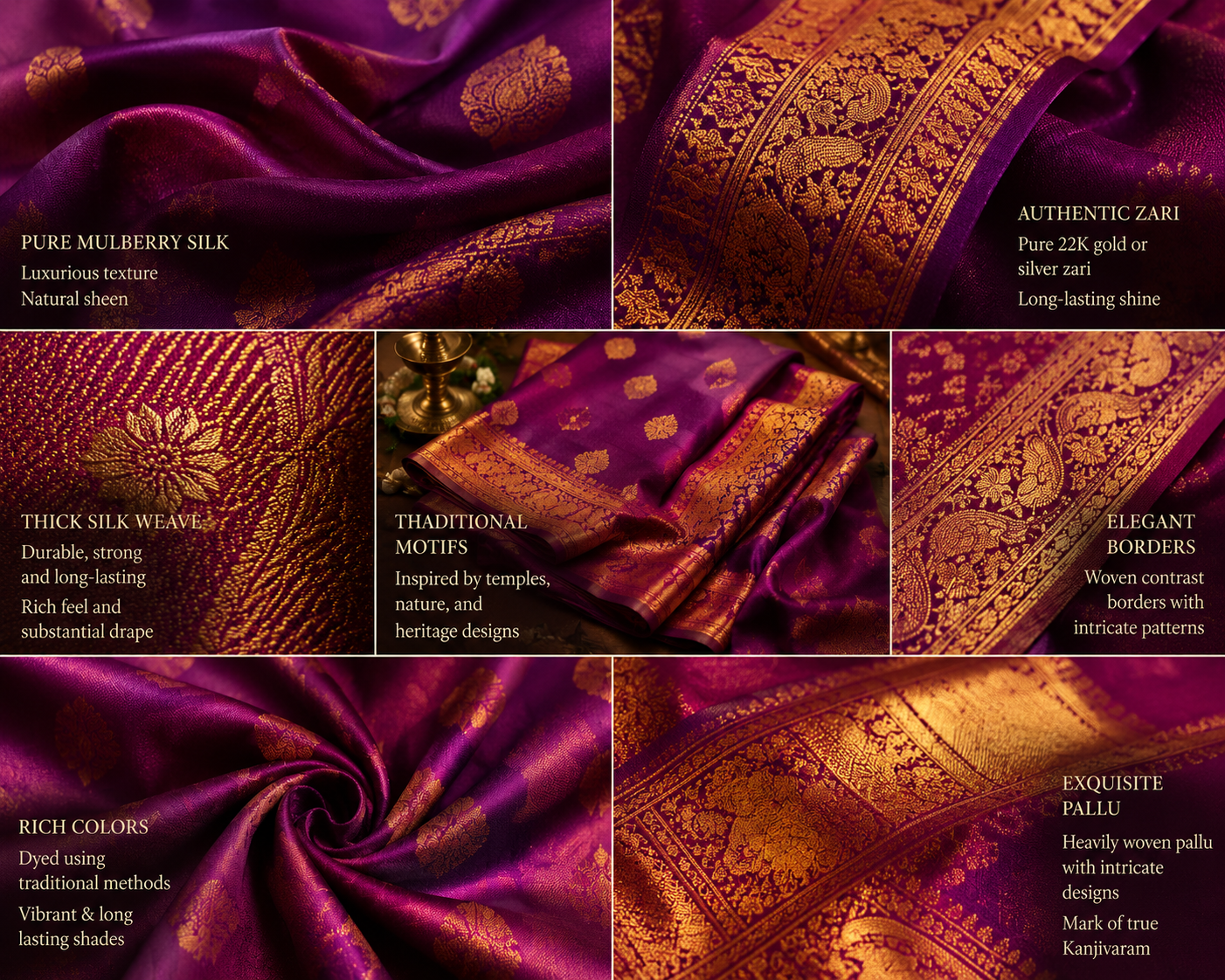
1. Touch the Silk
A major element in separating original Kanjivaram silk from the rest is the feel of the fabric.
Pure silk will have the following features:
- Softness that is accompanied with a pleasant graininess
- Hand is drawn to it because of its softness, but it is not slippery
- Exquisite and luxurious
- Has a plush thickness and substantial body
Usually, artificial silks give a sensation of being too smooth, too shiny or they might even remind one of plastic.
2. See the Natural Shine
Real silk is capable of a natural light reflection.
Pure Kanjivaram silk confers a mild radiance that alters moderately while changing one’s viewpoint.
Conversely, synthetic materials display a level and overly glossy finish that is quite obvious to be fake.
3. Feel the Weight
Most Kanjivaram silk sarees seem heavy when held versus synthetic ones, which are usually light.
This heaviness is attributed to:
- Pure mulberry silk
- Dense weaving of the textile
- Conscientious zari works
Typically, a Kanjivaram saree is around 600 grams and can even go over 1 kilogram depending on the design.
Very thin sarees branded as pure Kanjivaram may need an additional check.
4. Study the Zari Work
The zari aspect is one of the strongest identifiers of a Kanjivaram saree.
The real zari process includes:
- A silver filament
- Gold deposited on silver
Taking the saree inside out to get a better look at the metallic thread is a common technique that is widely accepted.
The real thread reveals a red silk beneath the metal coat quite often.
Fake zari will show white or synthetic threads.
5. Post-Purchase Inspection: Borders and Pallu
These parts have been the mainstay of Kanjivaram sarees for a long time, known for the way they have been separately woven.
The main part, border and pallu are first woven independently and then joined by using a highly proficient weaving method.
This special method of construction results in:
- strong joints
- clear separation of the designs
- excellent durability
In contrast, imitations made by machines often have everything woven as one continuous piece.
6. Weaving Quality
One can check for these features in handwoven Kanjivaram silk sarees:
- compact weaving
- clean finishing
- exactly symmetrical motifs
- accurate detailing
The patterns’ matching continues along the entire length of the saree.
Misalignment or improper weaving may be signs of a lower-quality imitation.
7. Confirmation by Traditional Motifs
Kanjivaram silk sarees are a great source of inspiration from South Indian culture as they often portray the ancient temple designs and nature through the use of traditional motifs.
Some of the frequently used motifs are:
- temples as borders
- peacocks
- mango motifs
- rudraksha motifs
- elephants
8. Optional Ring Test
To judge the quality of the silk ring, as many people do.
The reason that maybe good silk is that it is soft and very flexible.
Such material can pass through a ring on finger nicely.
However, this can not be the only authentication method because some imitation fabrics can also pass this test.
Use this with other identification techniques.
9. Ask for Silk Mark Certified
Checking out a Silk Mark label is the first and most trustworthy way of recognizing Kanjivaram silk’s authenticity.
Only the sarees made with real silk after testing for their quality are allowed to carry a Silk Mark label.
While shopping, inquire if the seller can show the Sarees Silk Mark.
This raises your confidence in the correctness of your purchase.
10. Buy from Trusted Sellers
Getting your product from a trustworthy source is the best way to stay away from being cheated with a fake product.
Credible sellers usually provide:
- Product authenticity information
- Detailed fabric descriptions
- Transparent pricing
- Quality assurance
- Customer support
Avoid buying costly silk sarees from unknown sellers that have unusually low prices.
Difference Between Pure and Fake Kanjivaram Silk Sarees
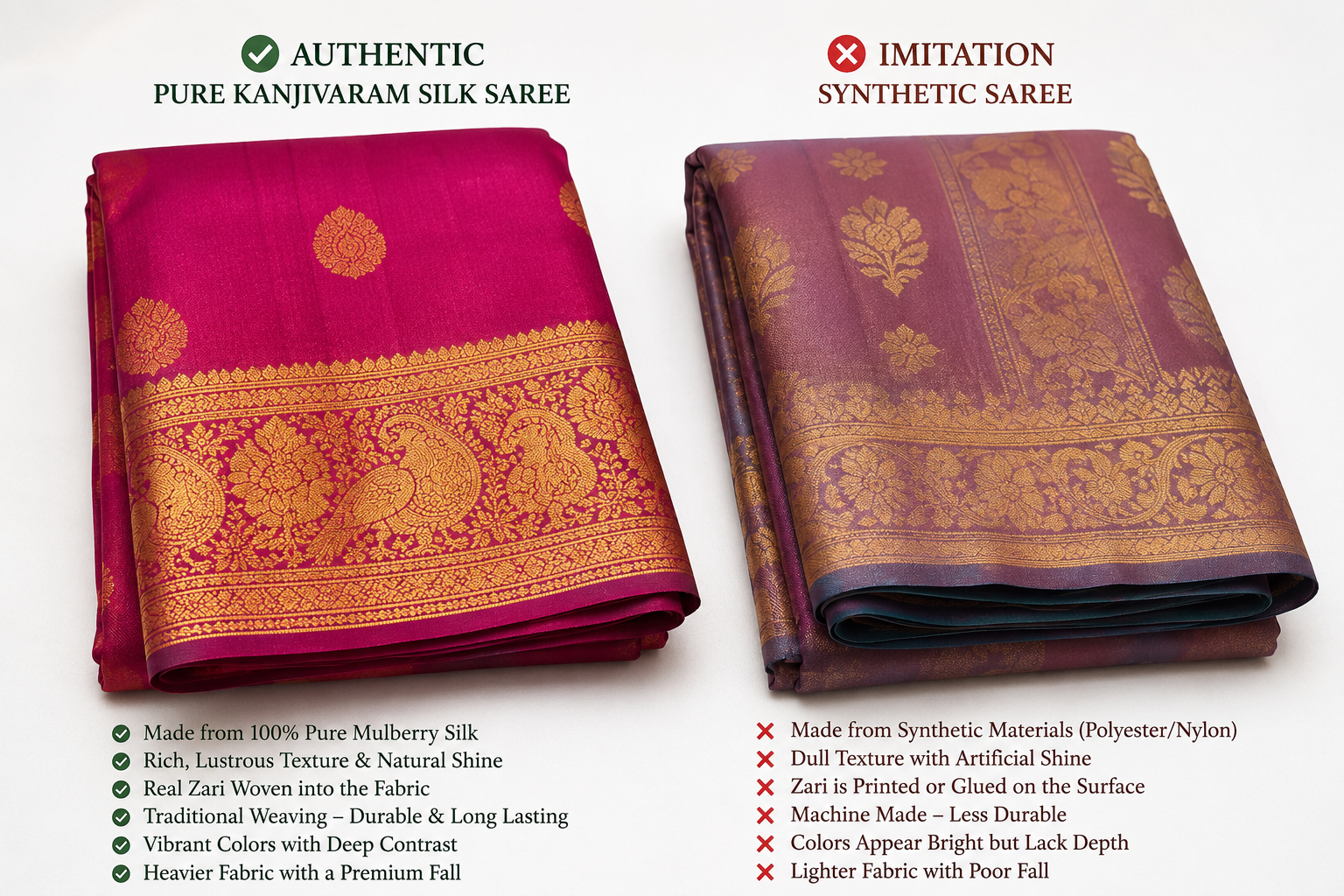
| Feature | Pure Kanjivaram Silk | Fake Kanjivaram Saree |
| Fabric | Pure mulberry silk | Artificial or blended fabric |
| Shine | Soft, natural glow that changes with light | Bright, plastic-like shine |
| Weight | Heavy due to dense silk and zari | Lightweight and less substantial |
| Texture | Rich, smooth, and soft | Slippery, rough, or synthetic feel |
| Zari | Made with silver thread and gold plating | Plastic or metallic imitation |
| Durability | Can last for decades with proper care | Wears out relatively quickly |
| Price | Premium due to authentic craftsmanship | Much cheaper than genuine silk |
| Weaving | Handwoven by skilled artisans | Machine-made or mass-produced |
Commonly Believed Falsely: Explanations
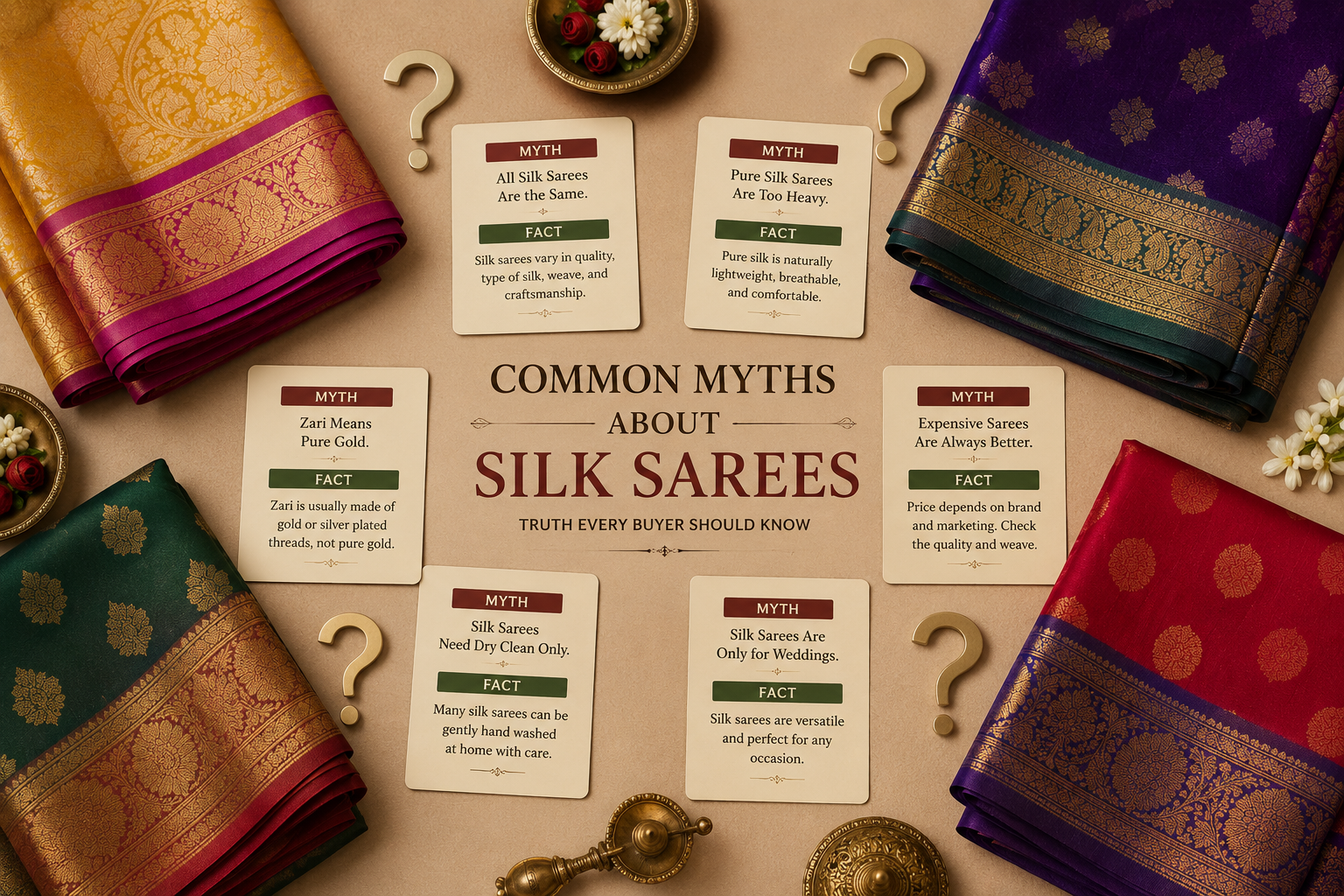
Myth 1: Expensive Means Authentic
A price tag alone cannot guarantee authenticity. It is good to have fabric samples and independent craftsmen’s work verification especially when the price is high.
Myth 2: Every Shiny Saree Is Silk
The fabric made from synthetic fibers can also reflect light to a degree. Real silk is distinguished by its softer, more regal glow.
Myth 3: Lightweight Means Better Quality
Due to their heavy silk garments with dense weaving and intricate zari work, Kanjivaram sarees are naturally heavy.
Myth 4: Online Sarees Cannot Be Genuine
The internet is a place where many authentic Kanjivaram silk sarees are available for purchase from a variety of well-known vendors. One must verify the seller’s identity and product authenticity certifications before buying.
Useful Advice for Purchasing a Pure Kanjivaram Silk Saree
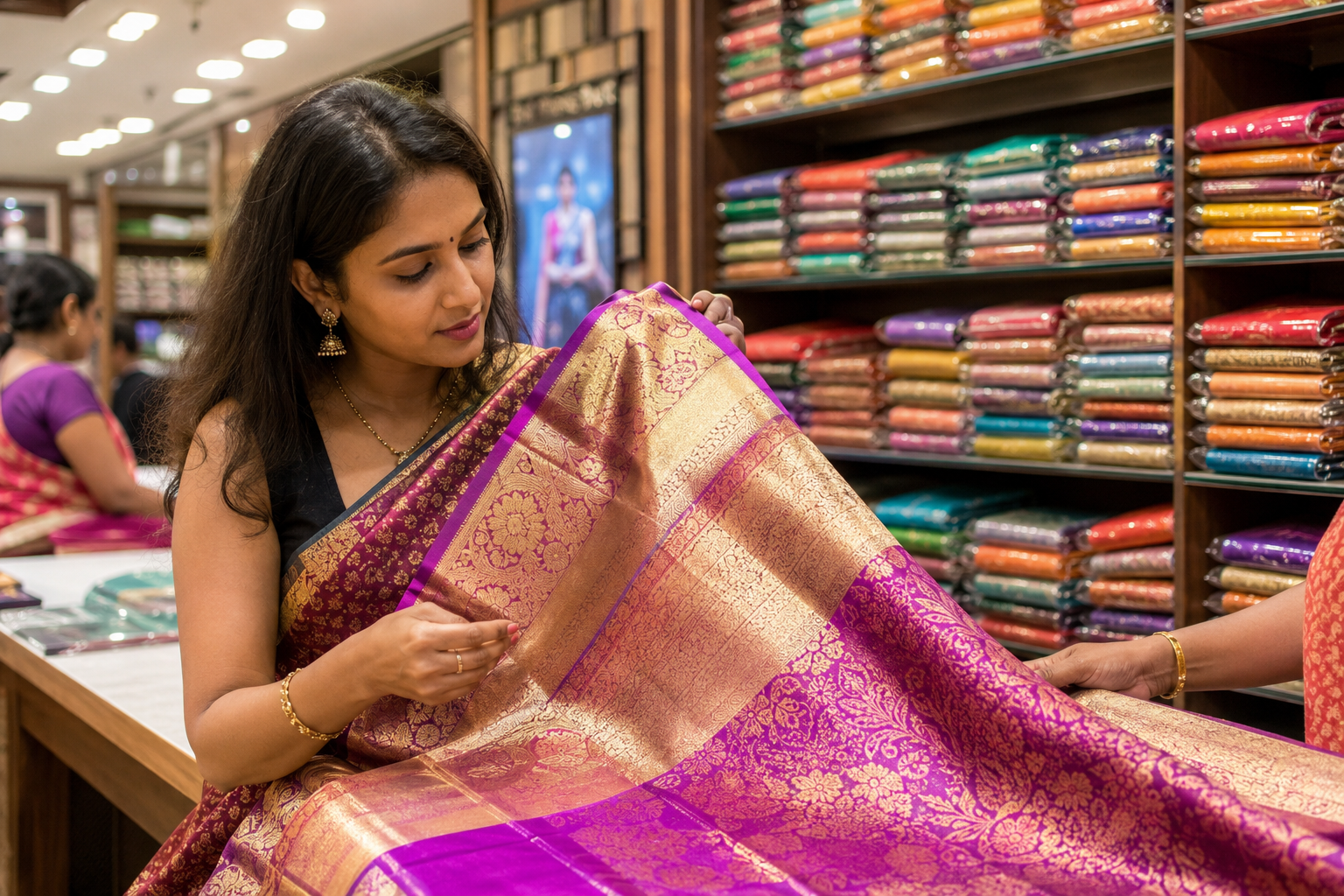
These are some tips to keep in consideration to be armed before your purchase:
- Research seller reputation.
- Compare prices from several stores.
- Look for detailed product information.
- Review customer feedback.
- Ask about silk quality.
- Verify zari material.
- Check for authenticity certificates if available.
- Examine high-resolution images when shopping online.
- Familiarize yourself with return and exchange policies.
- Avoid transactions that are too good to be true.
Maintenance of Your Pure Kanjivaram Silk Saree
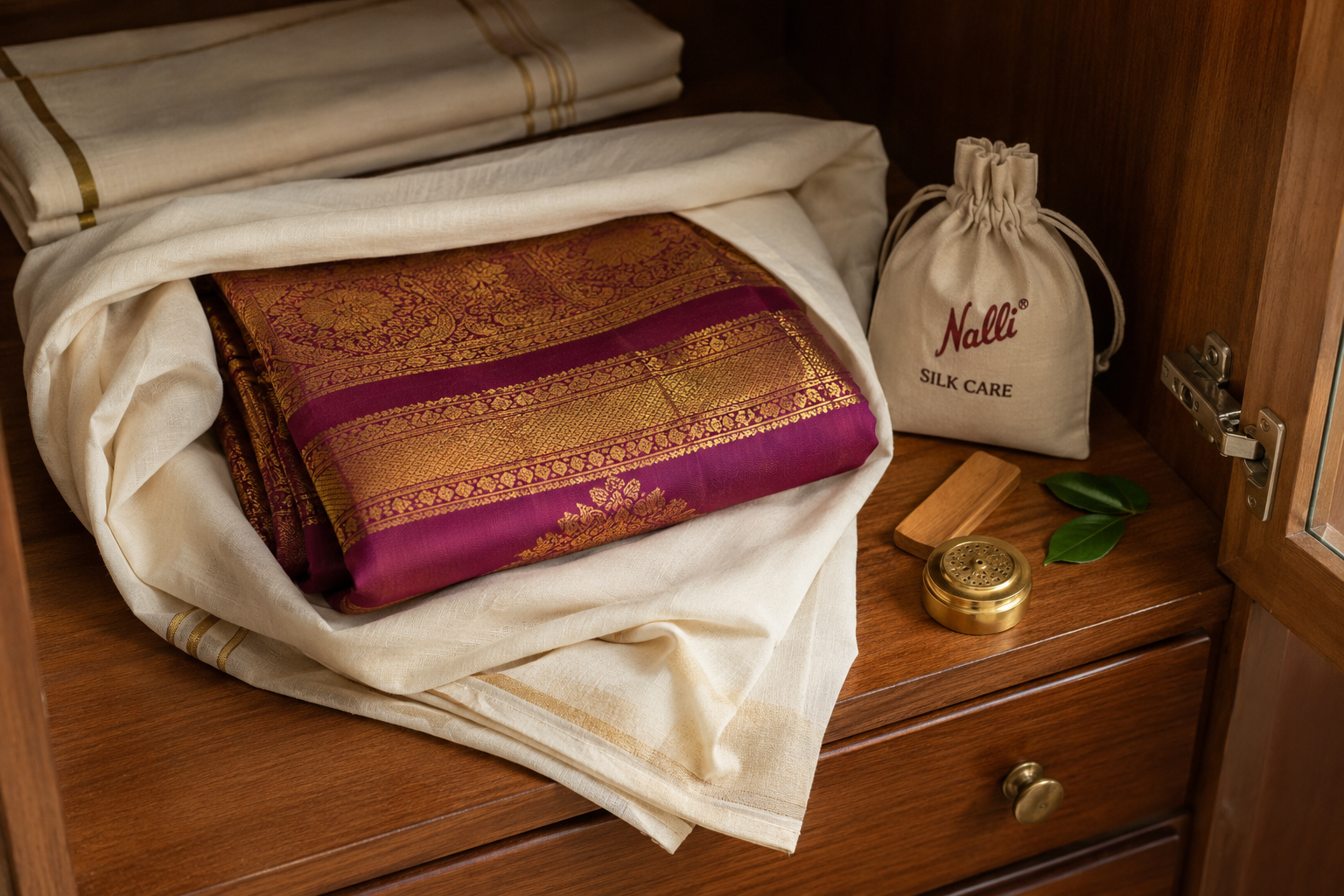
Right storage and regular upkeep are essential in maintaining the elegant condition of your saree for long time.
Storage Tips
- Keep it in a cotton cloth or muslin bag.
- Store in a cool, dry place.
- Don’t expose it to direct sunlight.
- Keep changing the folds to avoid permanent creases.
Cleaning Tips
- It’s better to be done by professionals.
- Harsh detergents should be avoided.
- Do not wring the saree.
- Occasional airing can prevent moisture accumulation.
Handling Tips
- Keep the fabric away from direct perfume spray.
- Be careful in removing jewelry as it may cause threads to pull.
- Stay away from rough surfaces.
After a long period of time, Kanjivaram silk sarees will still look gorgeous with a little extra effort of maintenance.
FAQ’S
1.How do I know if a Kanjivaram silk saree is pure?
Touch the silk, see the natural shine, weigh, check zari quality, scrutinize the weaving technique, and consider any Silk Mark certification available. Shopping at trusted sellers also helps ensure authenticity.
2.What is the reason for the high price of pure Kanjivaram silk sarees?
They feature the handiwork of masterful weavers using high-grade mulberry silk combined with weaving techniques that are quite intricate and time-consuming. Traditional zari also contributes to the overall price.
3.Is it possible for the fake Kanjivaram sarees to look like the real ones?
Yes, these days even the best fake sarees can challenge your ability to differentiate them from the real ones. This is why fabric, weaving, zari, and certifications must always be taken into account together.
4.Is it true that every heavy silk saree is a genuine Kanjivaram?
No. Apart from being generally heavier, other criteria must also be used in the proper evaluation of a Kanjivaram saree’s authenticity.
Related Post:
What is a Style Number in Fashion