
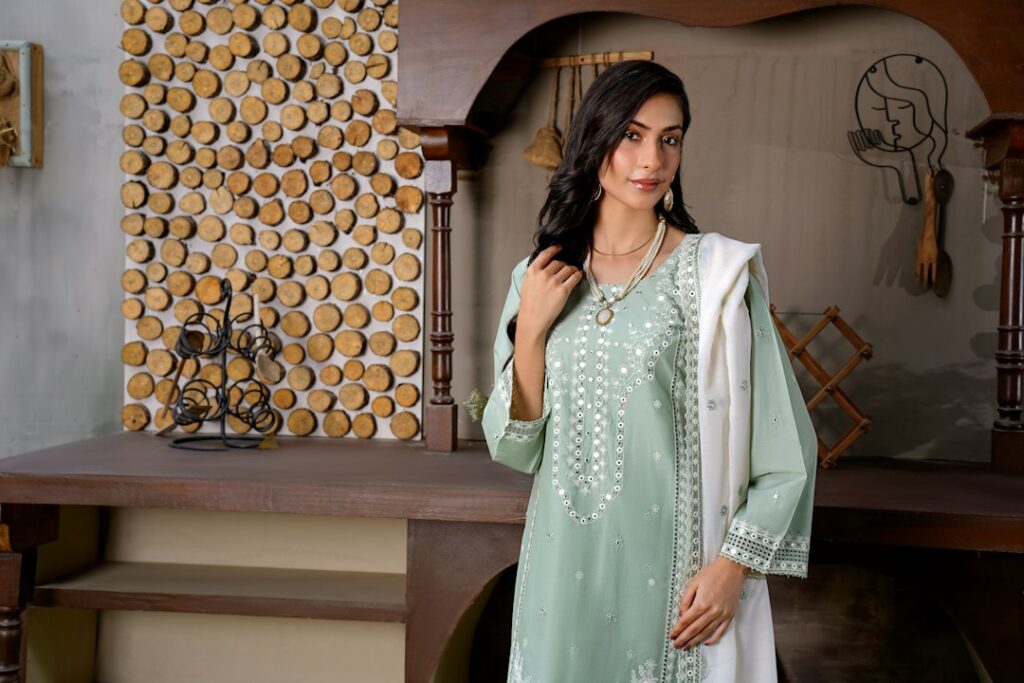
The kurti is one of the most worn garments in India, and walking into a store can still feel confusing. Straight, A-line, Anarkali, angrakha: each cut hangs differently and suits a different body, occasion and bottom. This guide explains 20 types of kurtis, what makes each one different, and how to wear it, so you can pick the right one without guessing.
The table below matches six common kurtis to the occasions they handle best.
| Type of kurti | Best for | Pairs well with |
|---|---|---|
| Straight kurti | Office and daily wear | Leggings, trousers, jeans |
| A-line kurti | Everyday, most body shapes | Leggings, palazzos |
| Anarkali kurti | Festivals, weddings | Churidar |
| Angrakha kurti | Festive and formal days | Churidar, straight pants |
| Short kurti | College, casual outings | Jeans, palazzos |
| Jacket-style kurti | Parties, layered looks | Straight pants |
1. Straight kurti
A straight kurti falls from the shoulders to the hem with the same width all the way down. It is simple, easy to wear and a staple for offices. Pair it with leggings, trousers or jeans.
2. A-line kurti
An A-line kurti is fitted at the shoulders and bust, then widens gently to the hem. It flatters most body shapes and is comfortable for long days. Palazzos and leggings both work with it.
3. Anarkali kurti
An Anarkali kurti fits snugly through the bodice and then flares into a full skirt-like fall. It is popular for festivals and weddings. Wear it with a churidar and a dupatta for the classic look.
4. Angrakha kurti
An angrakha kurti has overlapping panels that cross over the chest and tie at the side. The wrapped front looks elegant and suits formal days and festive occasions.
5. Kalidar kurti
A kalidar kurti is stitched from many panels, called kalis, which add flare at the hem. The result is a graceful, flowing shape that moves well when you walk.
6. Asymmetrical kurti
An asymmetrical kurti has a hem that is cut at an angle or in uneven layers. It looks modern and works well with slim pants or leggings.
7. High-low kurti
A high-low kurti is shorter at the front and longer at the back. The shape shows off your shoes and adds movement. Pair it with fitted bottoms so the hem stays the focus.
8. Front-slit kurti
A front-slit kurti has a centre slit that runs up from the hem. It makes walking easier and lets the bottom show a little. It suits fitted pants and leggings best.
9. Side-slit kurti
A side-slit kurti has slits on both sides of the hem, which gives room for movement. It is one of the most common office kurtis and goes with trousers, leggings or jeans.
10. Shirt-style kurti
A shirt-style kurti has a collar and buttons down the front, like a long shirt. It looks neat and suits workplaces and casual days. Add a belt to shape the waist.
11. Jacket-style kurti
A jacket-style kurti has an open front jacket stitched over an inner layer. It looks layered and dressy without needing a separate jacket, and suits parties and festive days.
12. Cape-style kurti
A cape-style kurti has a cape draped over the shoulders, usually attached to the kurti. It gives a graceful, modern look and suits evening events.
13. Layered kurti
A layered kurti has tiers or an overlay of fabric stitched together. It adds volume and works well in light fabrics. Keep the bottom simple so the kurti stands out.
14. Peplum kurti
A peplum kurti is fitted at the top with a short flared ruffle at the waist. It defines the waist and gives shape. Wear it with slim pants or straight skirts.
15. Dhoti kurti
A dhoti kurti is a short kurti paired with gathered dhoti pants. It is comfortable and stylish and suits festive and casual days alike. See our guide to types of pants for women.
16. Pathani kurti
A pathani kurti is a loose, long-sleeved kurta with a straight cut, inspired by the traditional Pathani suit. It looks relaxed and works well with salwars or straight pants.
17. Kaftan kurti
A kaftan kurti is loose and flowing, often with wide sleeves and printed or embroidered fabric. It is comfortable in heat and good for relaxed days.
18. Empire-waist kurti
An empire-waist kurti has a seam just under the bust, and the fabric flows loosely from there. It skims the middle and is a comfortable choice for daily wear.
19. Short kurti
A short kurti ends at the hip or thigh and is often called a kurtie or a tunic. It is popular with jeans and palazzos, which makes it easy to wear on college days and casual outings.
20. Long ankle-length kurti
A long kurti falls near the ankle, almost like a dress. It suits festive wear and looks elegant in silk or georgette. Pair it with a dupatta and traditional jewellery from our earrings guide.
How to choose the right kurti
Start with the occasion. Straight and side-slit kurtis suit offices, Anarkali and kalidar kurtis suit festivals, and short kurtis suit casual days. Then think about your frame. A-line and empire cuts suit most shapes, while fitted cuts show the waist.
Check the length against your height. Very long kurtis can shorten petite frames, so a knee-length cut with a slit often works better. If you are tall, a long kurti looks elegant.
Choose the fabric for the weather. Cotton and linen keep you cool, rayon and georgette drape well, and silk and brocade suit festive days. Look at the neckline and sleeve too, because they decide how comfortable a kurti feels over a full day.
For the wider wardrobe, see our guide to types of clothes, and finish the look with a bag from types of bags.
How to care for kurtis
Wash cotton kurtis in cool water and dry them in shade, because strong sun fades colour. Wash embroidered and silk kurtis gently or dry clean them. Turn printed kurtis inside out before washing. Iron on the reverse side so you do not damage embroidery or prints.
FAQs
What are the most common types of kurtis?
The most common are straight, A-line, Anarkali, short and side-slit kurtis. Most other styles are variations of these.
Which kurti suits a heavy body type?
A-line, straight and empire-waist kurtis in soft fabrics suit many body types. Choose a fit that does not cling, and a length that covers the hips.
Which kurti is best for office wear?
Straight, side-slit and shirt-style kurtis in cotton or crepe, paired with trousers or straight pants, are the usual choices.
What is the difference between a kurta and a kurti?
A kurta is the traditional long tunic worn by men and women. A kurti is usually a shorter, more fitted version designed for women.
About the author
Dev Panchal is a fashion and lifestyle enthusiast with an interest in clothing trends, personal style, and everyday fashion inspiration. Through Fashiqa, he shares practical styling tips, outfit ideas, fashion guides, and lifestyle articles to help readers discover new trends and make confident style choices.
Last updated: October 2026 | More from Dev | About Fashiqa