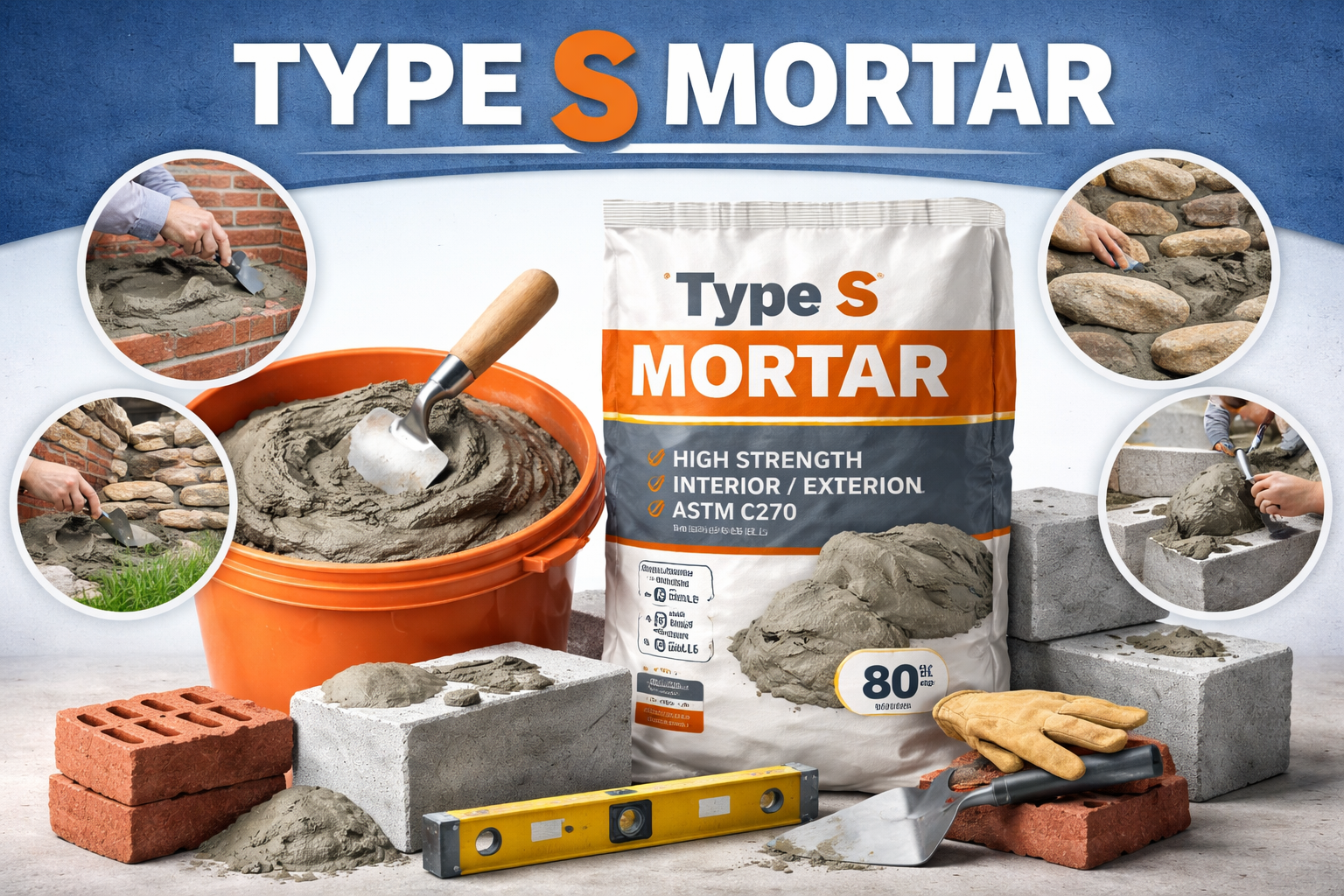
Mortar is just like bricks or blocks in that it is one of the most significant factors in determining the outcome of a masonry construction. One of the dependable and most frequently used types of mortar is Type S mortar. Actually, it has been acknowledged and appreciated for its strength, durability, and great bonding capacity. Due to these traits, Type S mortar has become a familiar building material for both residential and commercial buildings.
Type S mortar is something you must understand if you are going to make brick walls, stone masonry, foundations, patios, or retaining walls. Besides, knowledge of its functioning will help you make better construction decisions.
This blog post is a comprehensive guide to Type S mortar, which covers its composition, usage, advantages, mix ratio, and comparison with other mortar types.
What Is Type S Mortar?
Type S mortar is a type of mortar mix mild-to-high strength that is typically used in masonry works requiring strong bonding and durability. Cement, lime, and sand are mixed to make this mortar. Type S mortar provides better resistance to soil pressure, wind load, structural stress, etc.
This cement mixture is excellent if you use it for applications that are below grade or subjected to heavy pressure. It is the best mortar mix for foundations, retaining walls, exterior masonry.
Either you can get this pre-blended, completely ready to use, or, on the other hand, you can blend it yourself exactly the way you want it.
The S in ‘Type S’ Mortar: What Does It Mean?
The letter ‘S’ which is found in Type S mortar is a symbol of how different types of mortar in masonry are ROMAN CATHOLIC identified within a classification system. Usually, mortars additional grouped based on the following types:
- Type M
- Type S
- Type N
- Type O
- Type K
The differences between these five particulate types are mainly in the areas of compressive strength, flexibility, and typical usage. Type S mortar is still strong but not to the point of no return. It is fairly strong, yet provides a balanced mix between strength and workability.
The Components of a Type S Mortar Mix
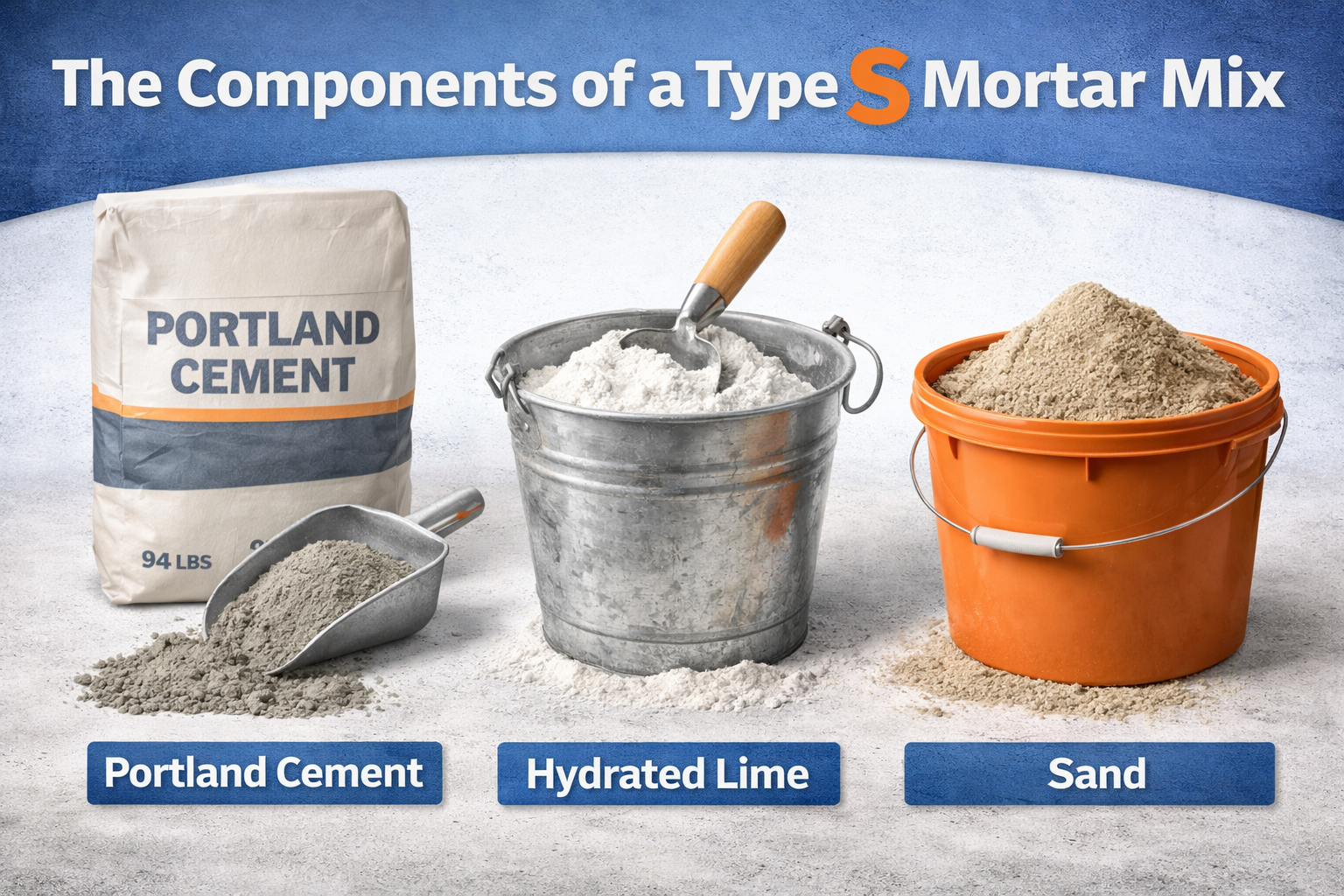
The major constituents are as follows:
1. Portland Cement
It is the element which mainly determines the cementitious mortar ability to withstand pressure over a suitable period with a minimum amount of distortion.
2. Hydrated Lime
Increasing the lime content makes the mortar more plastic and the lime potential for water retention increases to an extent of facilitating the adhesion capabilities.
3. Sand
Adding sand gives the mortar volume and improves the uniformity and overall mortar
Standard Mix Ratio
Traditional mix ratio for Type S mortar is approx:
2 parts cement : 1 part lime : 9 parts sand
The above ratio can vary slightly especially if purchasing pre-mixed Type S mortar.
Strength of Type S Mortar
Type S mortar is known primarily for its very high compressive strength.
Compressive Strength
The typical compressive strength of Type S mortar is about:
1,800 psi (pounds per square inch)
It is twice as strong as Type N and Type O mortar, while still providing some flexibility for a variety of structural applications.
Due to its strength, Type S mortar is heavily relied upon where load-bearing support and resistance to exterior forces are important.
Common Uses of Type S Mortar
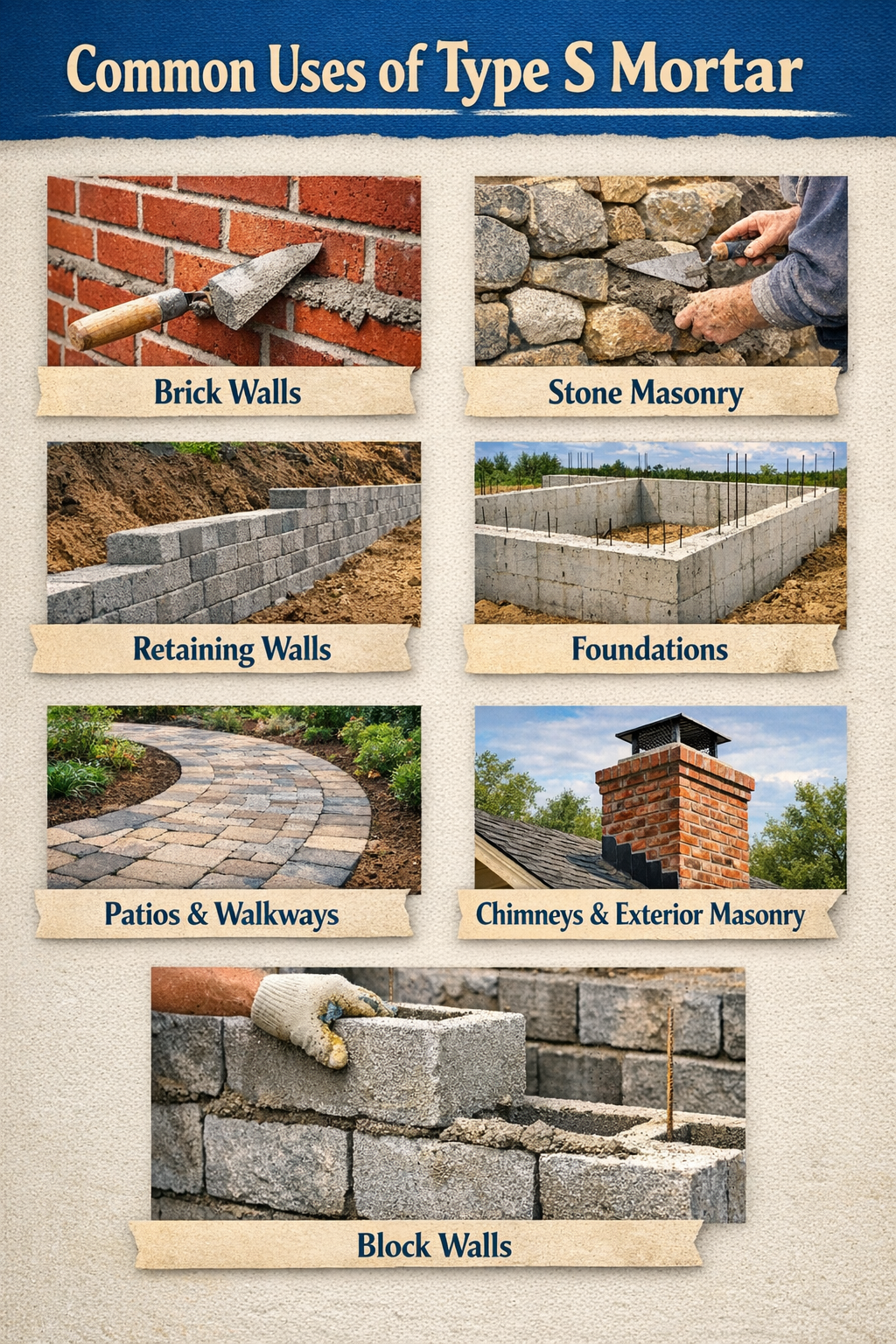
Type S mortar can be applied in different masonry works.
1. Brick Walls
It is used primarily for exterior walls and structural walls due to its excellent bonding and weathering properties.
2. Stone Masonry
Type S mortar is suitable both with naturally occurring stone and manufactured stone if a solid holding is required.
3. Retaining Walls
Type S mortar is the most appropriate mortar for retaining walls because it offers the ability to resist soil pressure.
4. Foundations
Masonry foundations along with other below-grade construction may be implemented with this mortar.
5. Patios and Walkways
Hardscaping outdoor elements that require durability and weather resistance will benefit from Type S mortar.
6. Chimneys and Exterior Masonry
Anything built with masonry on the exterior which will be subject to varied weather conditions can use it.
7. Block Walls
Concrete block walls are mostly done with Type S mortar because of its ability to provide structural support and strong adhesion.
Benefits of Type S Mortar
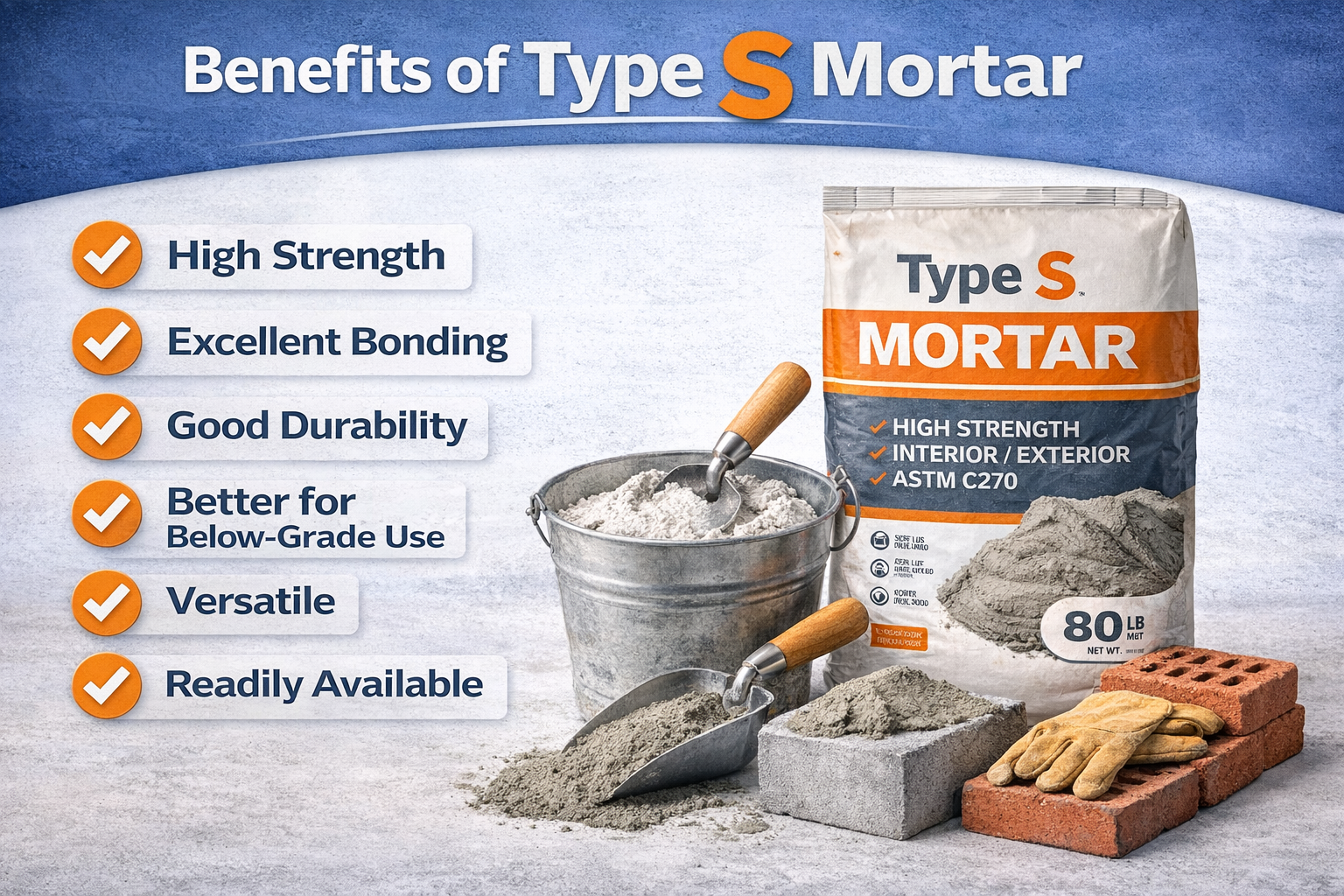
Different reasons have contributed that Type S mortar is the choice of majority of masons.
1. High Strength
It has the structural strength to support the weight of even large buildings.
2. Excellent Bonding
Type S mortar sticks very well with brick, stone, and concrete block surfaces.
3. Good Durability
In the course of time, it is possible to endure through the elements, pressure, and heavy usage.
4. Better for Below-Grade Use
It is resistant to soil pressure and moisture more than weaker mortars. Hence it is excellent for below ground installations.
5. Versatile
It can equally be used for vertical and horizontal masonry.
6. Readily Available
Type S mortar can be found in most hardware stores and construction supply outlets.
Type S Mortar vs Other Mortar Types
It is very useful to get a sense of where the strengths and characteristics of Type S mortar lie, when in fact you have to decide the best suitable material for the project by taking into account your own requirements and comparing with other mortar types.
Type S vs Type N Mortar
Type N Mortar
- Moderately hard
- It is the common mortar for constructing walls above-ground
- Light and easy to handle
- Mostly used for brickwork
Type S Mortar
- Has higher strength than Type N mortar
- It is an excellent option to provide structural support
- Can be utilized for heavy load and even below-grade applications
Which Is Better?
Most of the time, if the work is asking for extra strength and longer service life, you would be buying Type S mortar. Meanwhile, if it is a lesser work and the location is above the ground, Type N might suffice.
Type S vs Type M Mortar
Type M Mortar
- Very high-strength mortar
- Ideal for heavy loads and foundations
- Lacks workability
Type S Mortar
- Lower strength than Type M mortar
- Easier to work with mortar
- Commonly used for structural masonry
Which Is Better?
For situations where the load is extremely heavy, Type M is your best bet whereas Type S mortar offers a balance between strength and handling.
Type S vs Type O Mortar
Type O Mortar
- Very little strength
- Usually a choice for interior or restoration
- Absolutely not suited for structural work
Type S Mortar
- Much stronger and more durable
- A better choice for outdoor and bearing applications
Which Is Better?
In every aspect, Type S stands out as a more powerful and more reliable option for structural and ext projects.
How to Mix Type S Mortar
If you do not have a premixed bag, you can make Type S mortar either by hand or in a mixer.
Basic Mixing Steps
1. Measure the Materials
Accurately proportion cement, lime, and sand in the required ratio.
2. Dry Mix First
Blend all the dry ingredients before adding water.
3. Add Water Slowly
Gently add water while mixing to get the desired workable consistency.
4. Mix Until Uniform
To be able to hold its shape, mortar should be a bit stiff but at the same time, it should be soft enough for easy spreading.
How To Make The Most Of Type S Mortar
Things mentioned below can be really helpful in making the best use of Type S mortar.
1. Use Clean Materials
Choose clean sand and fresh cement/lime always for better bonding and strength.
2. Don’t Add Too Much Water
If you add more water than necessary, you will end up with a weaker mix that will get damaged very easily.
3. Work in Suitable Weather
Do not mix or put mortar if the weather is very hot or freezing or if it rains heavily.
4. Follow Manufacturer Instructions
Sometimes pre-mixed bags come with a set of instructions, so you should follow them without fail.
5. Cure Properly
Let the mortar have enough time to cure and develop its full strength.
Is Type S Mortar Waterproof?
Type S mortar is not completely waterproof but it is more resistant to moisture than weaker types of mortars.
Still, if something is constantly exposed to water, additional waterproofing measures may be necessary including:
- sealants
- drainage systems
- masonry waterproof coatings
This is mainly important for retaining walls, foundations, and exterior surfaces.
Can Type S Mortar Be Used for Repair Work?
Type S mortar is a top choice for repair work, especially when patching:
- Cracked brick joints
- Block wall sections
- Stone masonry
- Outdoor structural masonry
Nonetheless, for historic or softer brick structures, a weaker mortar like Type O or lime-based mortar may sometimes be more appropriate to avoid damaging older masonry.
Type S mortar is one of the most versatile and widely used mortar types in masonry construction. If balances strength, bonding, durability, and is versatile enough to work with a wide variety of materials such as brick, stone, concrete blocks, etc. It is suitable for use in the construction of retaining walls, foundations, and even patios.
If your building work involves structural support, outdoor exposure, or below-grade applications, then going for Type S mortar is often a good decision. By knowing its features, applications, and how to mix it correctly, your masonry will be both stronger and longer-lasting.
Whether you are a builder, DIY enthusiast, or homeowner, if you plan on undertaking masonry work, understanding when and how to use Type S mortar will greatly affect the strength and quality of your finished product.
Related Post: